warehouselogistiek.eu
EN

The platform for internal & external logistics, supply chain and automation
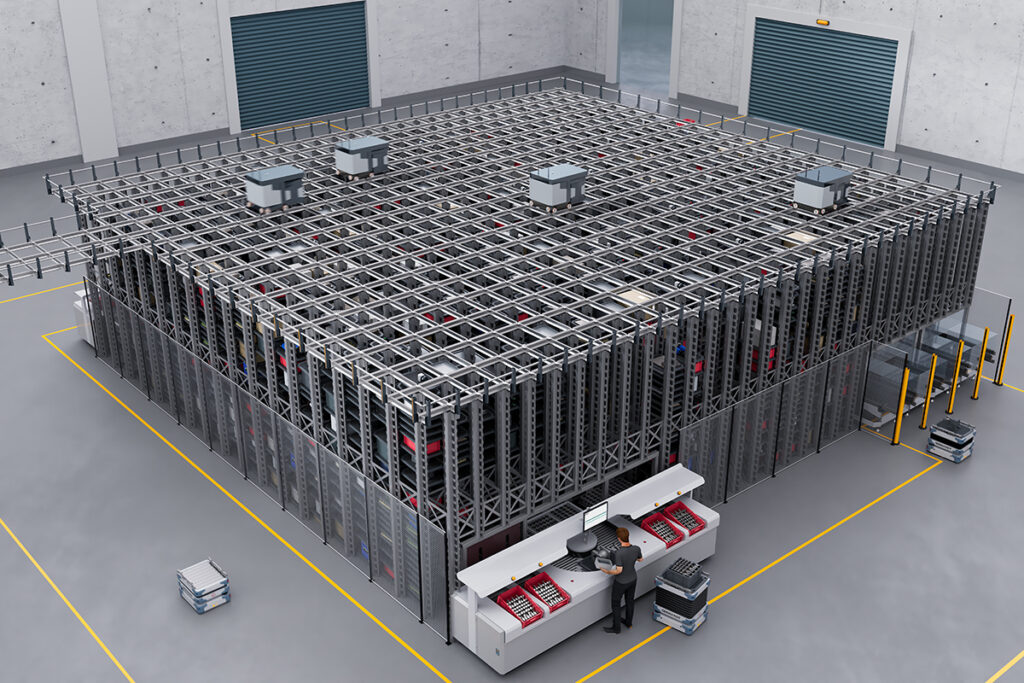
Your production machines are automated. But how efficient is your material flow?
Manufacturing and assembly companies invest in efficient machinery, robotics, and automation. Yet parts, semi-finished goods, and finished products are still often moved manually between different process steps. Employees supply the various production lines using forklifts, pallet jacks, or hand carts. Often, a one-day or multi-day supply of inventory is kept on hand in the various departments to prevent downtime.
This is precisely where opportunities lie. By organizing production, assembly, and logistics as a single integrated process, productivity can be increased, lead times can be shortened, and employees can be deployed more efficiently. In addition, less space is needed in production because inventory is stored centrally.
No matter how efficient a production machine may be, if it doesn’t have the right materials at the right time, it will still come to a standstill. The same applies to an assembly worker who has to wait for parts or fetch materials from the warehouse themselves.
By directly linking warehousing and internal transportation to production, materials can be supplied at the right time and in the correct order. After processing, semi-finished or finished products can be stored temporarily, moved to the next production step, or returned to storage.
The result: less manual handling, shorter wait times, and more time for value-added activities. With scalable automation, there are solutions for nearly every situation to achieve these benefits.
In many production environments, inventory is used between process steps to accommodate variations in speed. This work in progress takes up space, makes processes less transparent, and limits the flexibility to adjust the schedule.
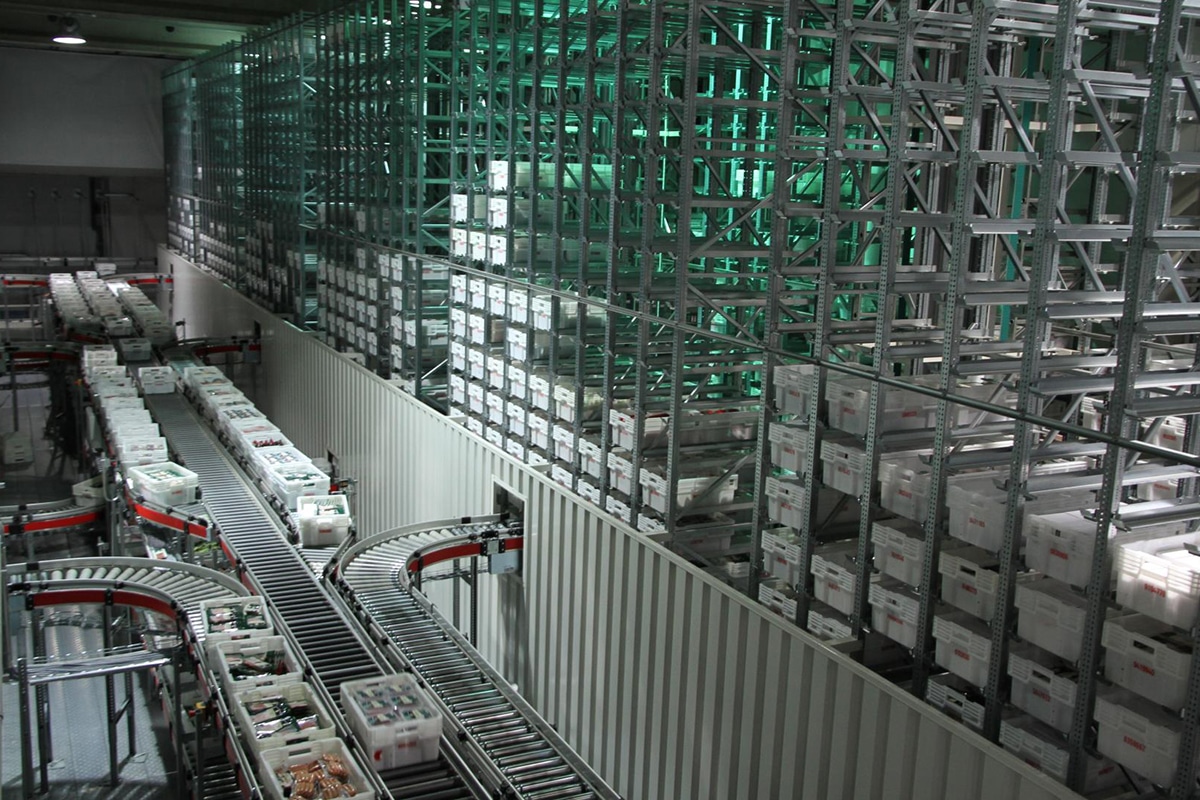
Automated warehousing can take over this function. Materials are temporarily stored, automatically sequenced, and made available as soon as the next process step requires them. As a result, a warehouse is no longer just a storage location, but a dynamic part of the production process.
Gebhardt offers a range of products to help assembly and manufacturing companies optimize their material flow. Together with StoreWare, our in-house WCS and WMS software, we design and implement turnkey automation solutions. We would like to highlight two product groups in particular.
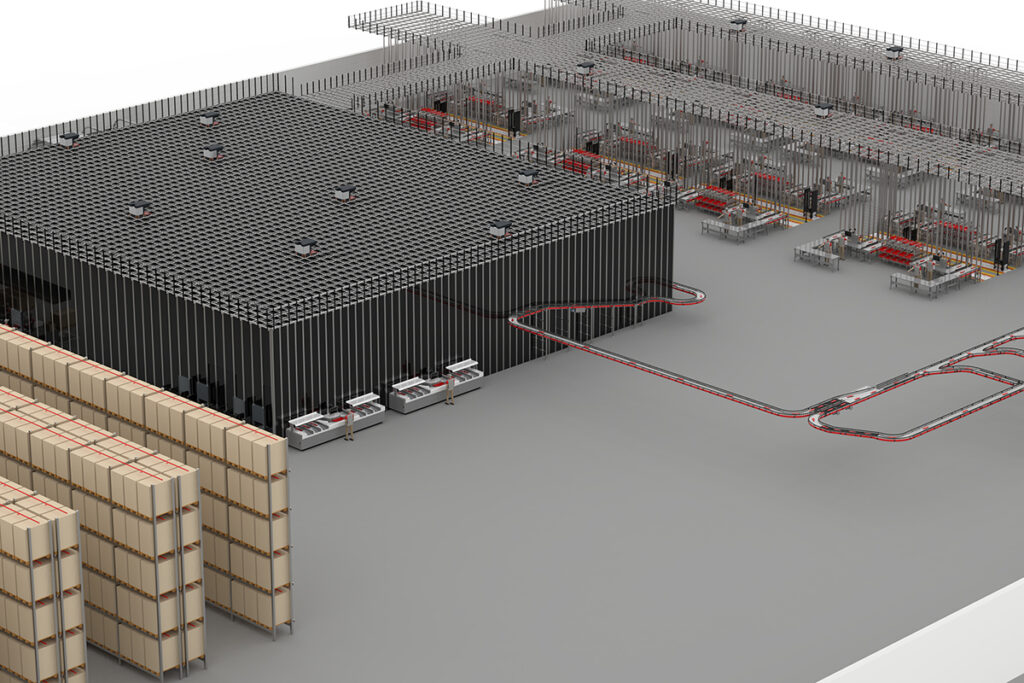
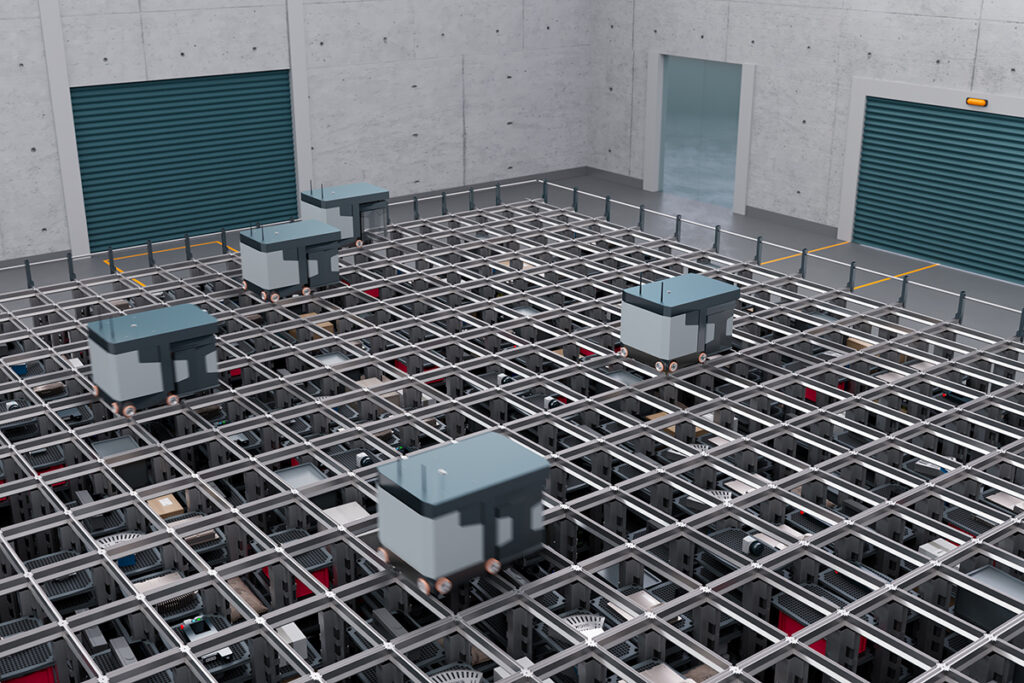
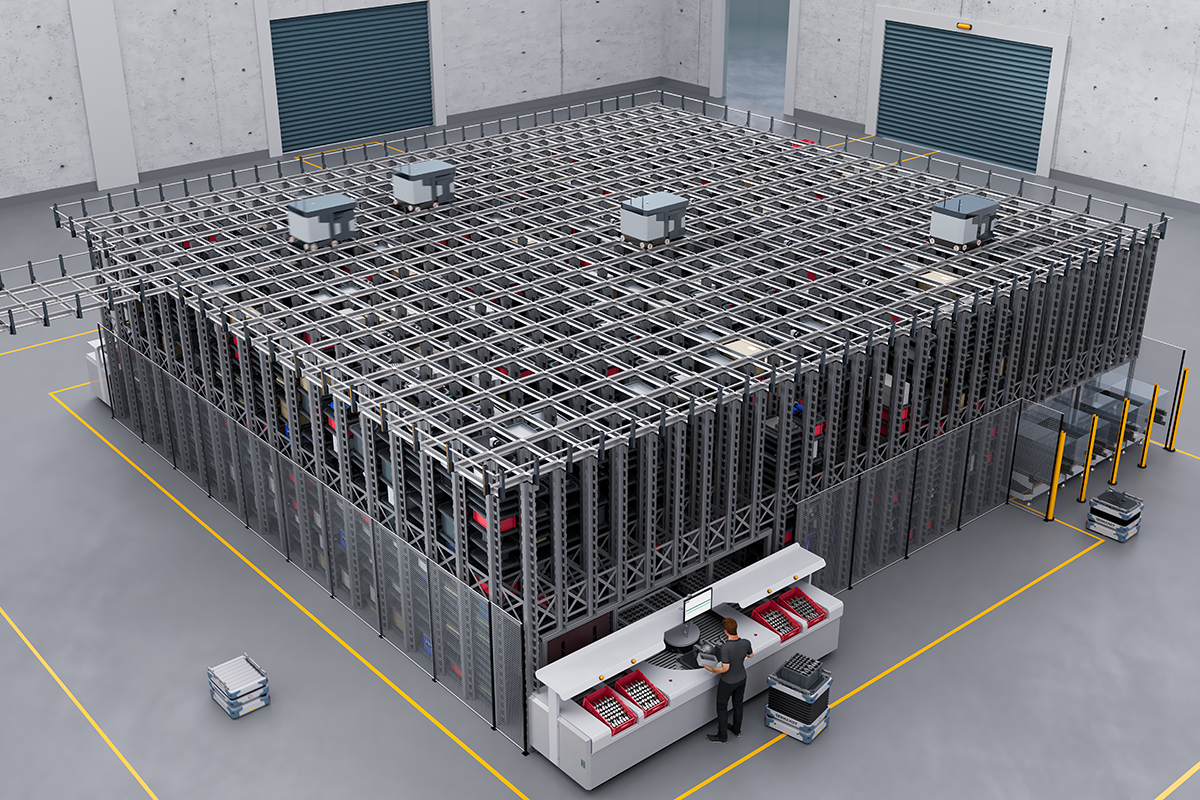
A good example of this is GEBHARDT Versastore®. The system combines storage, buffering, and transport, as well as integration with workstations or robot stations, all within a single system. This eliminates the traditional boundaries between the warehouse, logistics, and production or assembly departments.
Materials are stored on trays, which in turn can become part of the production process. Boxes, bins, or individual products can be stored on a tray, but products can also be positioned in a specific location for assembly or processing.
This opens up interesting possibilities for manufacturing companies. A tray of parts can be automatically transported from the warehouse to an assembly workstation. After processing, the same tray can be placed in a buffer, forwarded to the next workstation, or returned to the warehouse.
As a result, the product needs to be transferred between different load carriers and subsystems less frequently. This can reduce the number of transfer points and contribute to shorter and more organized material flows.
In addition, Versastore® can be integrated with conveyors, robots, and AMRs, and its capacity can be expanded as production needs change.
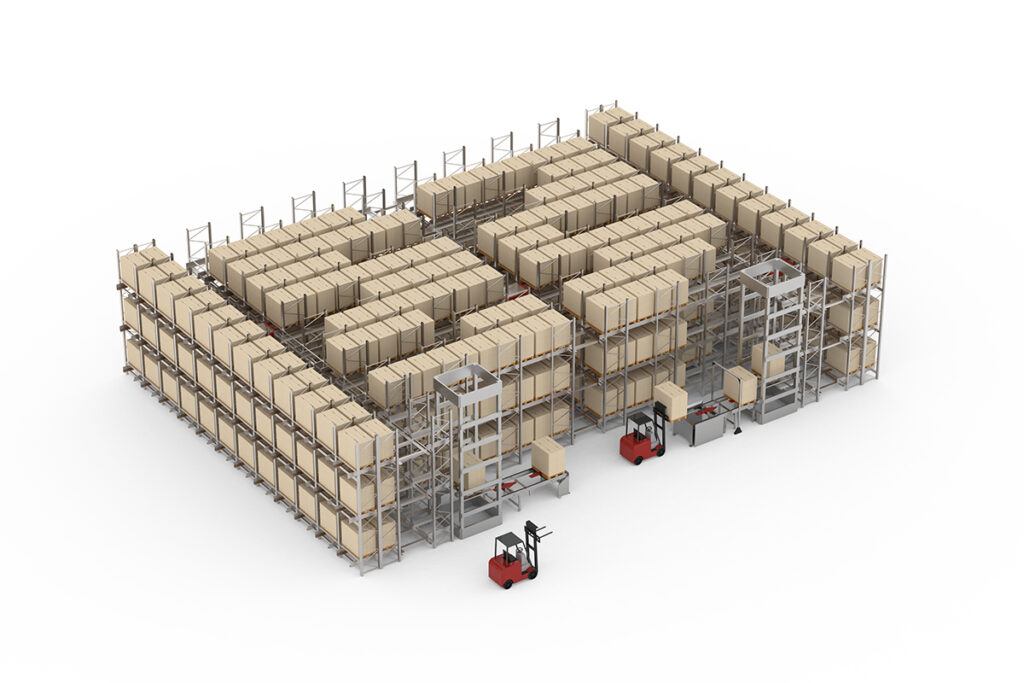
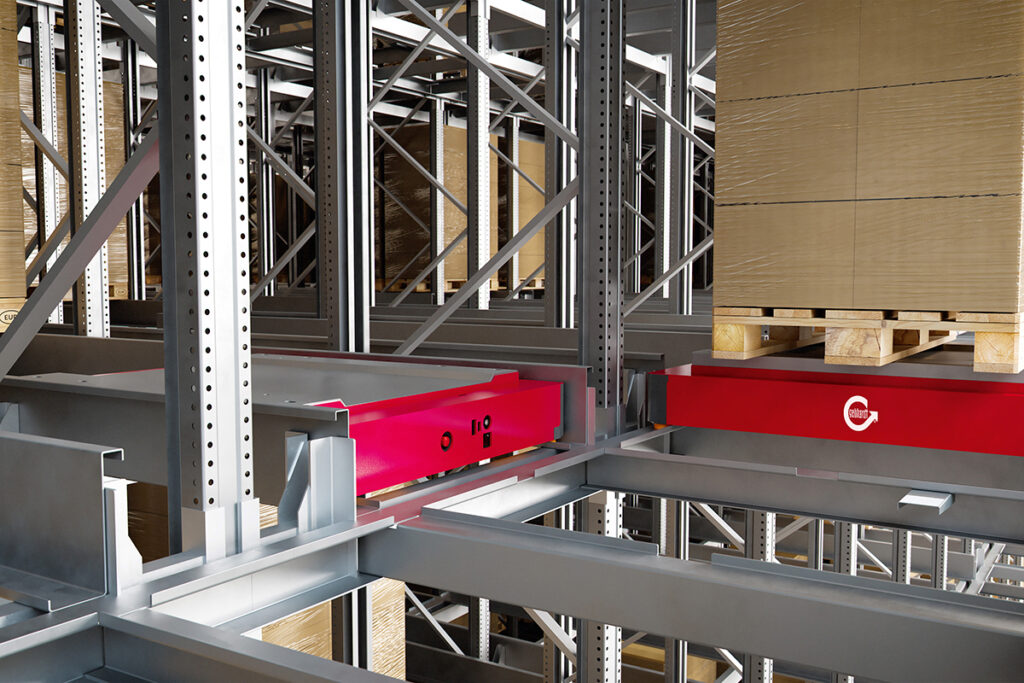
GEBHARDT Omnipallet® combines high storage density with freely moving shuttles that transport pallets through the system. The system supports various pallet sizes and loads of up to 1,500 kg.
What is particularly interesting for manufacturing companies is that such a system does not have to function solely as a traditional pallet warehouse. It can also be used as a dynamic material buffer between different production processes.
For example, pallets can be stored in the receiving area and then released according to current production needs. Semi-finished products can be temporarily buffered before moving on to the next process step. Finished products can be automatically picked and ultimately sent to shipping.
Integrating production and logistics does not mean that an entire factory must be automated all at once.
Often, the best business case starts with a simple question: Where is a lot of time being wasted today on searching, waiting, transporting, and buffering?
After all, anyone who wants to get more out of their production process shouldn't just focus on what happens inside the machines. It is precisely the connection between warehousing, production, assembly, and shipping that determines how efficiently the entire factory can operate.
Neem dan rechtstreeks contact op met Gebhardt Intralogistics Netherlands B.V.
 Contact opnemen
GEBHARDT Intralogistics – Partner for Innovative Intralogistics Solutions GEBHARDT Intralogistics is one of Europe’s leading specialists in intralogistics systems. What began nearly 75 years ago as a German family-owned business in Sinsheim is now an international company with its own branches in more than ten countries. The name GEBHARDT stands for innovative solutions, German quality, and […]
Bekijk Bedrijfsprofiel