warehouselogistiek.eu
EN

The platform for internal & external logistics, supply chain and automation
Blueprint for a Future-Proof Warehouse
Canon Production Printing in Venlo, the Netherlands, is internationally renowned for its high-quality industrial printers. Due to the company’s growth and the introduction of two new printer platforms, it was necessary not only to create space for additional production lines but also to completely rethink the entire internal supply chain.
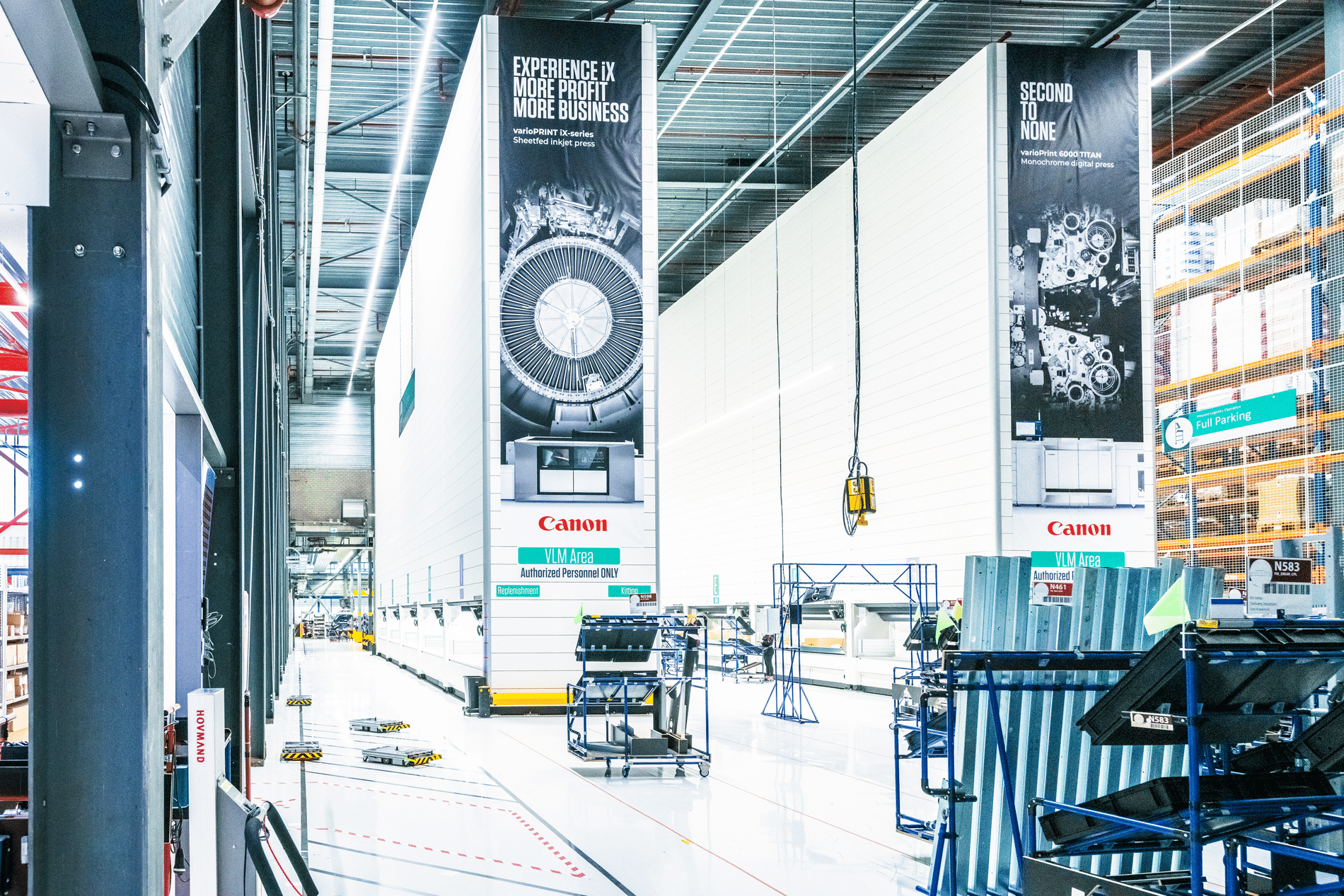
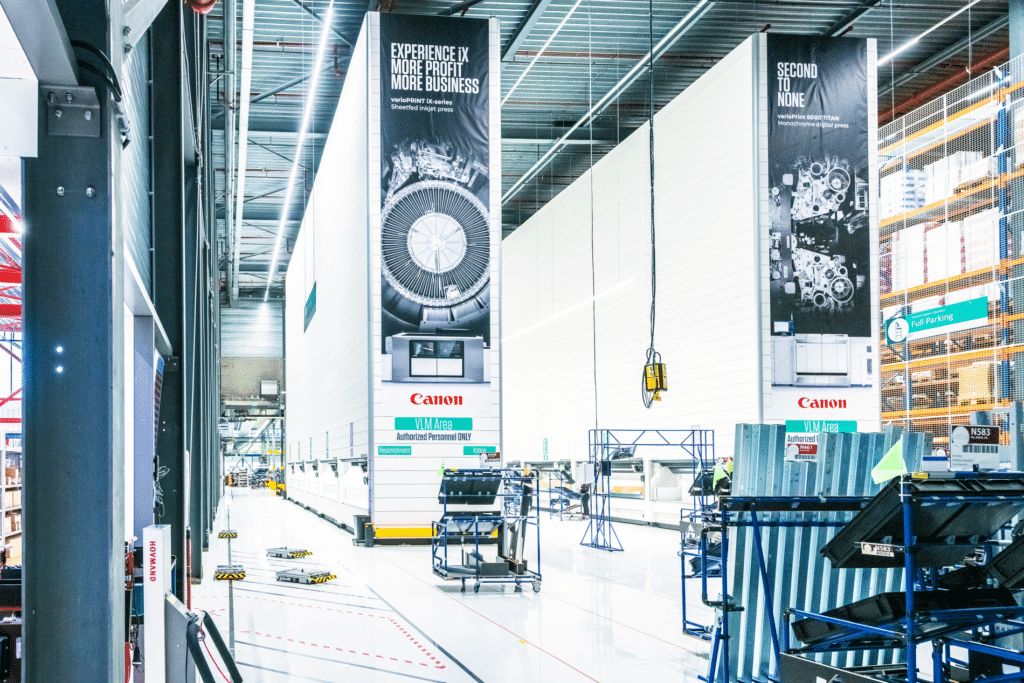
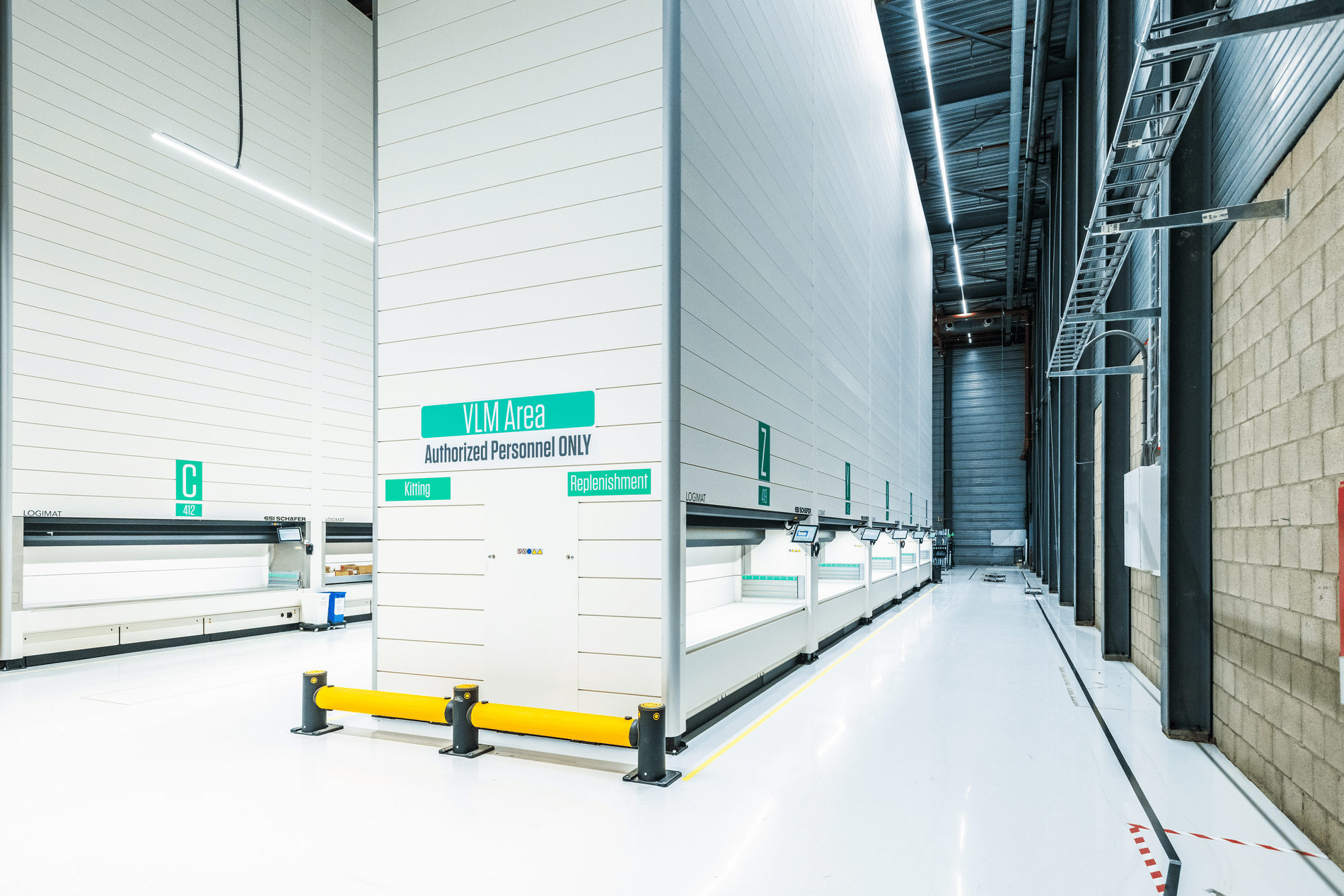
The old warehouse—a traditional shelving warehouse known internally as the ‘Supermarket’—could no longer handle the increased inventory volumes. CPP therefore decided to rebuild and automate the entire picking process from scratch. After a thorough evaluation, SSI SCHÄFER was selected as the intralogistics partner. Together, they built a new high-bay warehouse featuring twelve SSI LOGIMAT Vertical Lift Modules, fully integrated with SAP. “Twelve Vertical Lifts (VLM towers) filled with trays that are almost constantly in motion. That’s quite impressive,” says Michel Detische, Strategic Buyer at CPP.
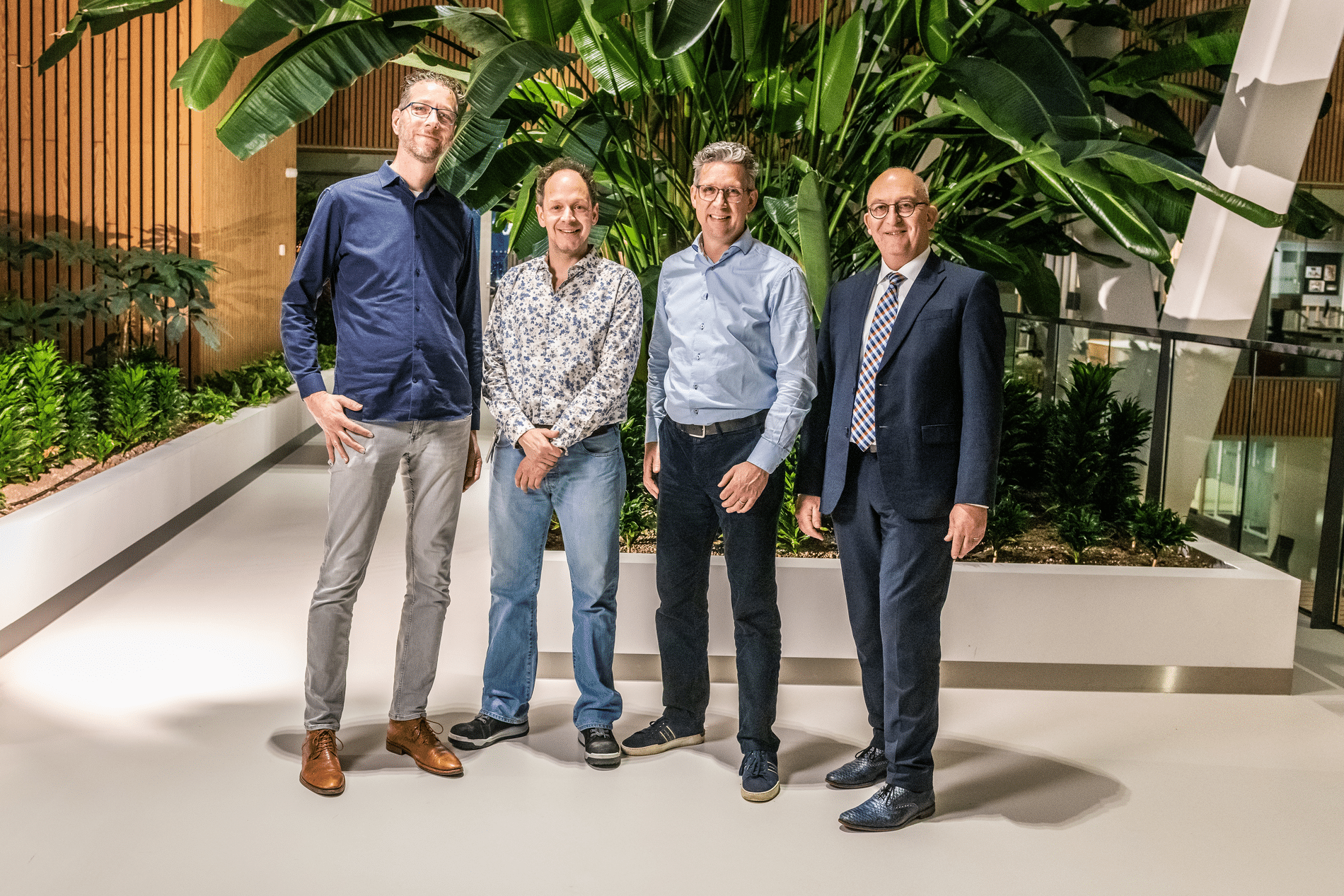
CPP deliberately started without a detailed plan. On the contrary: the engineers first wanted to test their ideas and be challenged. “We spoke with six or seven suppliers,” says Ruud van Heesch, Supply Chain Engineer at CPP. “But from the very first meeting with SSI SCHÄFER, we knew we were on the same page. Not just regarding the lift modules, but also in terms of SAP integration. They understood our assembly logic, and that gave us confidence.”
The preliminary discussions went far beyond price comparisons. Canon Production Printing wanted insight into the specific characteristics of the kitting process, the combination of front- and backside picking, ergonomics, service capacity in critical situations, and, above all, the extent to which a partner could contribute ideas regarding processes—both hardware and software.
The project team visited SSI SCHÄFER locations in the Netherlands and Germany to see installations in operation and visit customer sites. They even brought a full truckload of kitting carts to the experience center in Oosterhout (Gelderland) to test them with their own boxes and components. Does it work? Does it fit? Does the tilt function really add value?
The future operators were also in attendance. Ruud van Heesch: “They’ll have to work with it every day, so their feedback was essential.” In addition, CPP spoke with existing customers to assess service quality. That further strengthened confidence.
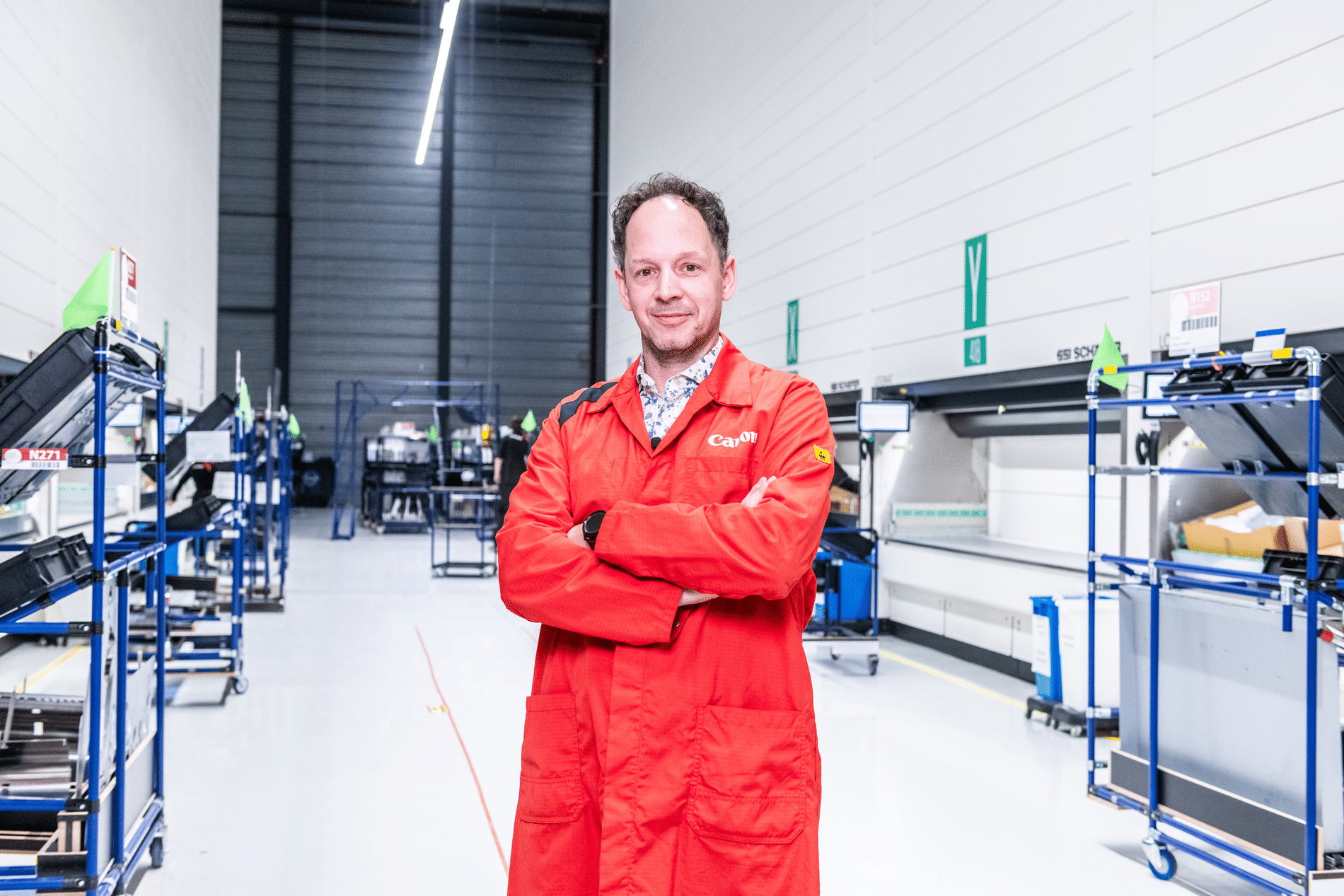
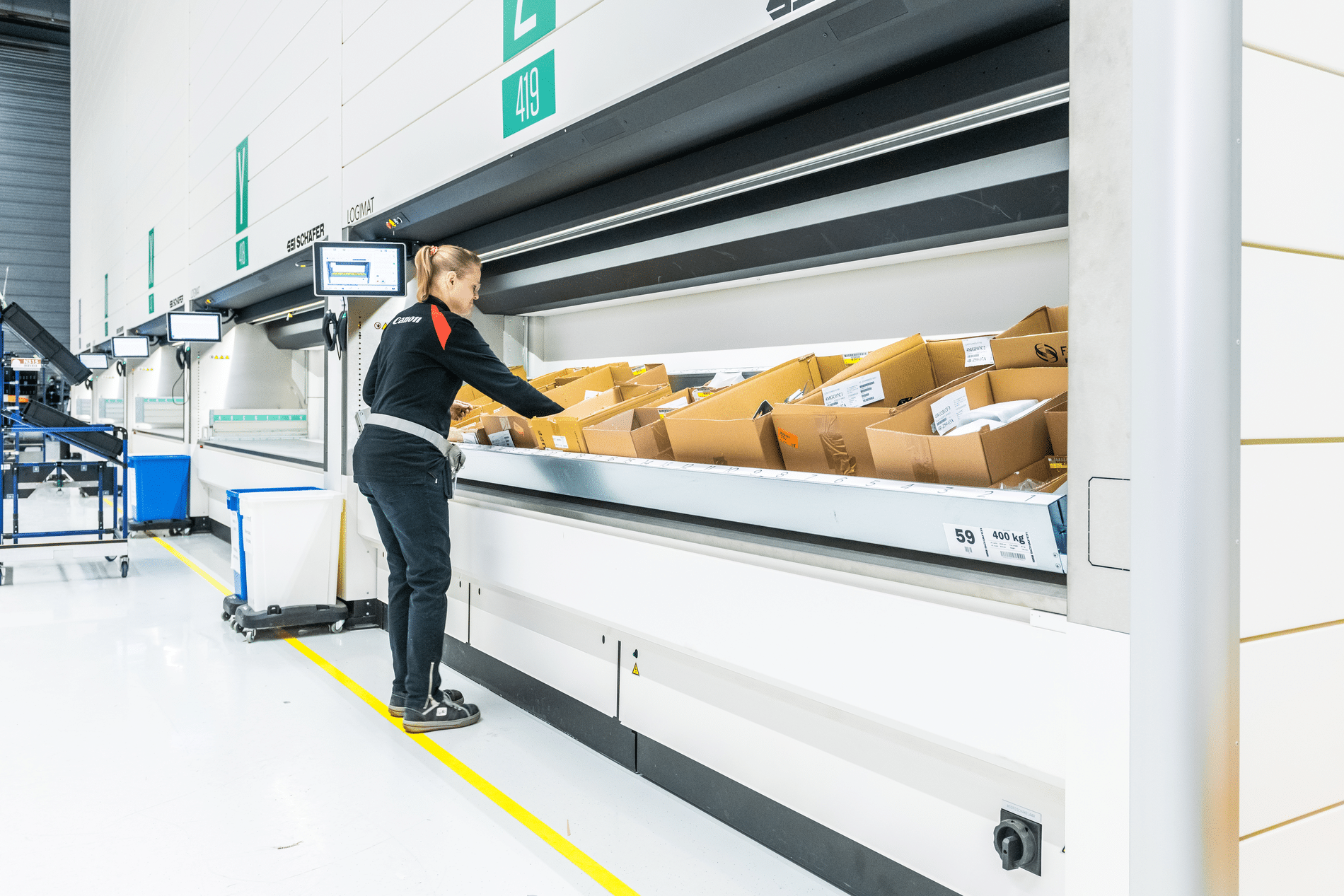
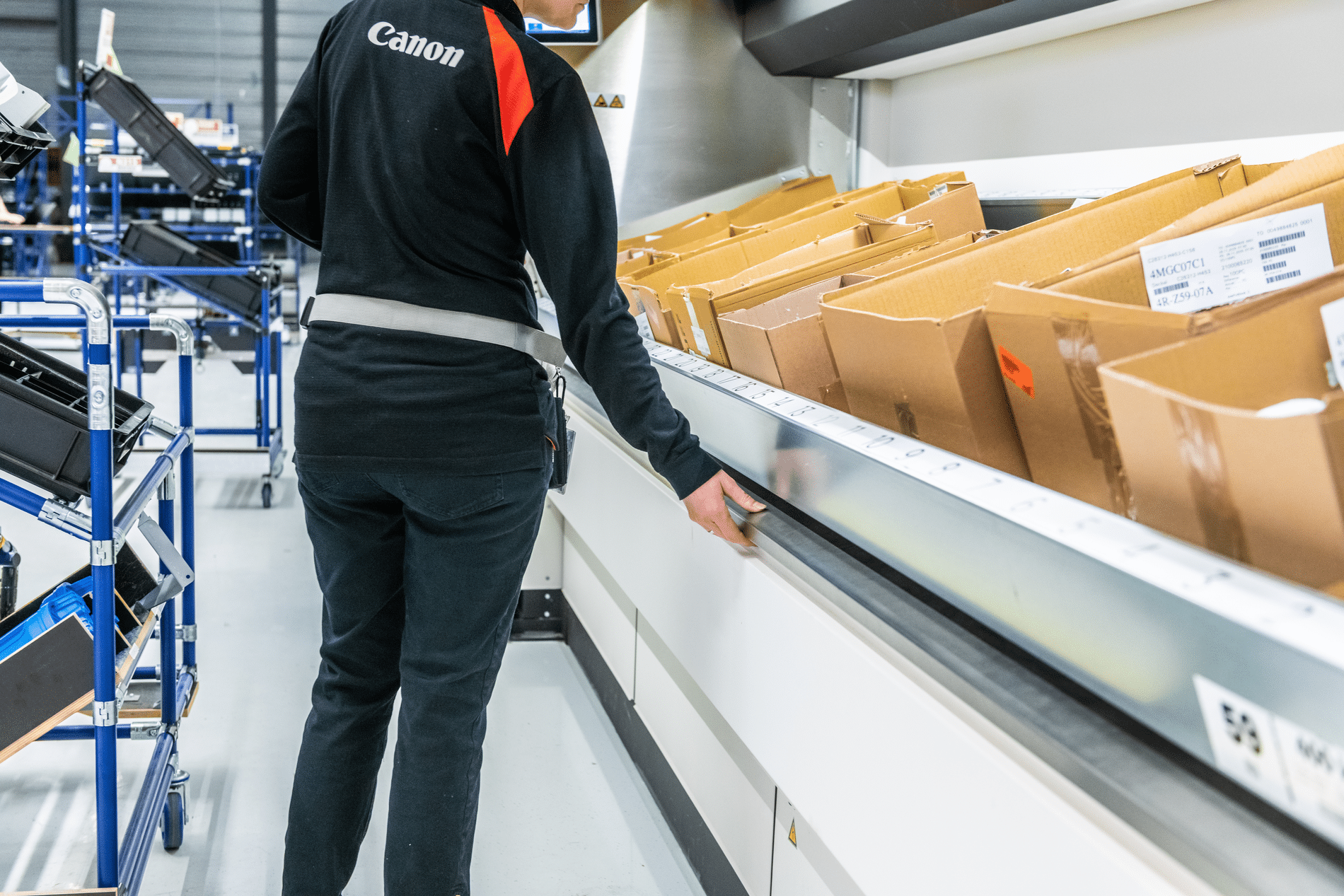
Based on all that input and feedback, and after an in-depth data analysis, SSI SCHÄFER developed a proposal centered on twelve SSI LOGIMAT lifts. Bas Salet outlines the scope of the installation: “The VLMs are 11.8 meters tall and have picking and replenishment openings on both the front and back. This allows trays to be replenished from the back while picking can continue uninterrupted at the front.” And that’s not all. “We helped devise a plan for how to organize the trays as efficiently as possible and equipped the lifts with various features to ensure smooth and safe picking operations. For example, each VLM has a LogiGate safety door and a LogiPointer—a pick-to-light laser that highlights the correct component in the tray. Thanks to the LogiTilt function, trays can be tilted so that employees can easily access the products. After all, ergonomics was a key priority. The unique touchscreen interface was the icing on the cake. It makes operating the lifts easy and intuitive.”
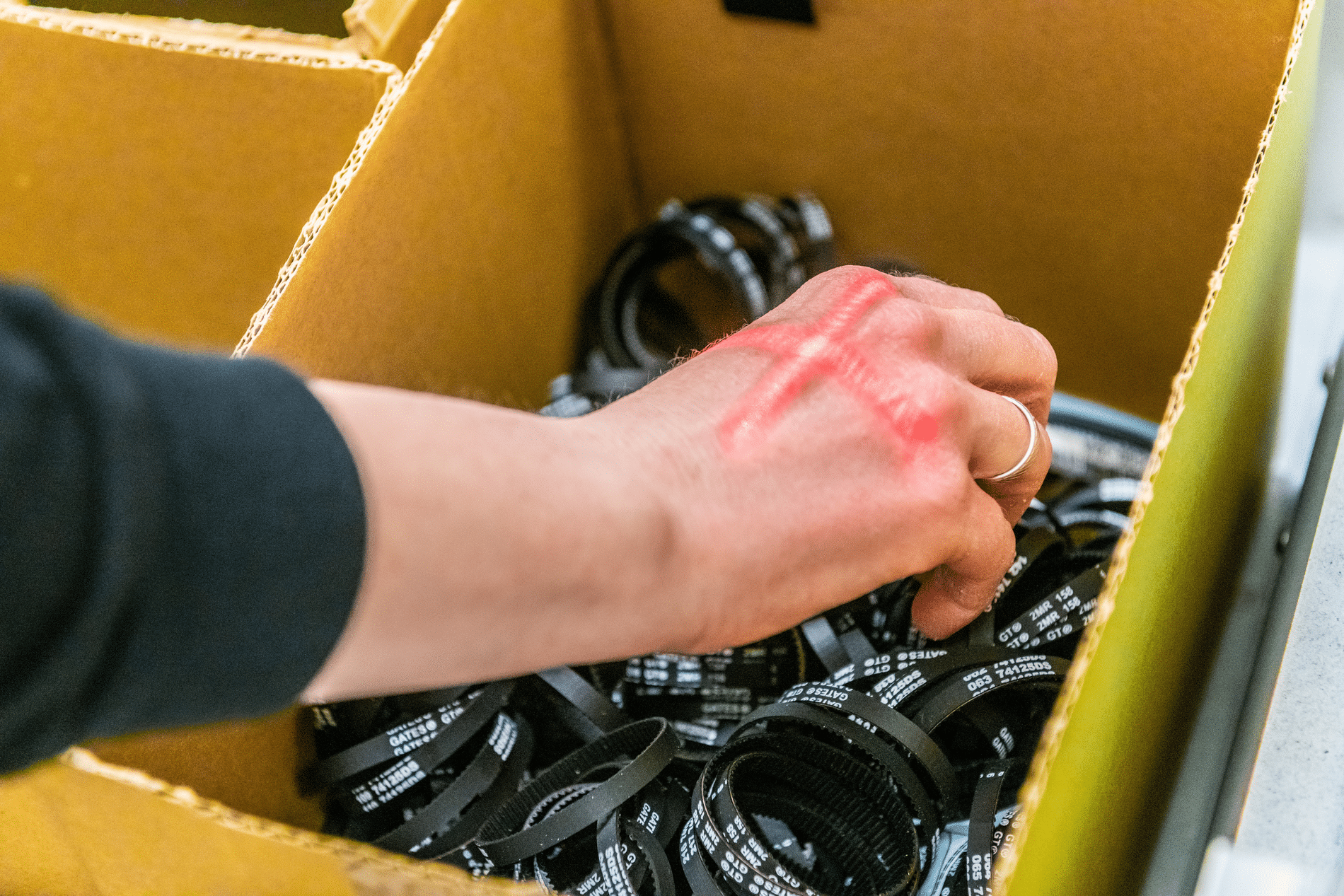
CPP took advantage of the expansion to modernize its entire SAP system. No standalone lift software, no siloed thinking, no data silos—just one system that manages and coordinates every aspect of the assembly process. “It was an opportunity,” says Michel Detische. “The Venlo site previously used a heavily customized SAP ECC platform,” explains Roger Vliegen. “With the help of SSI SCHÄFER and their IT partner, we gave it a major upgrade to a more standard SAP system that manages the supply chain end-to-end. Not just here in Venlo, by the way. The new version has already been integrated at our German site as well. The advantage? Everyone speaks the same language. The front end for users has been standardized. The robust interface converts SAP picking orders into elevator commands in real time. And, last but not least, the new system is scalable to future S/4HANA environments. That leap toward standardization is already paying off.”
The new layout doubled storage capacity and cut the floor space in half, from 2,000 m² to just 450 m². The warehouse is quieter, more organized, and has become a regular ‘must-see stop’ during our factory tours. In addition, thanks to this automation solution, productivity increased significantly: from 60–96 picks per hour to 117 in just one year, with an upward trend toward 154 picks. The layout positions the facility for sustained efficiency gains and future growth.
Thanks to the tilt function, laser pointer, and touchscreen, the work has become much more intuitive. “The long walks we used to have are a thing of the past. The elevators bring the parts to our people. We hear that it’s really pleasant to work this way,” says Ruud van Heesch.
The elevators feed directly into the assembly lines. Any interruption would be felt immediately. However, with on-site spare parts, remote support from SSI SCHÄFER, a trained first-line support team, and clear SLAs, CPP is prepared for anything. “We have a single point of contact at SSI SCHÄFER for both hardware and software. If anything happens, there’s always someone available,” says Michel Detische.
CPP views this project as the start of a long-term partnership. The foundation has been laid, and further optimizations are already underway. The plant in Poing, Germany, has since ordered a similar setup. The standardized SAP interface makes further rollout easy. “In addition to the global standardization of this solution, we are not yet using plastic bins from SSI SCHÄFER in the lift trays. Perhaps that is one of the next areas we can tackle together,” concludes Roger Vliegen.
As operations expanded, CPP faced three major challenges:
Neem dan rechtstreeks contact op met SSI SCHÄFER BV.
 Contact opnemen
SSI SCHAEFER | Warehouse Equipment, Intelligent IT Solutions and Customer Support & Service SSI SCHAEFER Group is a leading global solution provider in all areas of intralogistics. With innovative technologies and software, the company enables its customers to make their storage, order picking and transport processes more efficient and sustainable. SSI SCHAEFER offers small and [...]
Bekijk Bedrijfsprofiel