warehouselogistiek.eu
EN

The platform for internal & external logistics, supply chain and automation
Not all repetitive work has to be done by people
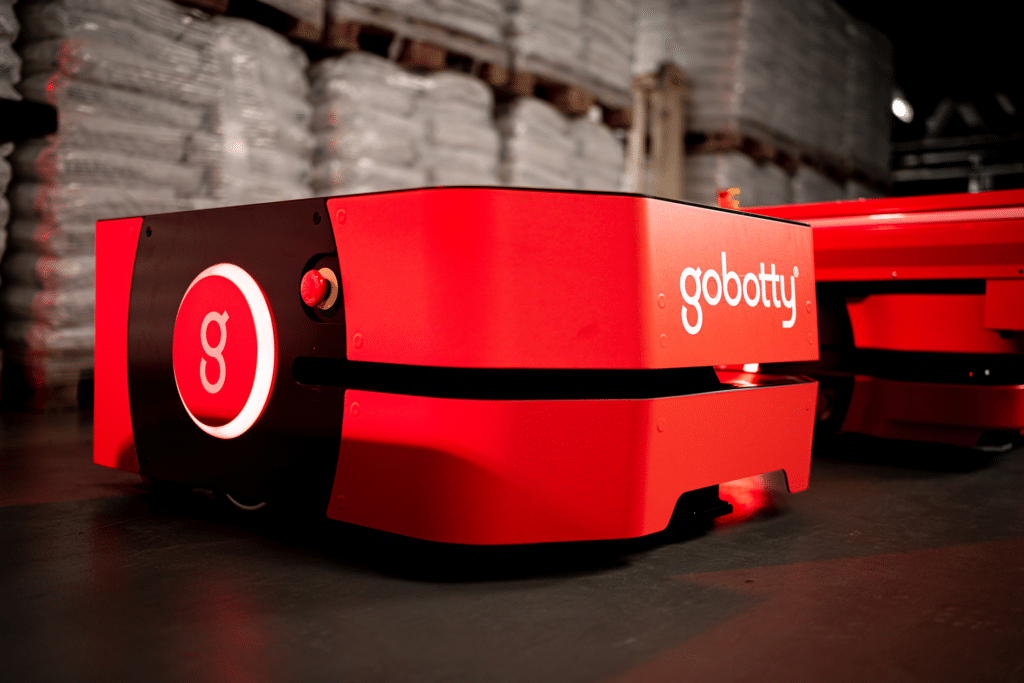
Labor shortages, rising costs, and the need for greater flexibility are forcing companies to take a critical look at their logistics processes. At the same time, workplace safety is higher on the agenda than ever. For many manufacturing companies and distribution centers, the solution is closer than they might think. With autonomous mobile robots (AMRs), Gobotty, based in Hendrik-Ido-Ambacht, helps organizations make their internal transportation safer and more efficient.
“Basically, we take over all repetitive tasks involving the transport of people,” says Arie Verhoeven, founder of Gobotty. “Whether it’s pallets, boxes, general cargo, or carts, our robots move them from A to B completely autonomously.”
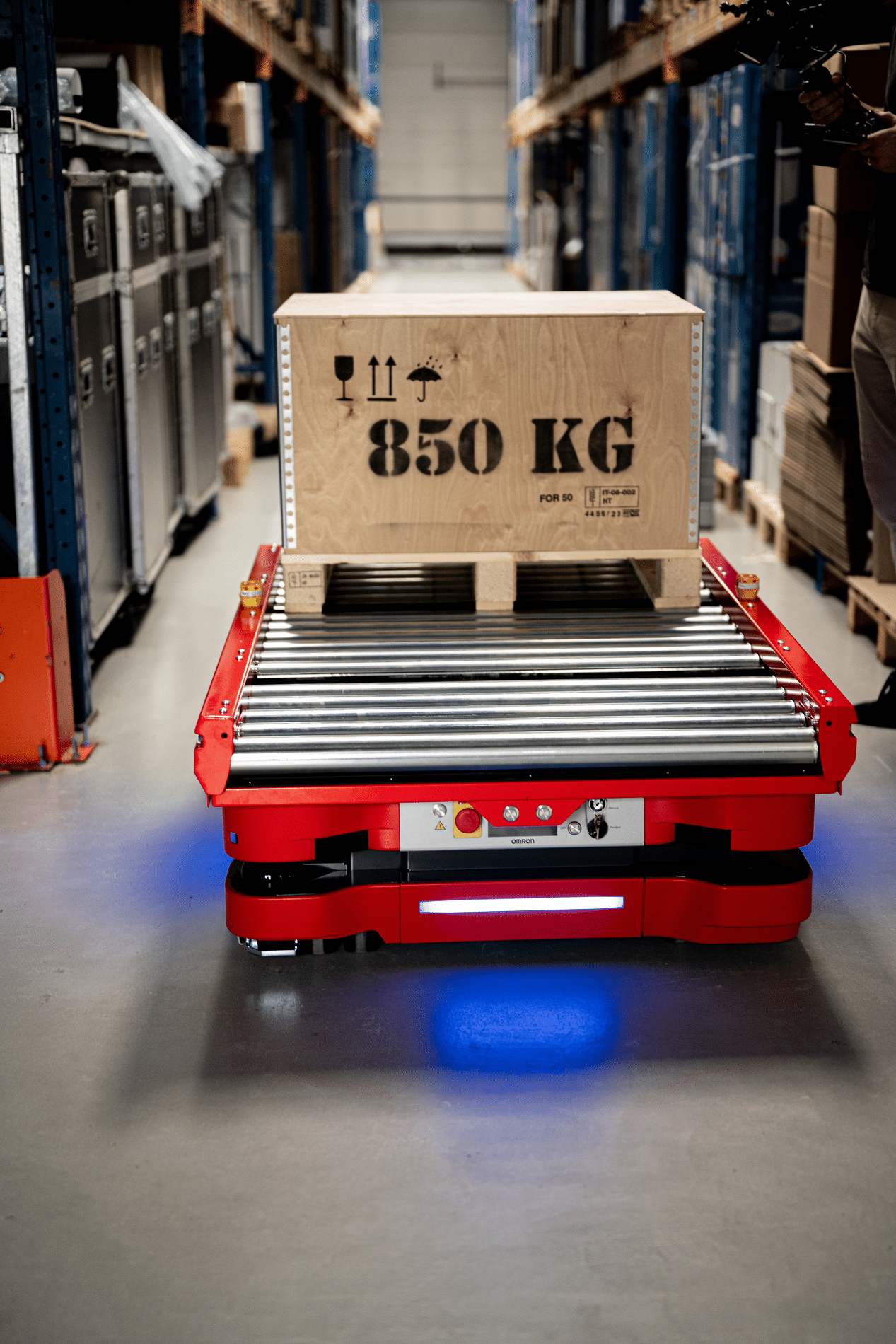
The technology behind the AMRs is based on more than 25 years of experience in control engineering. “The robots move autonomously through existing industrial environments without the need for markings, reflectors, or guide paths,” Verhoeven explains. “Using LiDAR sensors and smart software, they create a digital map of their surroundings and navigate safely among people, machines, and other vehicles.”
According to Verhoeven, collaboration between humans and robots is a key differentiator. “Our robots comply with current European safety guidelines and can operate safely in an environment where people are also working. If they detect an employee or an obstacle, they immediately adjust their speed or come to a complete stop if necessary. Ultimately, we want everyone to return home safely at the end of the workday.”
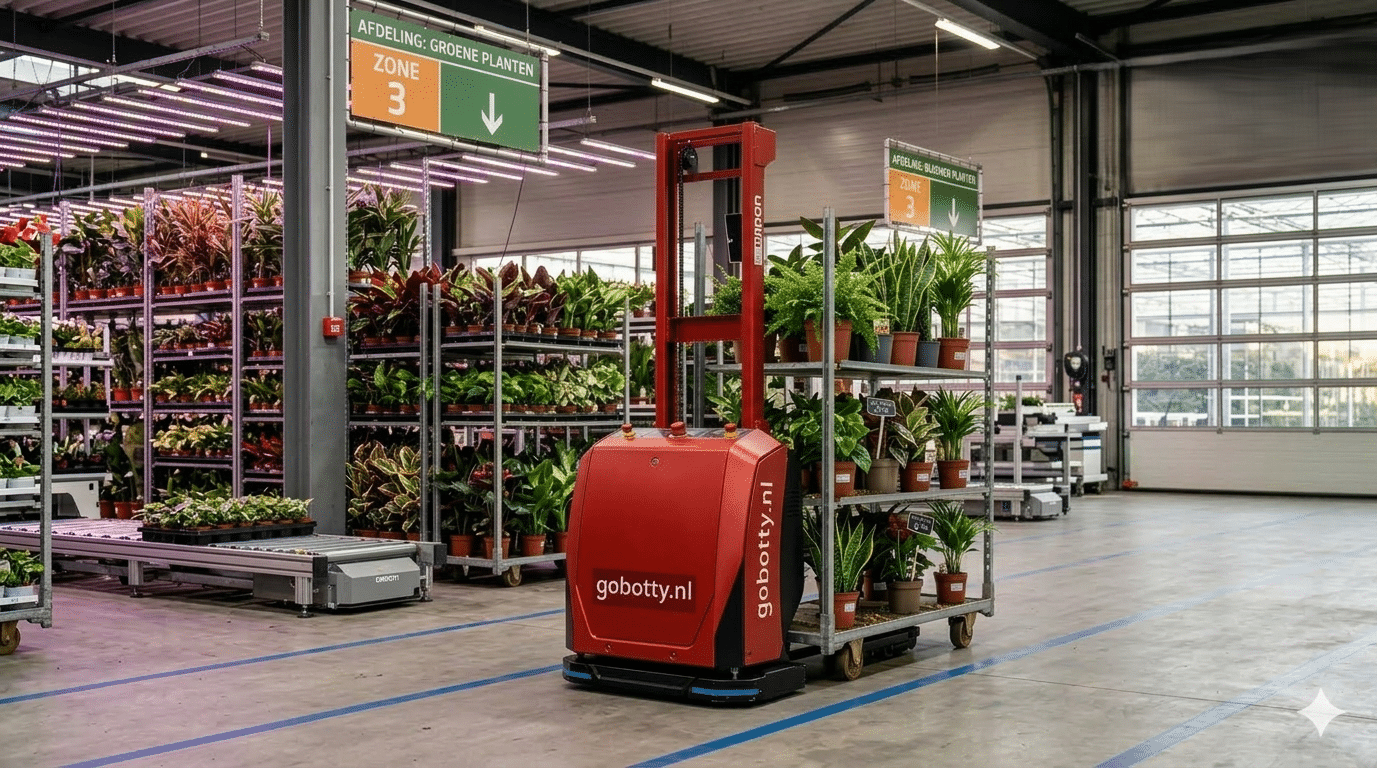
The applications are wide-ranging. In the manufacturing industry, the robots handle the supply and removal of materials at production lines and machines. In warehouses, they replace forklifts and electric pallet trucks for routine transport tasks. They’re also proving their value in greenhouse horticulture. There, our robots autonomously transport Deense and CC carts between different locations without the need for personnel,” says Verhoeven.
Another advantage is the flexibility of AMRs. “Fixed transport systems such as roller conveyors are often difficult to adapt,” Verhoeven rightly points out. ”Our AMRs, on the other hand, easily adapt to changing production processes. Companies want to produce with ever-greater flexibility. When a process changes, we often only need to make a software adjustment.”
In addition, the systems are equipped with artificial intelligence. The robots learn from their own movements and continuously optimize their routes. Multiple robots can also work together and determine among themselves which machine can complete a task the fastest.
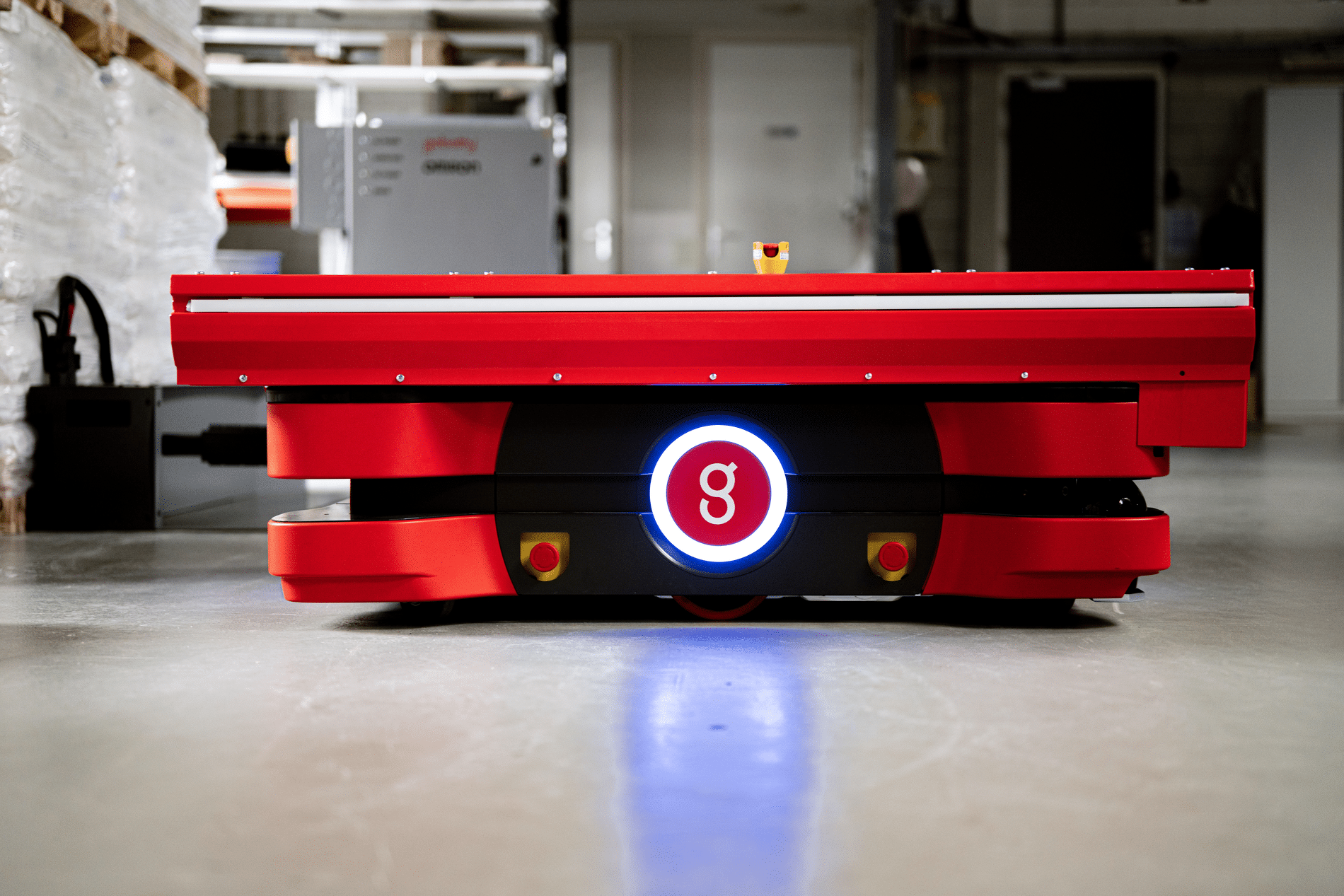
To keep the barrier to entry as low as possible for customers, Gobotty has deliberately opted for a rental model. “Customers pay a fixed monthly fee that covers everything: the robot, installation, maintenance, service, and any necessary infrastructure modifications. This eliminates the need for large upfront investments.”
“Many companies are curious, but find the move toward automation daunting,” Verhoeven notes. “That’s why we say: just give it a try. We’ll place a robot in the customer’s process for two weeks. If it works well, we’ll leave it there. If it doesn’t, we’ll take it back.”
With this accessible approach, Gobotty aims to introduce more and more companies to autonomous logistics in the coming years. The ambition is clear: wherever an electric tow tractor or forklift is currently in use, the distinctive red Gobotty robots will soon be doing the work.
Neem dan rechtstreeks contact op met Gobotty B.V..
 Contact opnemen
At Gobotty, we believe that robotization is not just a product. It is an innovative service, moving companies forward by providing them with customized robotization solutions on a subscription basis. Robotization is invaluable, has many benefits to offer and is not just for the big players. To [...]
Bekijk Bedrijfsprofiel