warehouselogistiek.eu
EN

The platform for internal & external logistics, supply chain and automation
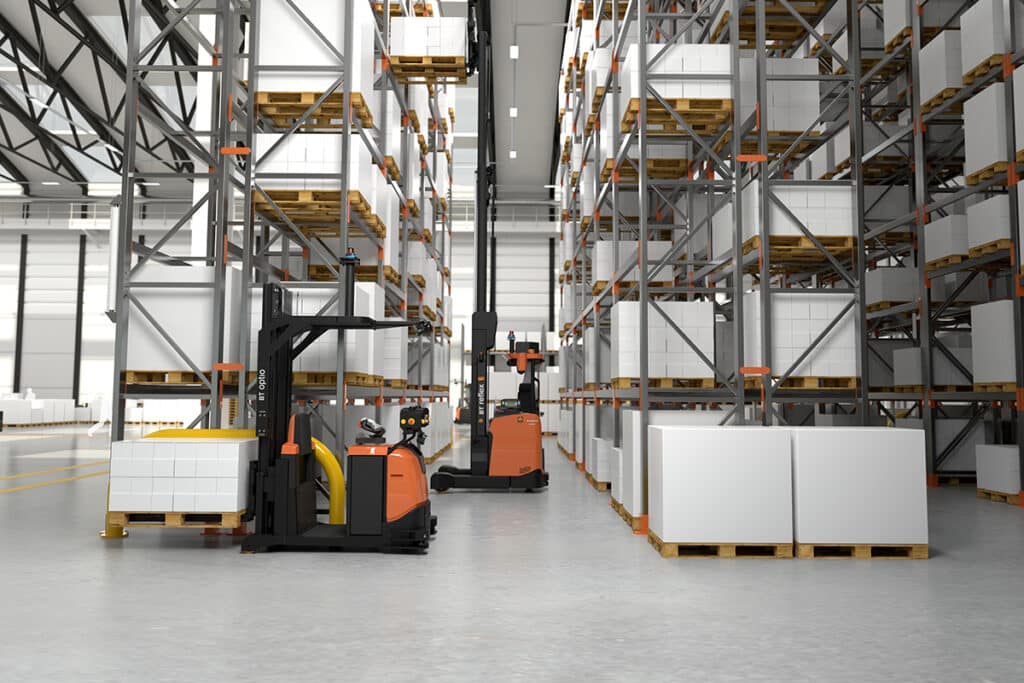
Automating warehouses and manufacturing environments with common sense
Automation in warehouses has long since ceased to be a futuristic idea, but the way companies deal with it varies enormously. For Thomas Vercammen, Logistics Automation & Innovation Manager at Toyota Material Handling Belgium, automation is not a goal in itself. It's about working to the customer's specifications, with attention to people, process and future-proofing. “Technology is important,” he says, “but the real progress is in the combination of innovation, ergonomics and a realistic view of warehousing.”
Toyota Material Handling is known for its extensive product offerings of forklifts, warehouse trucks, AGVs and robotic solutions. But according to Vercammen, it goes far beyond hardware alone. “We have been operating for forty years with a very strong service model,” he explains. “From installment plan and service contracts to complete automation projects. We take that experience with us today in every step toward robotization.”
Toyota Material Handling Belgium serves a broad customer base: almost 85 percent of all Belgian VAT numbers can use our solutions in one way or another. “Our customers operate in every conceivable sector,” says Vercammen. “Any organization that needs to physically move something from point A to B is relevant.”
Although technology is evolving at a rapid pace, Toyota remains cautious and pragmatic in its approach. “We are being sparing with automation,” Vercammen emphasizes. “Automation should make the operation of a warehouse better, safer and more efficient; not more complex or fragile. That's why I advocate step-by-step automation.”
That phased approach almost always starts with a proof of concept. “We first test in the customer's reality. Is the flow correct? Does the data match reality? Can we achieve the promised performance? Only if that physical test at our or the customer's site or via simulation using our digital twin is convincing, do we move to the industrial automation phase.”
Toyota Material Handling is known for its strong commitment during automation projects. “We sign solid contracts,” says Vercammen. We ensure that the results promised in the “solution description” are always achieved and this according to the latest legal standards; ‘no cure, no pay’.”
Financially, the service provider also takes a lot out of your hands. “We finance a lot of automation projects ourselves. We evaluate a customer's creditworthiness ourselves. In a sector with low margins, this is an important added value. And it obliges us to look very critically ourselves at the quality of our logistics solutions.”
Although automation is often linked to robotization, Vercammen sees humans as the starting point. “It is never intended to make humans obsolete,” he says. “It serves to improve ergonomics, avoid errors and deploy employees to tasks with more added value.”
He envisions a “hybrid” and “step by step” future: a mix of manual vehicles, semi-automated tools such as RTLS systems and 1-dimensional shuttles, for example, and fully autonomous robots. “The trick is to strike that balance precisely between what is best kept manually because of, for example, peak management and excessive process complexity and automating processes that justify an acceptable ROI and CAPEX.”
“We also like to work with clients who bring their own consultants or external software and hardware partners, as well as trusted parties within our ecosystem. We then make sure everything is evaluated together for feasibility, aligned and neatly integrated.”
For many companies, automation starts from financial motives, but Vercammen nuances that. “A strong return on investment is valuable, but not a guarantee of a profitable system at ten years. Your business model can change in the meantime. That's why automation must be flexible, scalable and future-proof.”
With that comes another crucial aspect: cybersecurity. “An automated warehouse works with big data, connectivity and software integrations. Security - physical and digital - is therefore an absolute priority for us.”
Automation rarely happens in an empty warehouse. “We usually implement while the customer is doing their day-to-day operations,” Vercammen says. “That's like living in a house that you're remodeling at the same time. That requires razor-sharp planning, lots of consultation and a zero-fail mentality.”
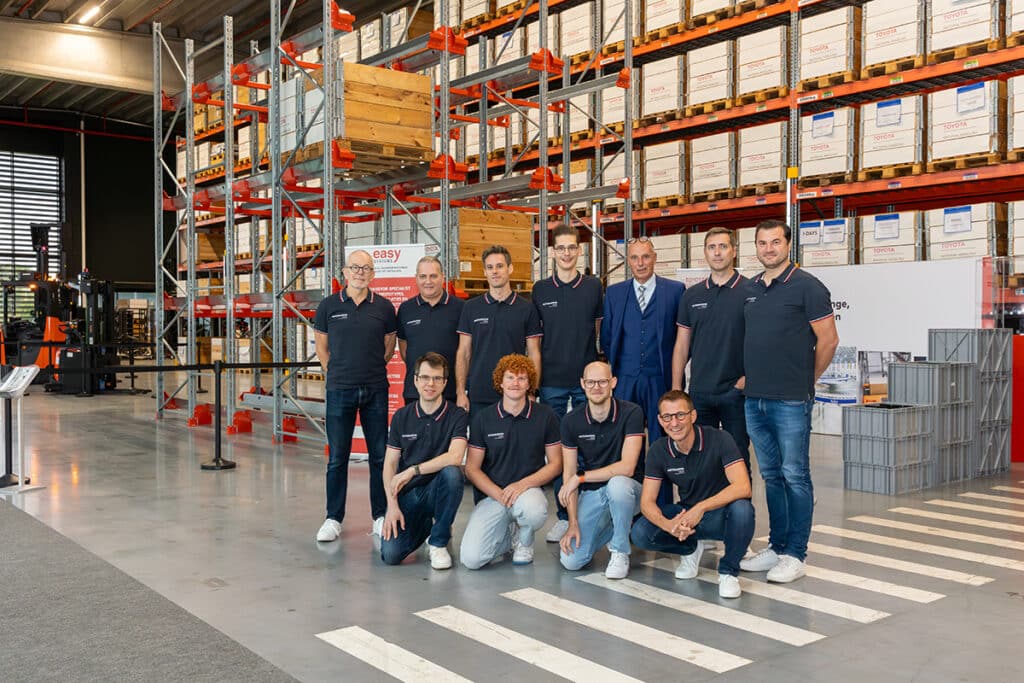
“However, it remains human work. Where people work, sometimes mistakes are made. But mistakes are there to be learned and solved. Our implementation team is very strong; they have a lot of experience and are well matched. It is actually a great group of friends who want to deliver professional work.”