warehouselogistiek.eu
EN

The platform for internal & external logistics, supply chain and automation
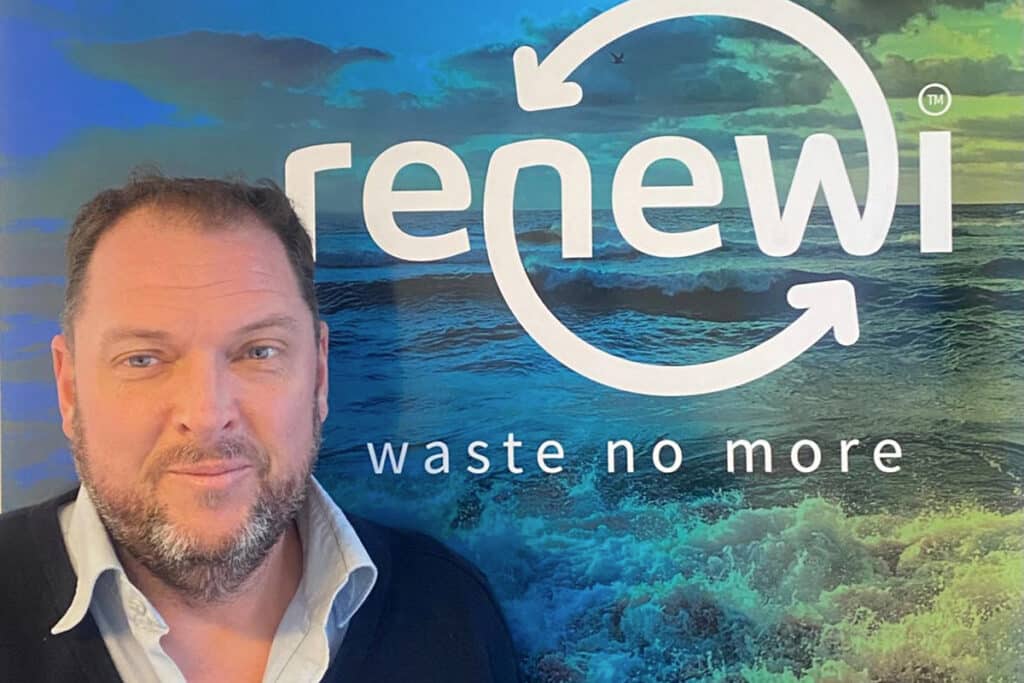
Digital media, confidential archives, sensitive products (such as certain textiles or medical materials) ... confidential data comes in many forms. They have one thing in common: if not collected and destroyed properly, the consequences can be dire, from data breaches and reputational damage to legal penalties. More and more companies are therefore rethinking their approach to confidential waste. Renewi offers specialized solutions that combine security, compliance and circularity. Steven Neels explains what that process looks like in concrete terms.
Flemish companies process large amounts of sensitive information every day. Despite progressive digitization, confidential data still remarkably often circulate physically. Digital carriers play an important role in this, but personal data, contracts and medical records also remain en masse on paper. On top of that, there are numerous products - such as textiles and medical materials - that must be securely destroyed for a variety of reasons.
And this confidential data carries an often underestimated risk. “Data security is no longer an afterthought,” says Steven Neels, site manager at Renewi in Lokeren. “A small mistake can have major consequences.”
That reality varies greatly by sector. “Healthcare facilities, government and legal services continue to rely heavily on paper,” says Neels. “In addition, archives and older data carriers remain that must be securely destroyed.” For this very reason, he says, it is crucial that companies regularly reevaluate their processes: “Confidential waste does not disappear by itself. What is stored correctly today may be a risk tomorrow.”
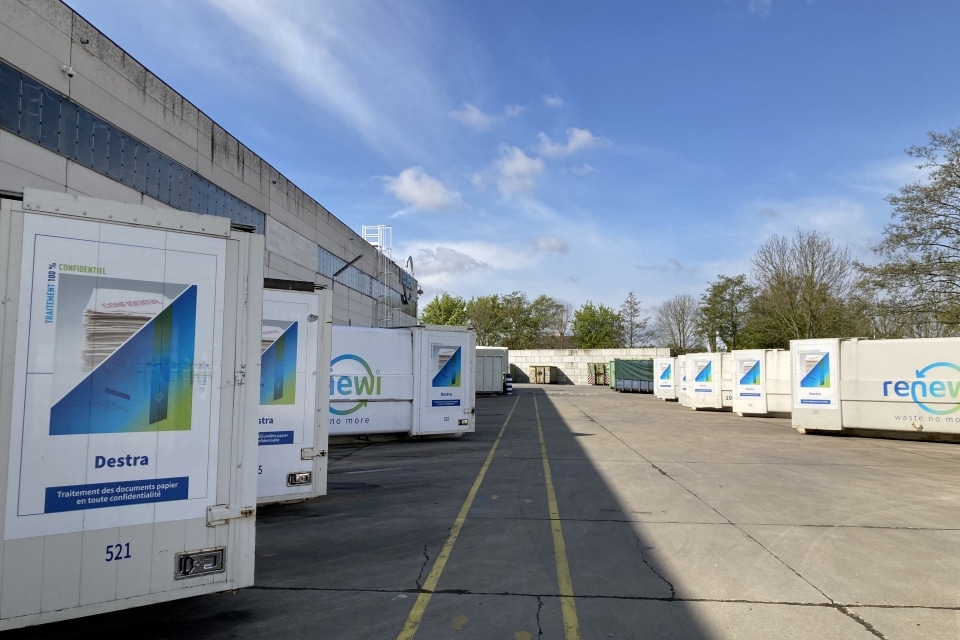
What all these flows have in common is the need for absolute certainty, not only in the destruction itself, but throughout the entire process. At Renewi, this starts as early as collection. “Customers receive sealed containers, like a kind of ‘mailbox,’ in which documents and products are safely deposited. These containers are collected closed and also remain closed until they are processed at our facility,” Steven Neels explains. “We manage the keys. This is essential to ensure customer confidence.”
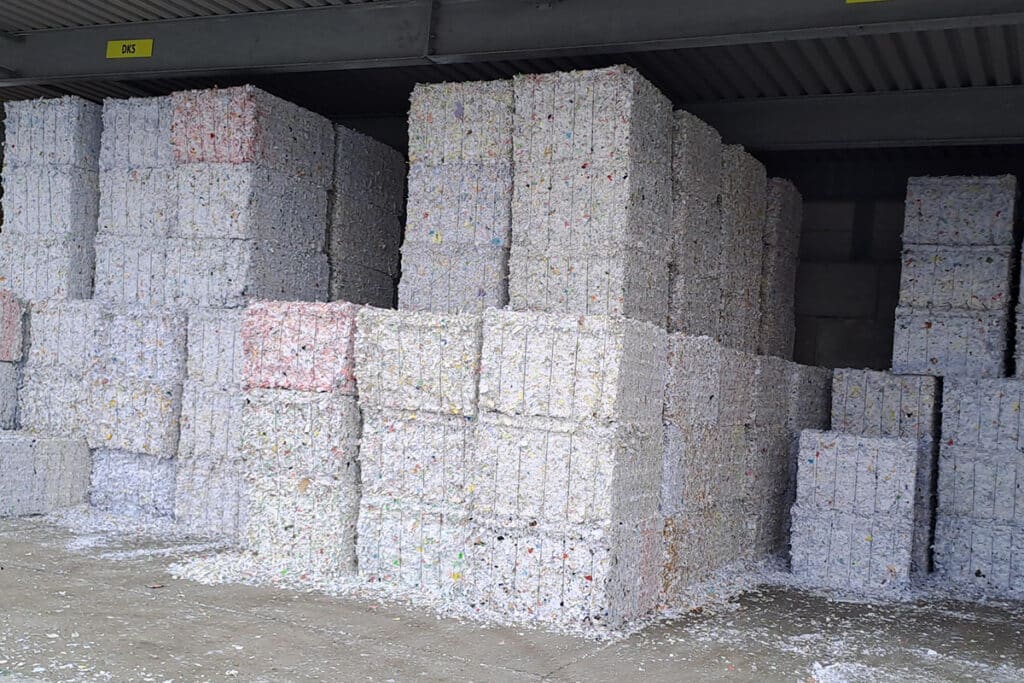
Once they arrive at the Renewi facility in Lokeren, the containers are not immediately destroyed. They first remain in closed storage for a short time. “If a customer suddenly realizes there is a document in there that he still needs, we can recover it during that period,” Neels clarifies. Only then does the destruction process start, which takes place in a closed hall. First the non-paper materials are removed, after which everything is shredded. Other confidential goods are processed correctly depending on their nature.
The processing of confidential waste takes place in Lokeren in a strictly defined environment. This plant processes confidential streams from all over Flanders with a specialized team of about a dozen employees, a separate core of which works exclusively with confidential material. “Access to that particular area is highly controlled,” the site manager points out. “Employees are screened and visitors always sign a statement. Traceability is not a formality here, but a basic requirement.”
Customers also receive a monthly destruction certificate, which includes dates, volumes and confirmation that everything went according to the rules. “That certificate is important. It offers companies not only peace of mind, but also tangible proof toward audits or inspections.”
What sets Renewi apart is the combination of data security and circularity. After destruction, the paper or product is recycled and reused as a raw material. “Safety and sustainability are not mutually exclusive,” says Steven Neels. “On the contrary. What can be recycled is also effectively reused. Even for non-paper materials, maximum efforts are made to recover.”
That approach requires investment, but Renewi says it is necessary. “We notice that companies are becoming more conscious of their responsibility, not only to their customers, but also to society.”
Companies often don't lack good will, but they do lack insight into exactly what happens to confidential waste. “We get regular visits from customers who want to see how the process works. Then you notice that awareness grows. Many companies do not realize how big the impact can be of a thoughtless approach.”
That awareness will only become more important, especially now that data security is higher and higher on the agenda. Steven Neels concludes, “Confidential destruction is not a cost, but an investment in protection, in trust and in the future of your organization.”