warehouselogistiek.eu
EN

The platform for internal & external logistics, supply chain and automation
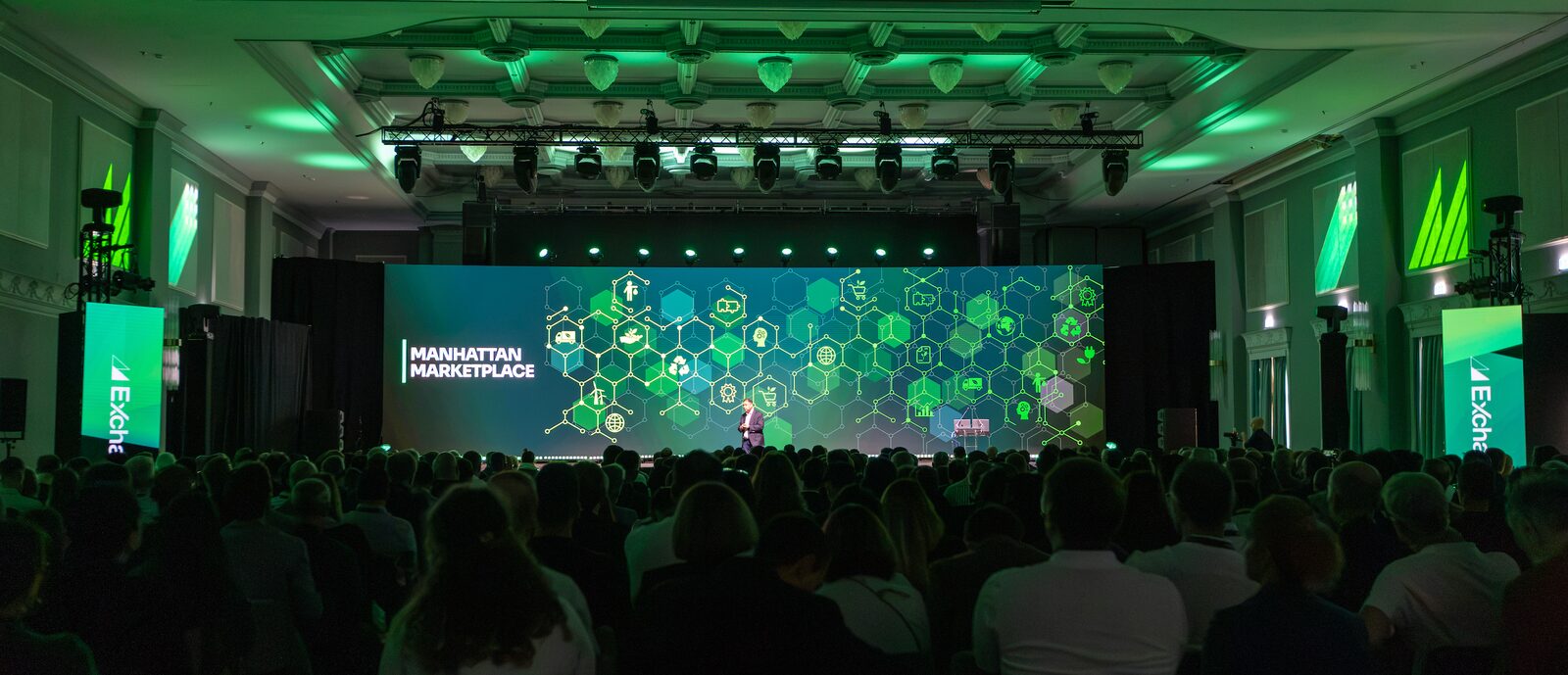
AI was a major theme at Manhattan Exchange 2026 in Milan. But behind all the agentic AI, natural language, and autonomous decision-making lay a more interesting message. Supply chain software shouldn’t bombard people with even more information; rather, it should reduce complexity for them. That means faster implementation, breaking down silos between systems, and increasingly allowing software to act on its own. Case studies from companies such as L’Oréal, Nespresso, and Bauhaus show that this shift has already begun. At the same time, they make it clear that technology is only part of the story.
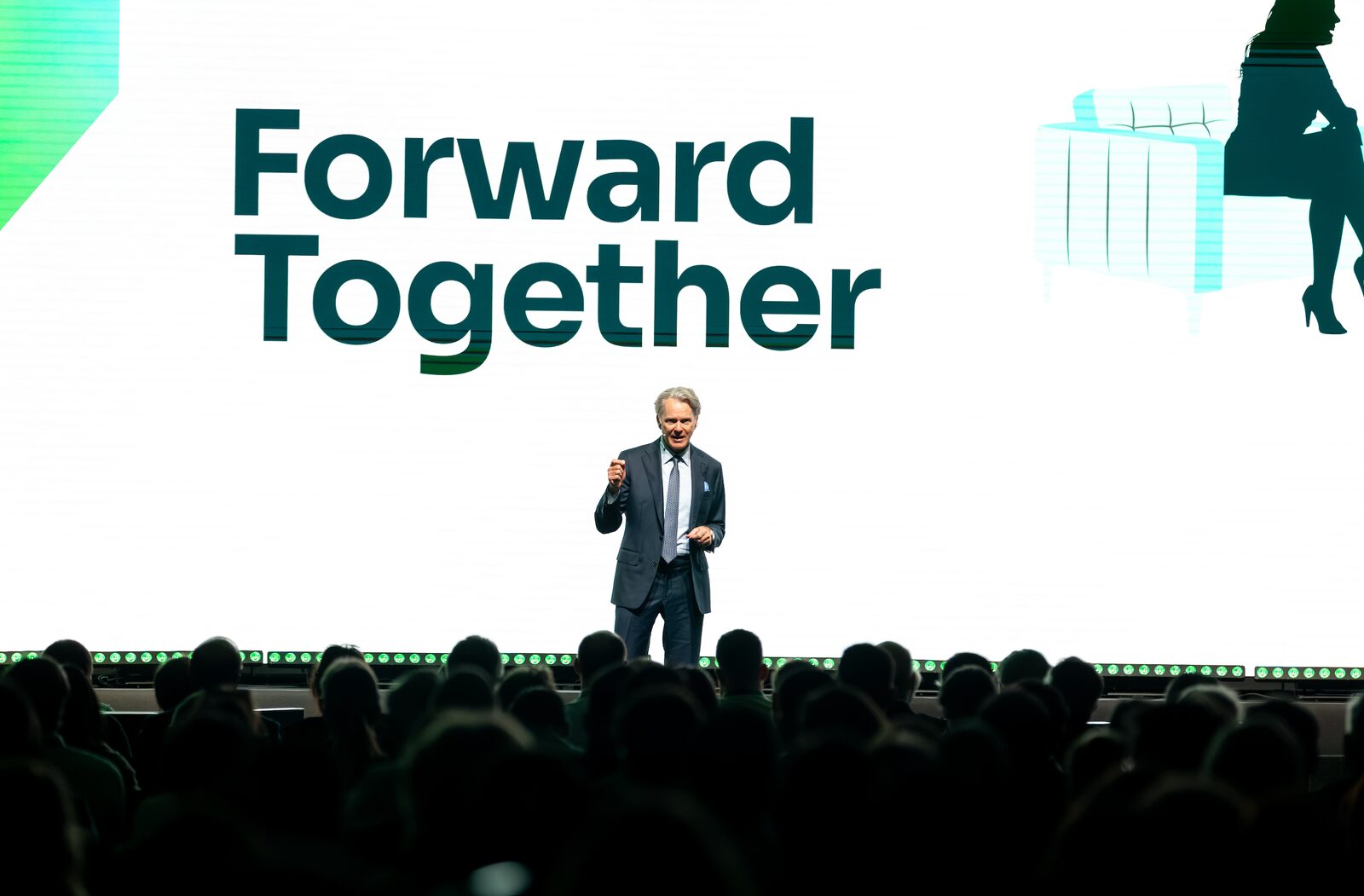
A cockpit was perhaps the best metaphor for Manhattan Exchange. In his opening keynote, CEO Eric Clark referred to the evolution of aviation. Not because flying has become easier—quite the opposite. Airspace became more congested, regulations more complex, and requirements more stringent. But the systems on the aircraft took on more and more of the complexity that would otherwise have fallen to the crew.
According to Manhattan, the same thing now needs to happen in the supply chain. All too often today, planners, warehouse workers, and store teams are presented with yet another dashboard, alert, or application that they then have to figure out on their own. Clark summed it up succinctly: “Complexity in the market is an opportunity. Complexity in software is a burden.”
That quest for simplicity translates first and foremost into speed. Manhattan says it has reduced the standard implementation time for its warehouse solution by up to 50%. AI agents help with this by, among other things, setting up configurations in natural language, configuring extensions more quickly, and generating labels and reports.
For order and warehouse management, the company cites go-lives starting at 100 days. In transportation, Manhattan states that individual inbound or outbound functionalities can now be rolled out in fourteen weeks—approximately 40% faster than a year ago. In certain cases, the migration of older Manhattan systems to the new platform should also be possible within 100 days.
At the same time, Manhattan is working to make its technology more accessible to organizations that aren’t among the very largest logistics players. ActiveWarehouse, ActiveTransportation, ActiveStore, and ActiveOrder are now available in three editions: Essentials, Enterprise, and Enterprise Premier. Each runs on the same platform. According to the company, this means that growing organizations do not need to reimplement the system but can simply activate additional functionality.
The second shift is more fundamental. AI must not only analyze or advise, but ultimately also take action.
Manhattan has explicitly chosen to use AI that is embedded within its existing platform. Agents are only allowed to use the APIs for which they have been granted permission. For example, an agent can be granted access to three specific APIs out of a much larger set, without gaining direct access to the underlying database. External interactions via MCP also first pass through that controlled agent layer. In this way, Manhattan is attempting to answer one of the biggest questions surrounding autonomous AI: how do you prevent an agent from performing actions that fall outside its mandate?
However, full autonomy is not (yet) the starting point. Clark emphasized that human experience remains essential. The best superuser can sometimes intuitively recognize which customer deserves priority at that moment, which restriction is negotiable, or which rule was originally written for a different reality. “That’s not data—that’s instinct,” Clark stated.

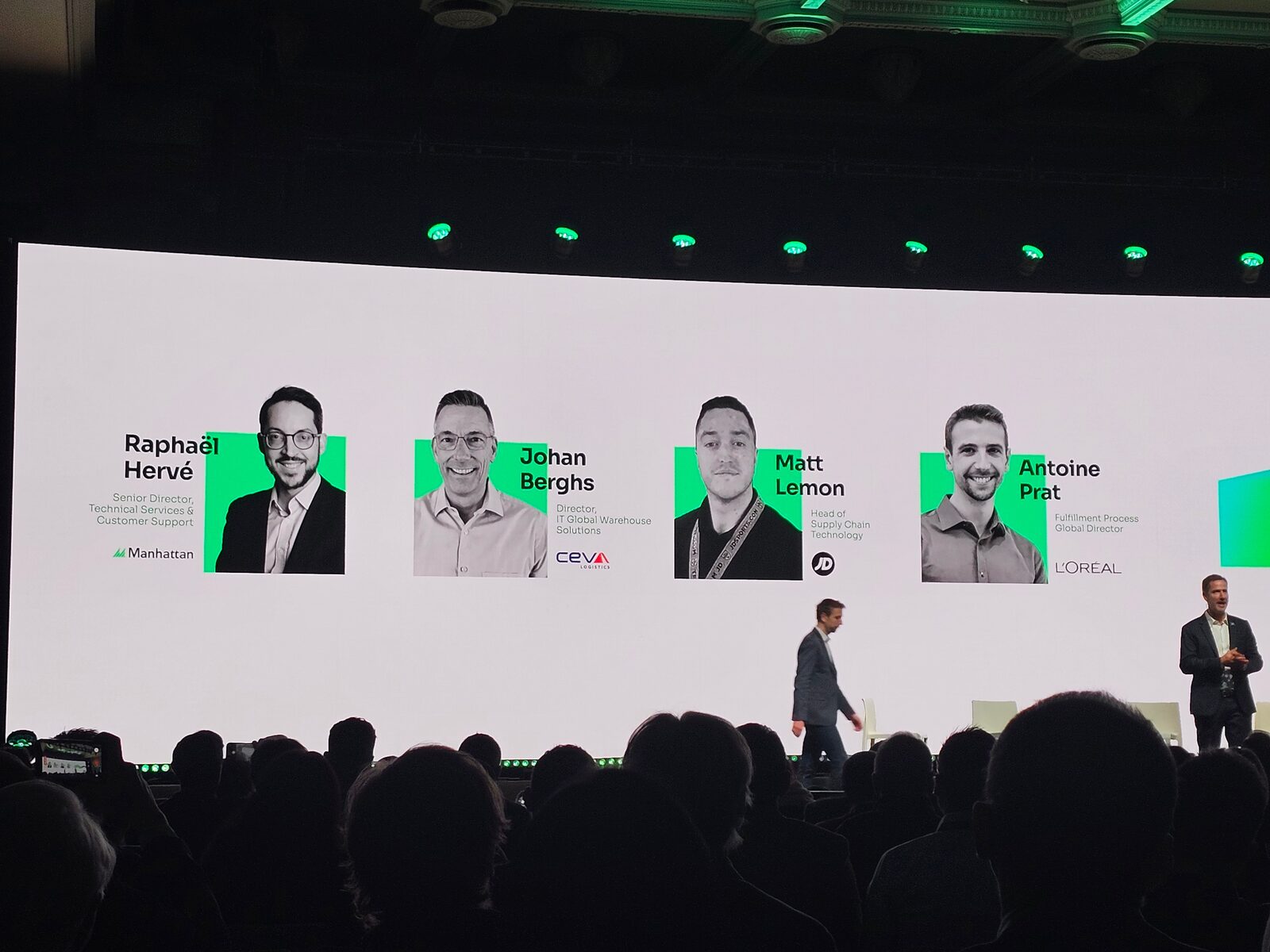
The most interesting reality check came from L’Oréal. The company initially experimented extensively with AI agents but quickly discovered that exploring technology is not the same as creating operational value. The focus therefore shifted to specific problems in the warehouse: wave readiness, replenishment, and inventory decisions. For example, one agent can predict in advance where a wave is at risk of failing, while another analyzes the cause of an existing problem and proposes a next step.
The figures from the pilot bring the story to life. At one site, a pre-wave agent yielded 14% in additional picking productivity and a calculated time savings of 352 hours per year. A replenishment monitor, in turn, reduced the time between waving and loading by approximately 8%, amounting to 440 hours per year. For cycle counting, the results varied widely: on average, decision-making delays decreased by 13%, while at the top-performing site, a reduction of up to 70% was measured. It is precisely these differences that are interesting. The same technology did not yield the same results everywhere.
“Global access does not guarantee global adoption,” was one of the lessons learned from the project. Simply providing access to an agent proved insufficient. It wasn’t until L’Oréal clearly defined who owned the process, which operational employees were required to use it, and which KPIs would be tracked that adoption truly began to grow. The conclusion was therefore strikingly down-to-earth: don’t start by asking how many agents you can install. Start with the problem you want to solve for employees. Define a baseline, then measure continuously, and provide support close to the operations.
You could hear that same nuance in Frank Soudan’s remarks; he recently took over responsibility for Manhattan in the Benelux, Germany, and Scandinavia, among other regions. According to him, every new commercial opportunity Manhattan is currently discussing in Germany includes an AI component. So the demand is definitely coming from the market.
But asking questions about AI and letting the technology make decisions on its own are two different things. “Where do we draw the line?” Soudan said, summarizing the current debate. Agents can detect shortcomings and suggest improvements, but companies are still hesitant to completely relinquish human control.
For the Benelux region, there are also very concrete logistical challenges at play. In the Netherlands, available space is becoming scarcer, forcing companies to get more out of existing buildings. In Belgium, labor costs are a top priority. As a result, automation, robotization, and AI all play a role in the same equation: getting more work done with fewer resources and allowing people to focus increasingly on exceptions rather than repetitive decisions.
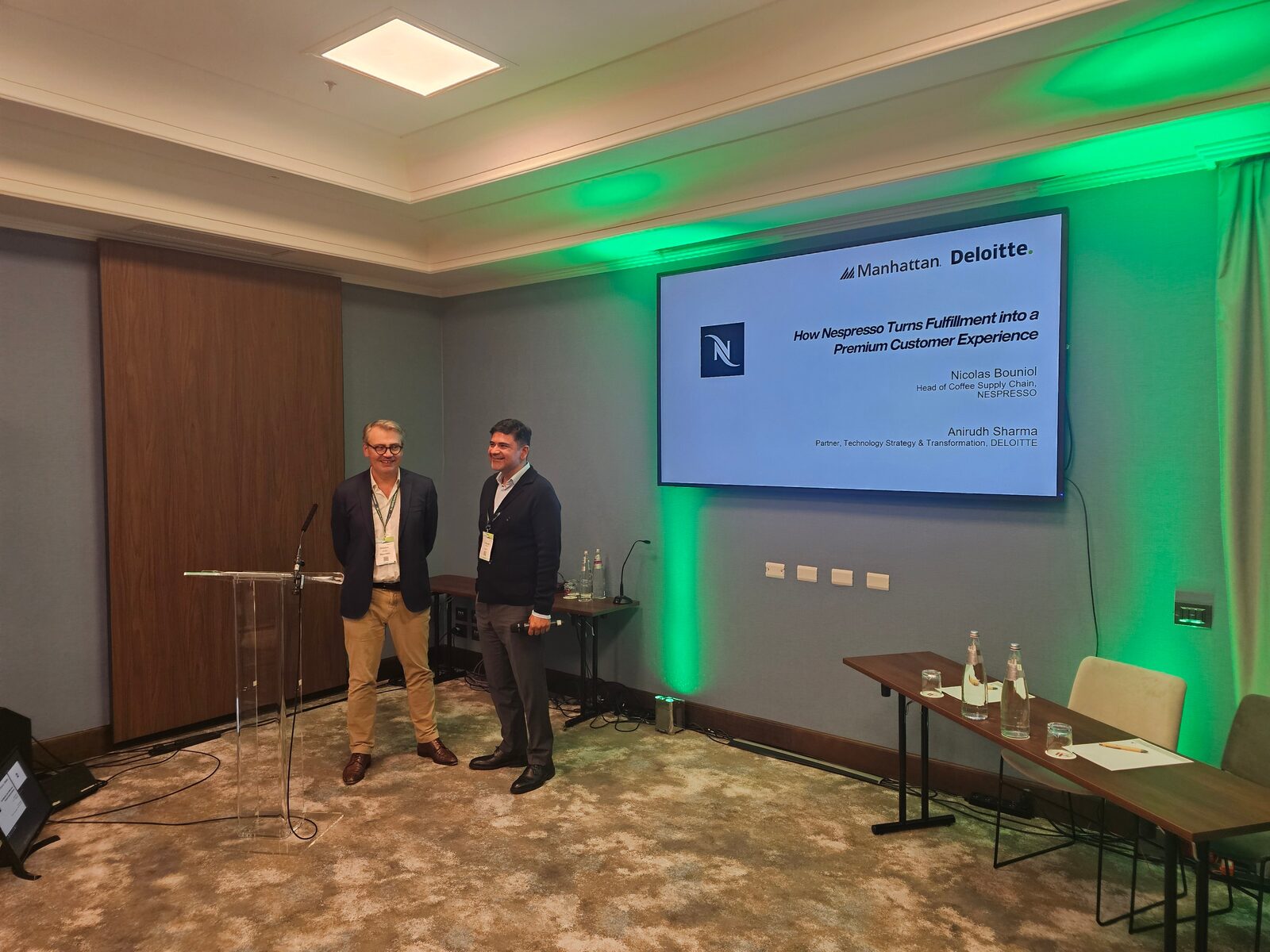
The fact that technology and customer experience are becoming increasingly difficult to separate was evident at Nespresso. The coffee specialist has been working with Manhattan for warehouse management for twenty years and is now continuing to build out a broader order management transformation that will ultimately cover 42 countries.
That’s no simple environment. B2C, B2B, marketplace, replenishment, and transfer orders all converge in a network of production sites, distribution centers, regional warehouses, and boutiques. The goal is to have a single, centralized view of orders and inventory. One statement stood out: fulfilling a customer promise 100 percent does not necessarily mean stocking more inventory. It’s about making better use of the inventory that’s available somewhere in the network.
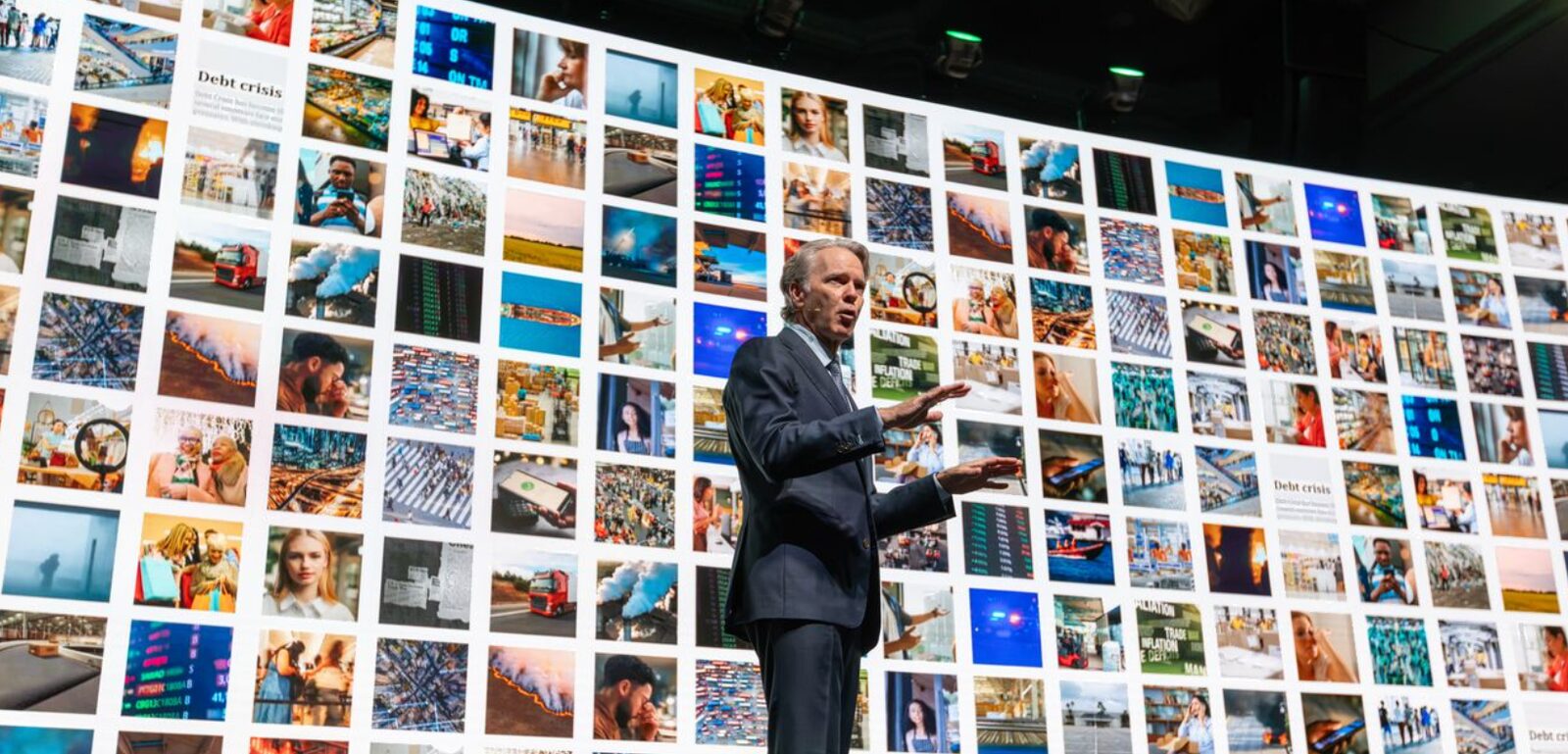
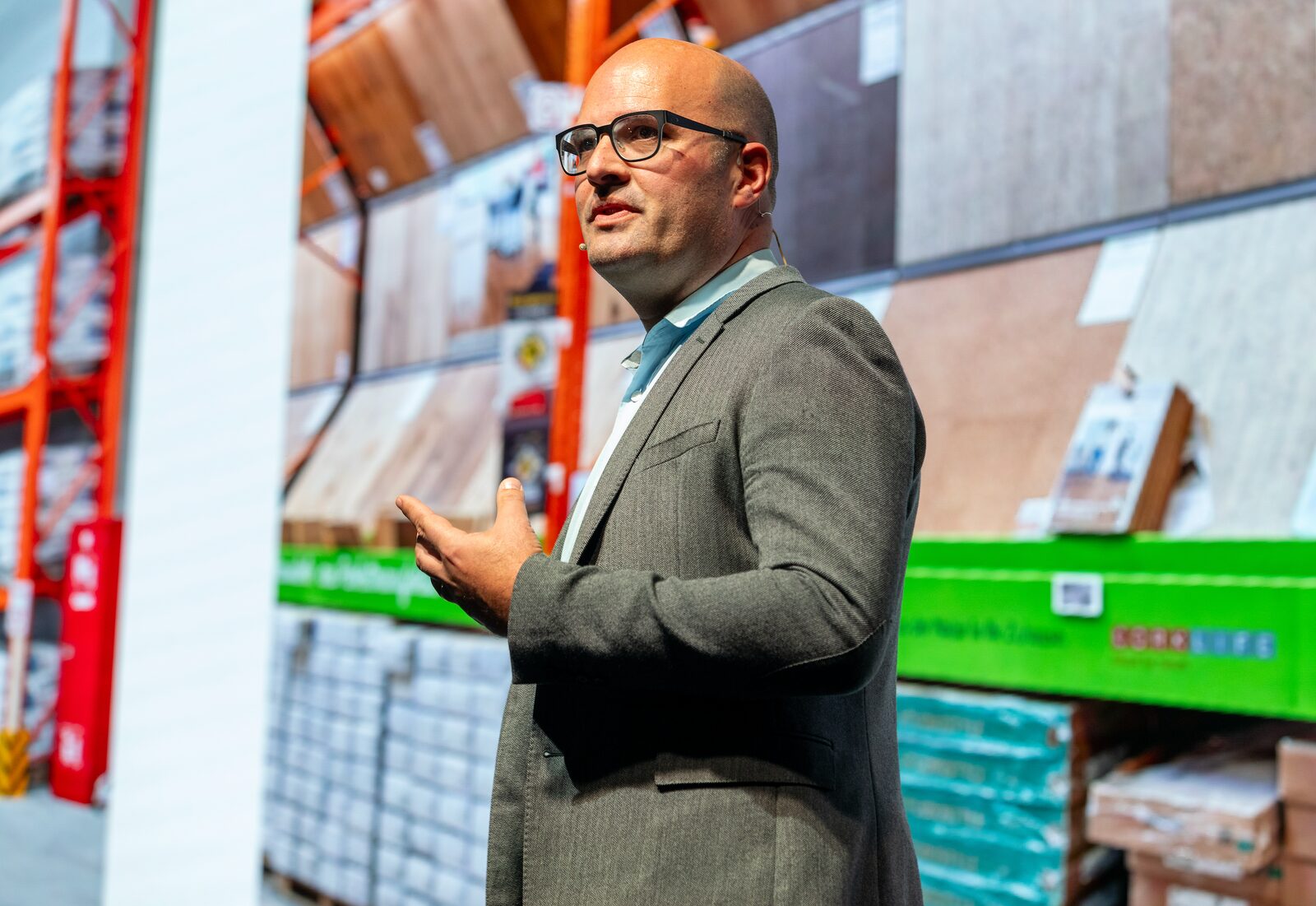
Bauhaus put that same principle into practice in a very concrete way. For a retailer that sells everything from bags of cement and long wooden beams to individual screws, there is no one-size-fits-all fulfillment strategy. The company uses a single inventory view across its digital touchpoints. According to Bauhaus, an API delivers inventory data in about 70 milliseconds and is called up to 40 million times. Click & Collect must make products available within ninety minutes. Whereas an online order used to take up to fifteen minutes to reach a store, it now happens within a few seconds.
Software is also increasingly driving delivery decisions. If the nearest store only has part of an order in stock, a location a little farther away that carries all the products may be a better option. After all, one slightly longer trip is often cheaper and more convenient for the customer than two separate deliveries.
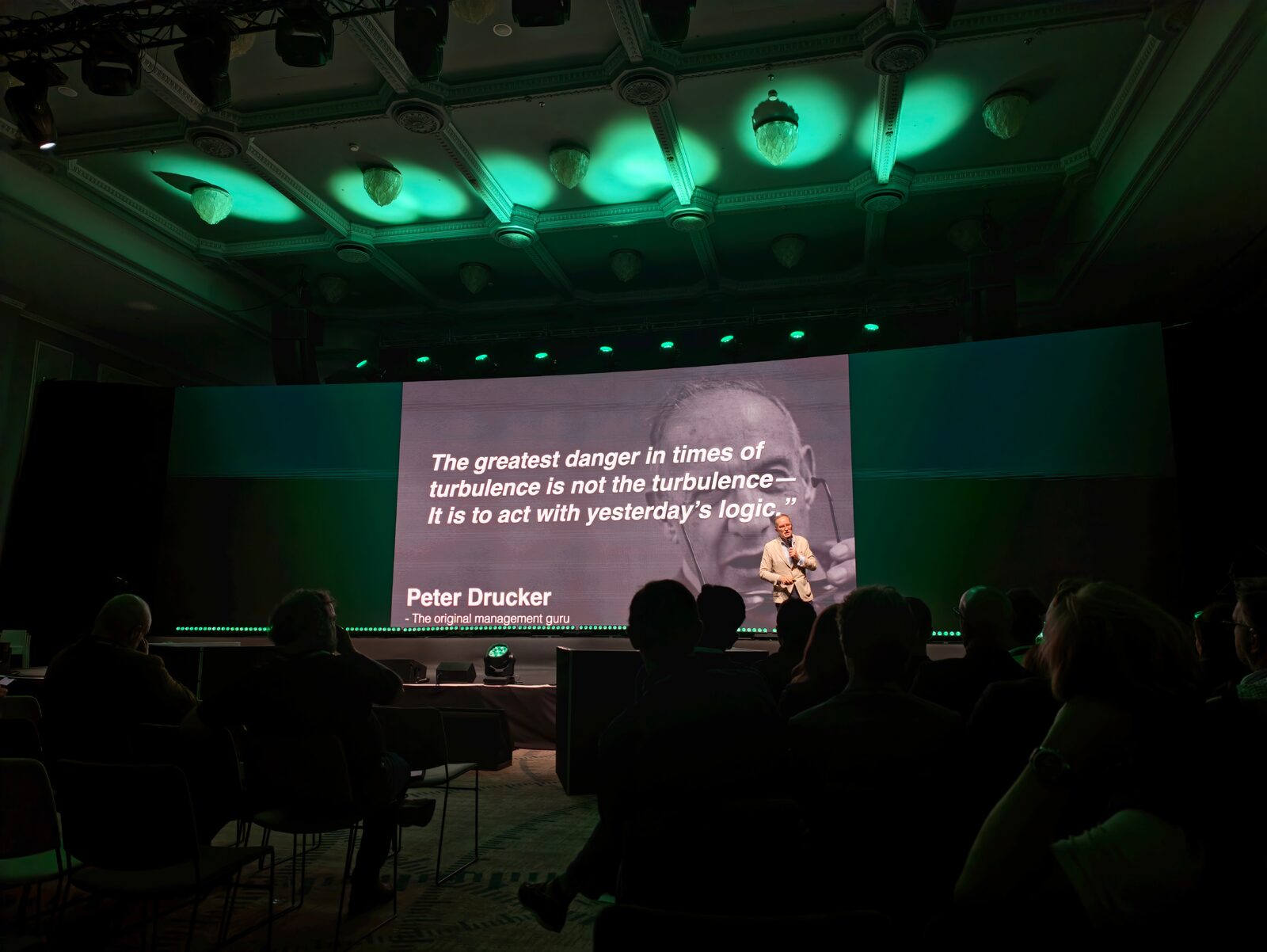
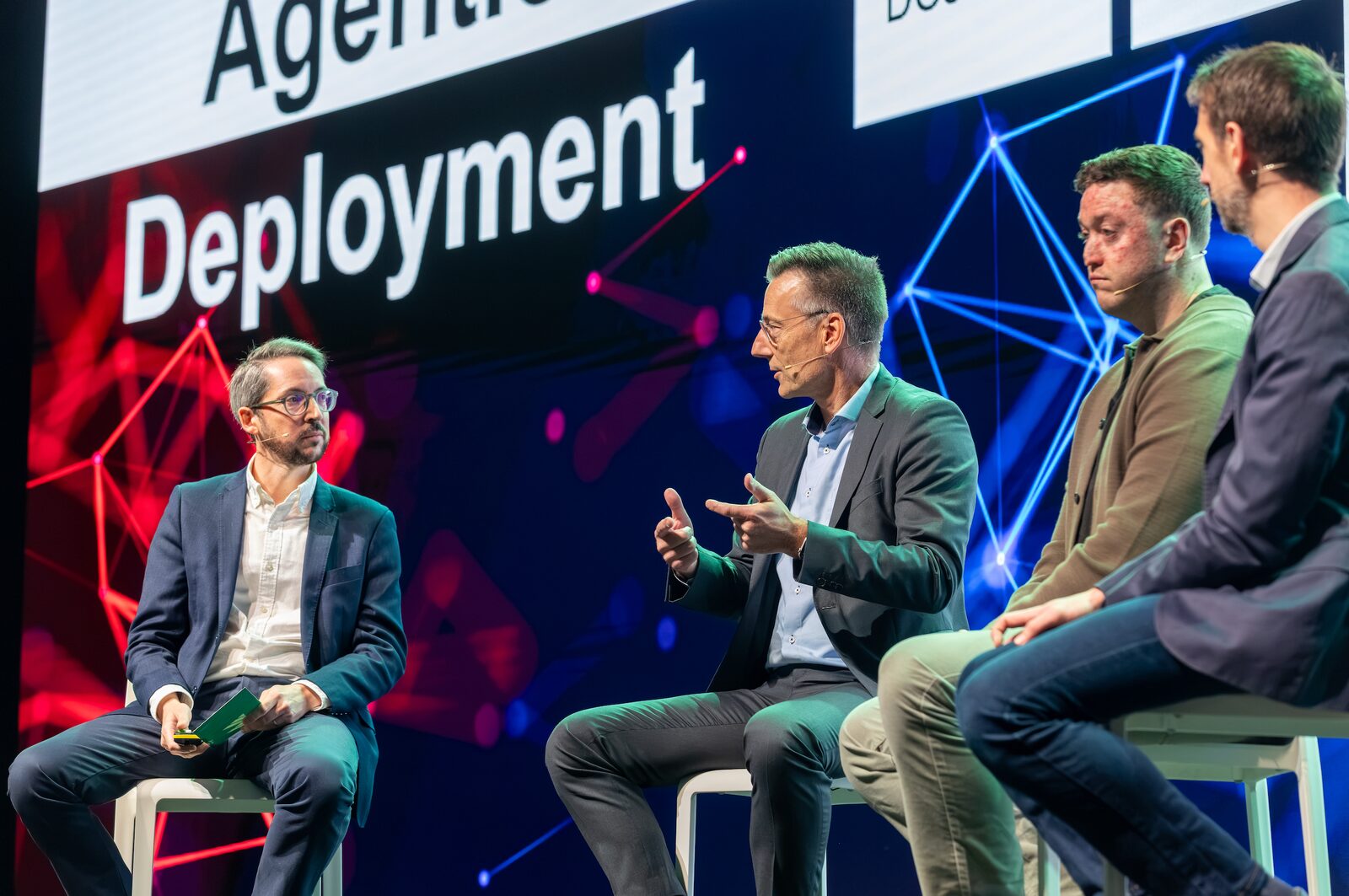
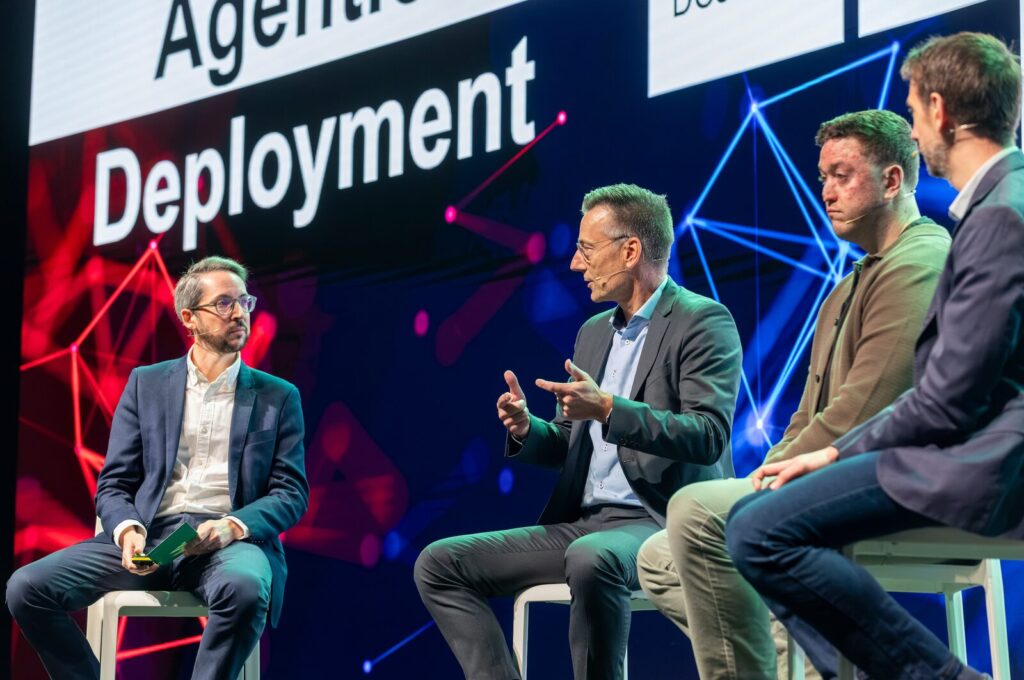
AI was everywhere in Milan. Keynote speaker Peter Hinssen joked that if you walk through San Francisco today, you’ll hardly see anything but “AI, AI, AI.” He described the speed at which technology is changing as a roller coaster. But that’s exactly why the most interesting stories at Exchange weren’t the spectacular visions of the future. They were the examples in which companies were able to demonstrate what was actually working better and more efficiently.
That may also be where the next phase of agentic AI in logistics lies. Not in yet another agent, yet another model, or yet another dashboard, but in the question of whether software can actually take on some of the operational complexity. Safely, measurably, and above all, without sidelining the expertise of the people on the warehouse floor. In other words, from insight to action. For now, though, it’s still up to humans to decide just how much of that action they’re willing to hand over…
Neem dan rechtstreeks contact op met Manhattan Associates Europe B.V..
 Contact opnemen
We are Manhattan Manhattan Associates is a global technology provider of AI-driven supply chain and omnichannel commerce solutions. With our cloud-native platform, we help organizations make their supply chain and commerce processes smarter, faster, and more resilient. Our solutions connect planning, inventory, fulfillment, transportation, order management, stores, and customer interactions into a single integrated ecosystem. Thanks to advanced AI capabilities, an API-first architecture, and real-time […]
Bekijk Bedrijfsprofiel