warehouselogistiek.eu
EN

The platform for internal & external logistics, supply chain and automation
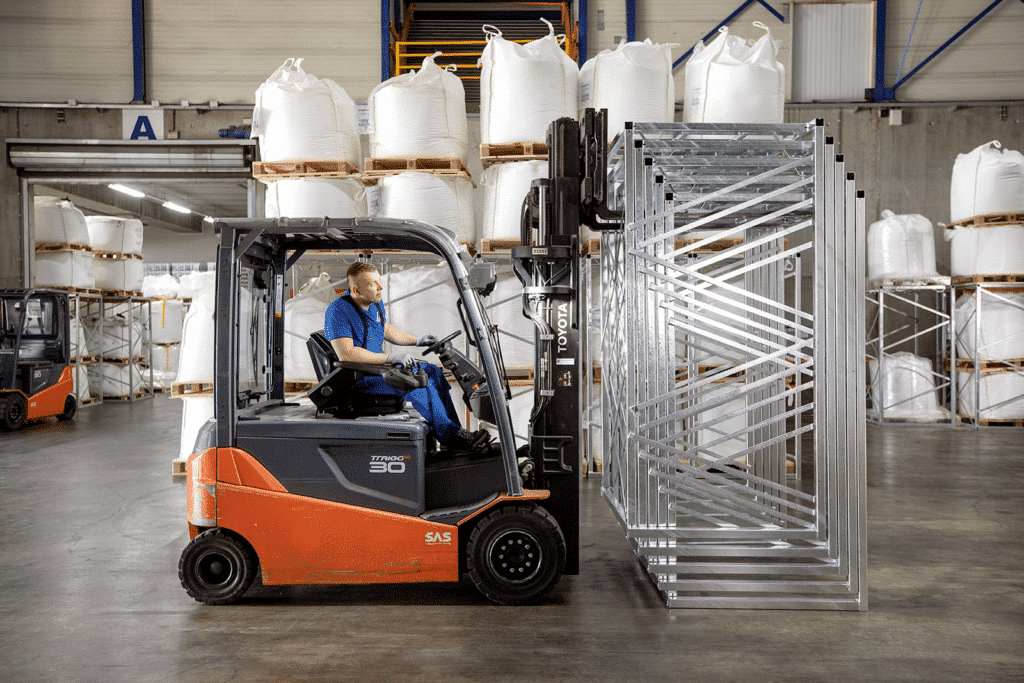
Pressure on warehouse space has been increasing for years. At the same time, expansions or the installation of fixed racks are not always possible, for example due to rental structures, permits or the nature of the goods stored. In this field of tension, logistics parties are looking for solutions that can be deployed quickly and do not require permanent interventions. One such solution is the movable storage frame, such as Maxxrack's system.
The principle is relatively simple: a steel frame is placed on an existing pallet location with a forklift, creating an additional storage layer. This makes use of the available height without having to make structural changes to the warehouse layout. Especially in environments where flexibility is key, such as temporary storage or seasonal peaks, this proves to be an attractive starting point.
Maxxrack's background is not in the classic warehouse environment, but in the storage of hazardous materials. The system was developed by Alphons Lourier, who ran into practical limitations in that context. In specially equipped bunkers, floors often turned out not to be completely flat and goods were under tension due to uneven loading. The frame was designed to better distribute those forces and support unstable stacks. From that niche application, the system found its way into broader logistics applications.
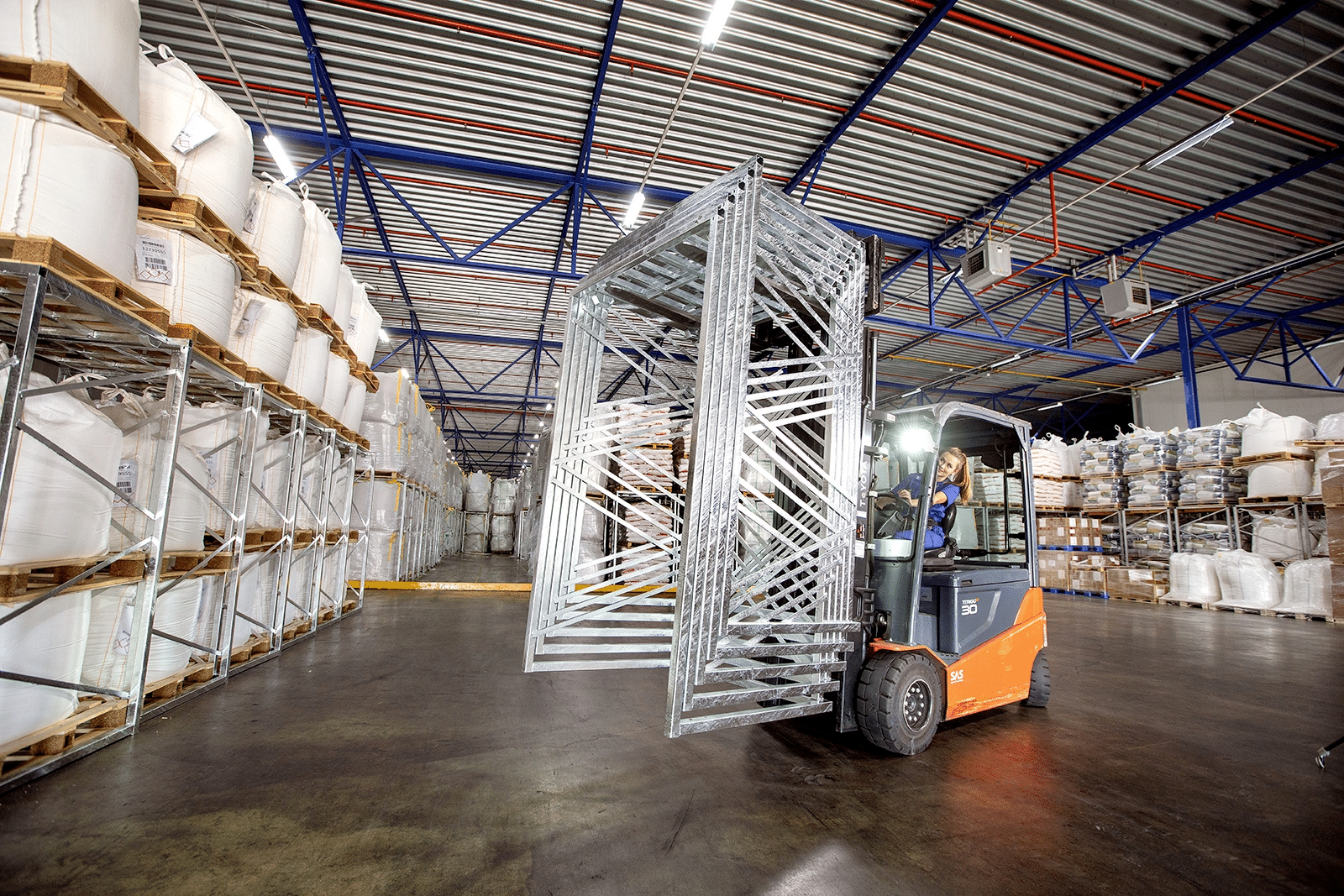
The frames are made of galvanized steel and are based on standardized dimensions, similar to container dimensions. This makes them usable in a variety of warehouse configurations. Depending on the type of goods, different versions are available, for example for bagged goods, drums or IBCs. Customization also occurs, especially in sectors where different dimensions or specific safety conditions apply.
In practice, the system revolves around creating additional storage capacity over existing goods. According to the manufacturer, about 3,200 pounds of additional storage can be provided per frame, with placement done with a forklift. Because the operation is relatively simple and requires no additional infrastructure, the system can be quickly deployed or, conversely, removed when the situation calls for it.
An important area of application lies with goods that are difficult to stack. Think of unstable pallets, big bags or compressed bales. The frame creates a physical separation between lower and upper cargo, limiting damage from pressure or deformation. Newer variants with a closed top respond specifically to this type of load.
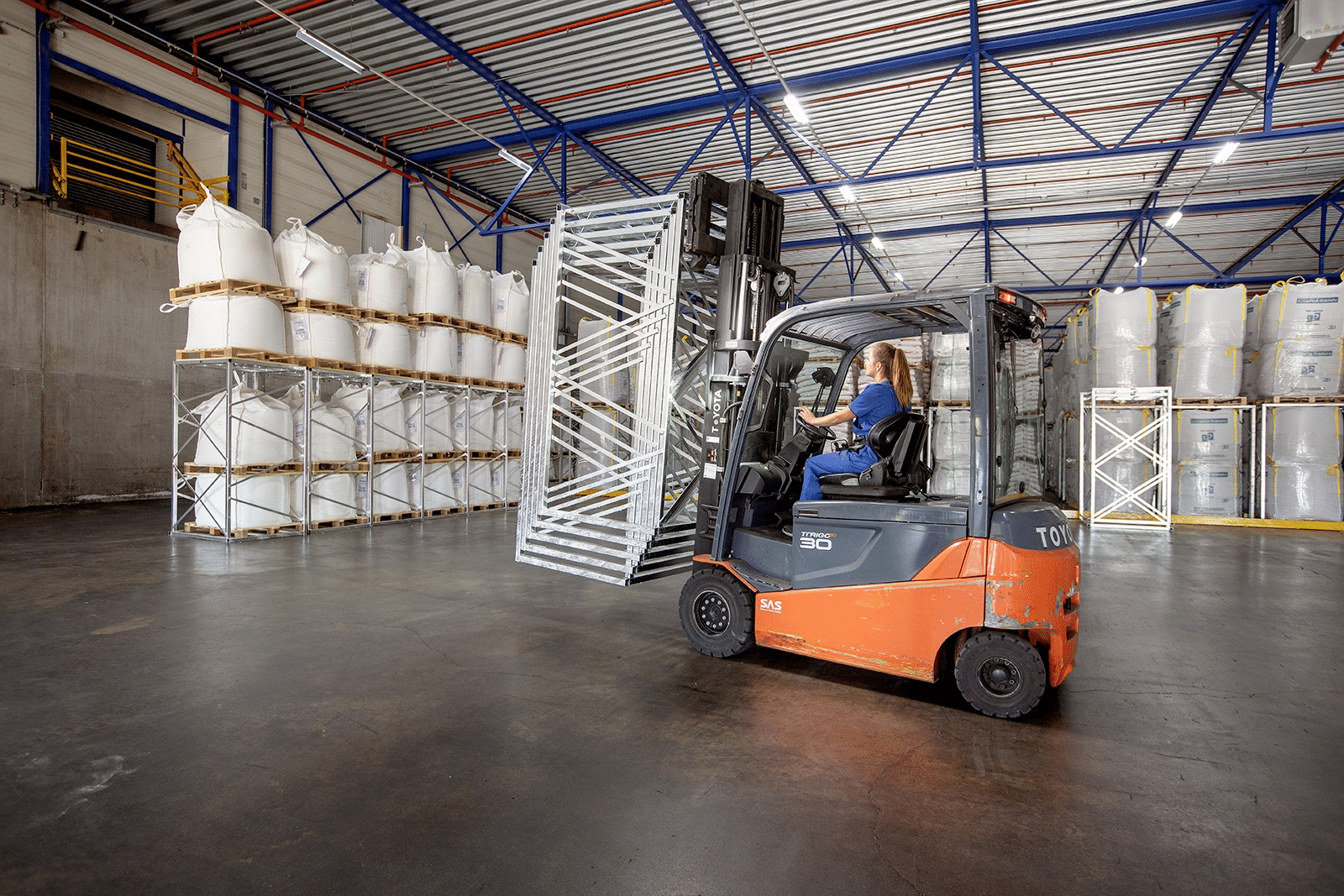
On a logistical level, the storage of the frames themselves also stands out. When not in use, several can be stacked together. This reduces the space required and makes transportation relatively efficient.
At the same time, some perspective on the positioning of these types of systems is appropriate. Moveable storage frames are not the only way to temporarily add capacity; stacking racks and mobile racking are also widely used. The distinguishing factor lies mainly in the combination of flexibility, deployment without structural modifications and applicability within existing pallet structures.
For warehouses operating under space and time pressure, this can be a practical interim solution. Not as a replacement for a well-thought-out warehouse layout, but as a tool for absorbing peaks or temporarily organizing specific flows of goods differently. As such, the system is in line with a broader trend in logistics in which adaptability and speed are becoming increasingly important.
Neem dan rechtstreeks contact op met Maxxrack.
 Contact opnemen
Maxxrack is a versatile solution for warehouse storage, in the form of a frame made of high-quality galvanized steel, which offers additional capacity for high storage of approx. 3,200 kg. The frames are designed so that even the most challenging and difficult-to-stack goods can be easily stacked. Thanks to its ingenious construction, the Maxxrack frame […]
Bekijk Bedrijfsprofiel