warehouselogistiek.eu
EN

The platform for internal & external logistics, supply chain and automation

The Belgian family business Gamma-Wopla and Smart-Flow have been producing plastic bins, pallets and containers for more than 25 years that not only contribute to a circular economy, but also provide direct cost savings. By purchasing directly from the manufacturer, customers benefit from competitive prices as well as smart logistics solutions. With a wide product range and a strong focus on reusability and recyclability, the company is ready for tomorrow's challenges. And they help their customers to be too.
There is currently a lot of uncertainty surrounding the upcoming PPWR legislation aimed at reducing the environmental impact of packaging in Europe. “We are keeping a close eye on developments with a working group actively monitoring the regulations,” says commercial director Michaël Cibois. “But in fact our approach has been in line with the goal of this legislation for decades: reusability, recyclability, use of recycled materials and solutions that contribute to reducing the environmental footprint. Circularity has actually been in our DNA for more than 25 years.”
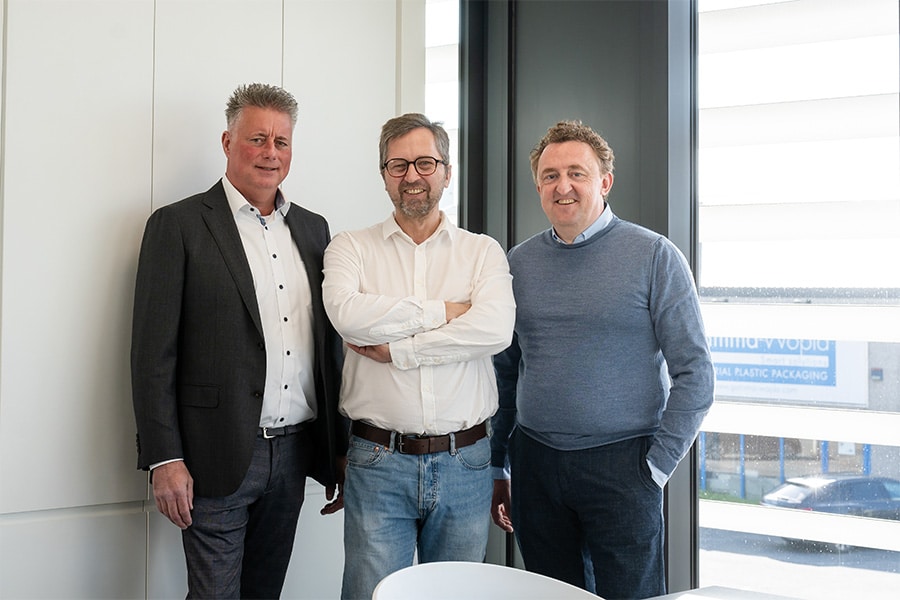
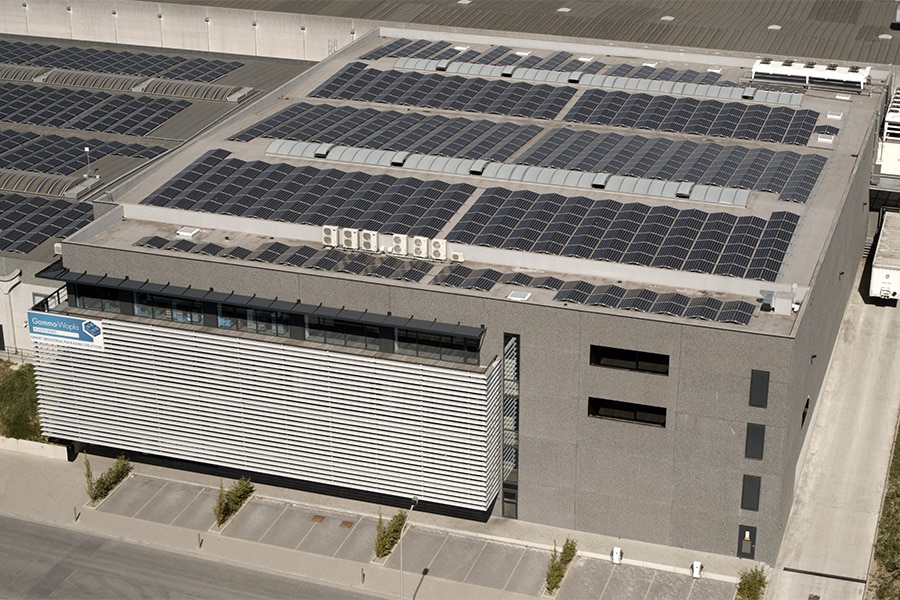
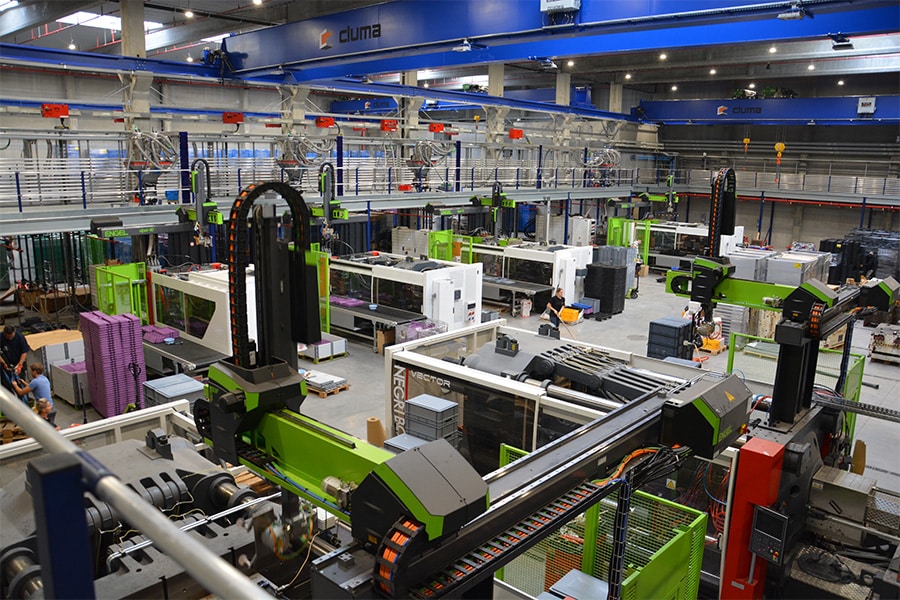
Based in Mouscron, Belgium, Gamma-Wopla and Smart-Flow have been producing plastic load carriers since 1998. With 43 injection molding machines, a turnover of 57 million euros and customers throughout Europe, they supply sectors such as distribution, intralogistics, pharma, food and automotive. “We offer both standard and customized solutions, fully tailored to the customer's logistics processes. In addition, our products for the food industry meet the required certifications,” Cibois explains. The product range varies from stackable, nestable and pliable bins to distribution bins, automotive crates, plastic pallets and accessories.
The in-house R&D department can work out custom-made solutions for customers who have specific requirements in terms of size, material or application. In addition, this department comes up with highly innovative solutions. A good example is the Smart Sleeve Pack system. This modular system consists of a pallet, a folding sleeve and a lid. “Thanks to the foldable sleeve, you save up to eighty percent space in empty returns. It is lightweight, but extremely robust and suitable for intensive use. An extremely environmentally friendly choice, because it is also completely reusable and recyclable,” adds Eddy Van Sas, sales manager for the Netherlands.
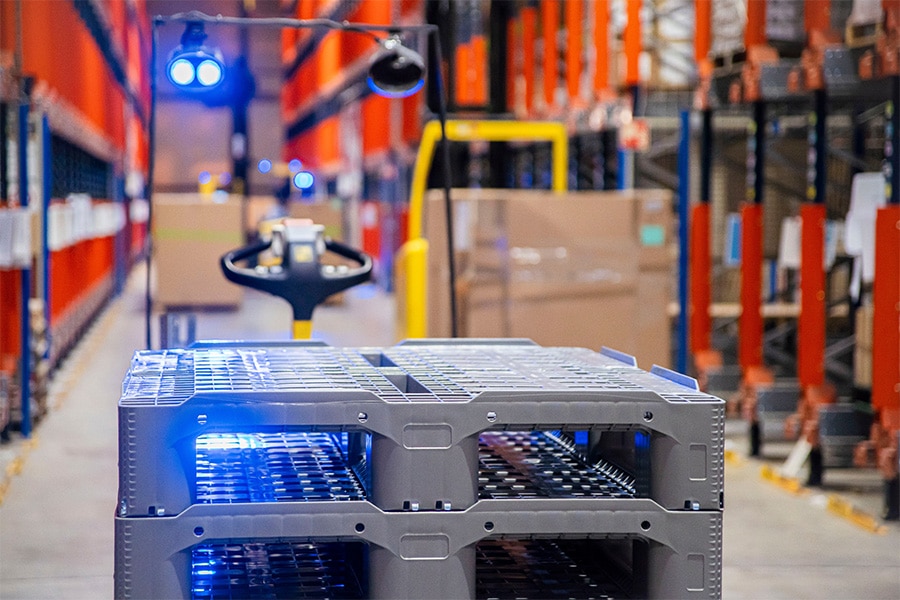
For automated warehouses, the company developed a range of automation trays. With reinforced bottoms for weights up to 50 kg and rounded, reinforced corners, they move smoothly over conveyors and provide optimal grip for robots, grippers and shuttles. With barcode or QR code printing and IML personalization, they can be integrated directly into track-and-trace systems. “With this, we help companies speed up their flow of goods and ensure error-free automation,” Van Sas said.
The Belgian family business recently developed an alternative to the wooden europallet: a plastic version that is dimensionally stable, solid, hygienic, ergonomic and durable. This saves considerably on maintenance and replacement costs. This SF800EUR fits easily into existing systems and is suitable for conveyors and racks. Unique to these one-piece injected pallets is that the slats are closed. These ensure flawless detection in automated warehouses. Cibois cites another advantage: “Thanks to its medium weight and properties, such as shatterproof and durable, this product is unique on the market.”
This fall, Gamma-Wopla will be present at the Transport & Logistics Exhibition in Antwerp and the ICT & Logistics Exhibition in Utrecht. There the public can get to know the wide range of products on offer. “Visitors with questions regarding optimization of logistics efficiency and sustainability, I cordially invite them to visit our booth. We are happy to think along with them,” Cibois concludes.