warehouselogistiek.eu
EN

The platform for internal & external logistics, supply chain and automation
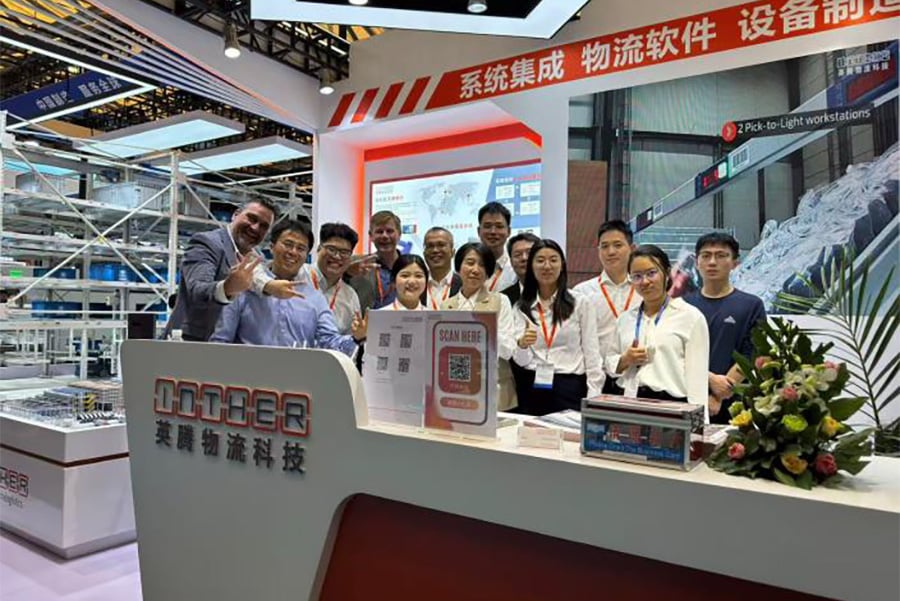
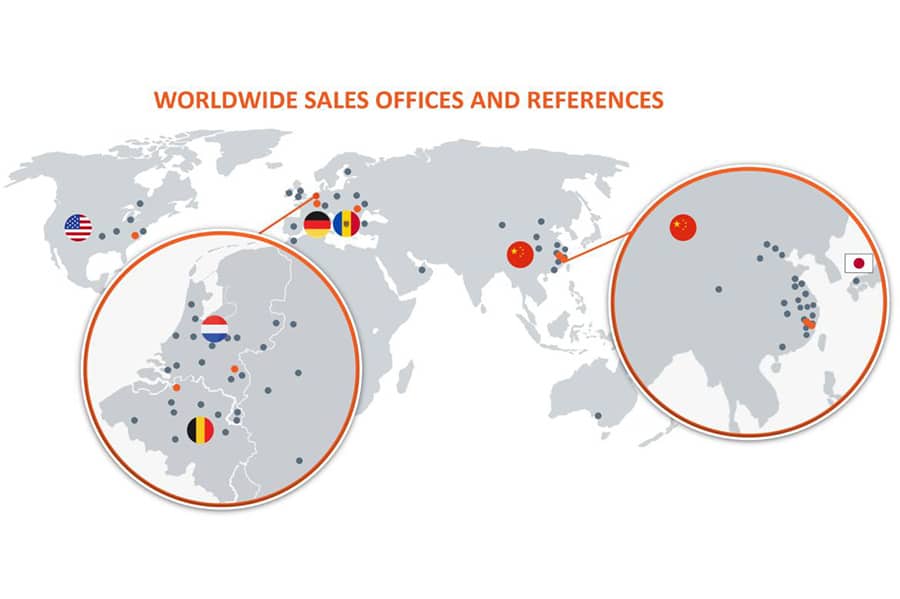
Since 1998, Inther Group has been known as a full-service system integrator that designs and implements intelligent material handling solutions worldwide. With headquarters in the Netherlands and projects across Europe, North America, Asia, and Australia, the company's software-driven approach has made it a trusted partner in warehouse automation. Yet few markets are transforming logistics as rapidly as China—a country where new e-commerce models emerge almost monthly and automation cycles proceed at an unprecedented pace. In this interview, CEOs Martijn Herder and Paul Hermsen explain why China is more than just another market—it is the beating heart of logistics innovation.
Reporter: Let's start with the big picture—why did Inther choose to establish and maintain a strong presence in China?
Martijn Herder: Because China is where the logistics world is moving fastest. The pace of innovation, automation, and change is unmatched here. Every month, new warehouse models, robot solutions, and customer demands emerge. For a company like Inther—rooted in integration and adaptability—China is both a challenge and a source of inspiration. It keeps us on our toes. We learn something new here every day, and what we learn flows back into our global projects. It encourages us to continuously innovate. What we learn in China strengthens our global capabilities.
Reporter: So it's more about learning and innovation than just market expansion?
Paul Hermsen: Exactly. China isn't just a market—it's a laboratory for logistics evolution. When parcel volumes reach hundreds of billions annually, the entire ecosystem innovates at lightning speed. By being here, we're not just selling systems; we're staying ahead of the curve globally in terms of what's coming next.
Reporter: How has that philosophy shaped your footprint—now with two locations in China?
Herder: We started modestly, but to truly serve the market, we needed proximity. Shanghai handles our commercial and customer-facing activities, while Suzhou focuses on engineering and manufacturing. Together, they make us faster and more responsive. It's about being inside the ecosystem, not just observing it. It's about speed, flexibility, and being part of the daily logistics dialogue.
Reporter: Inther has been active in China for quite some time. What lessons stand out?
Herder: Local presence is non-negotiable. During our first Chinese projects, we learned that speaking the language, sharing time zones, and solving problems on the spot make all the difference. That's why we have continuously invested—from service technicians to production lines—instead of managing everything from Europe.
Reporter: What was the reason behind the decision to start a joint venture for hardware production?
Hermsen: Control and flexibility. We wanted to shorten lead times and deliver customized solutions in line with local standards without compromising on quality. By working with Yugasum, we were able to jointly develop a line of modular transport and sorting equipment, built in accordance with Inther's software and safety standards, but optimized for local production and component availability.
Reporter: Was that primarily a cost-saving decision?
Hermsen: Not really. Costs play a role, but the main drivers were speed and market suitability. When you can design, test, and manufacture within the same region, iteration cycles become significantly shorter. For customers, that means faster delivery; for us, it means continuous learning. The focus is on speed and adaptability.
Reporter: How does the joint venture affect Inther's global innovation pipeline?
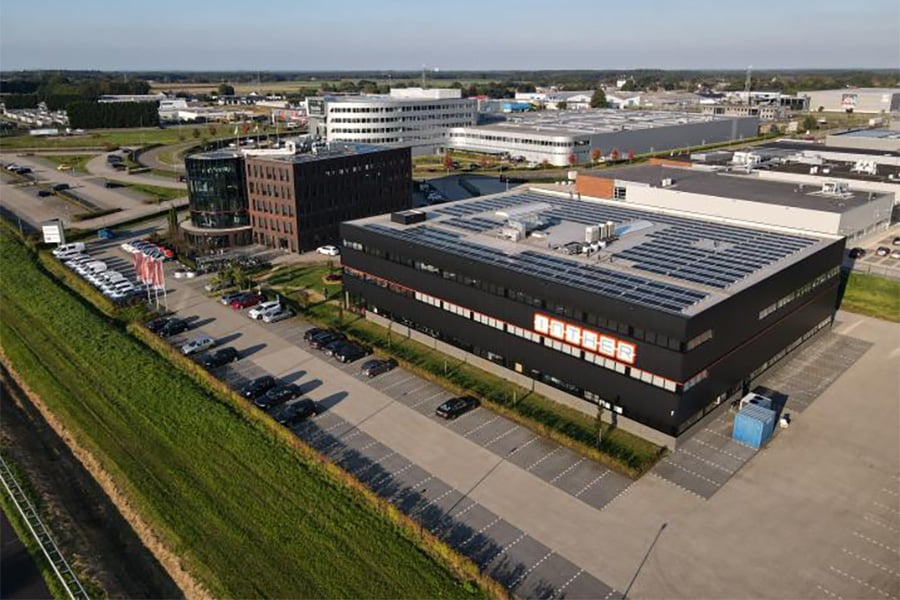
Hermsen: It has become a second R&D ecosystem. Our European and Chinese teams share core design libraries, but adapt hardware for different warehouse profiles. Whether a conveyor belt is built in Venray or Suzhou, it integrates seamlessly via our Inther LC software—that is the power of a hybrid system architecture.
Reporter: Many companies are concerned about losing consistency when they localize production. How do you prevent that?
Herder: By making standards sacred. Every component, every sensor, and every PLC template is validated using the same global test protocols. From a software and service perspective, our joint venture products must feel identical to European modules. That consistency makes us credible as a system integrator.
Reporter: How do logistics requirements in China differ from those in Europe?
Herder: The Chinese market is developing rapidly. Customers expect scalability, flexibility, and ROI within months, not years. That mindset determines everything: modularity, plug-and-play designs, and the ability to expand automation step by step. It fits perfectly with our philosophy of incremental, data-driven improvement.
Reporter: What are some tangible benefits of local production?
Hermsen: Faster project execution and fewer dependencies. The joint venture can assemble transport modules in advance and deliver them directly on site. There is no sea freight, no customs delays—just readiness. That is essential when a retailer wants to have a system up and running before Singles’ Day, Chinese New Year, or Black Friday (especially for e-commerce companies with global online customers).
Reporter: How do you deal with intellectual property and quality control in such a situation?
Hermsen: We separate ownership from operations. Core IP—our controls, interfaces, and design rules—remain with Inther. The joint venture focuses on manufacturing excellence and market adaptation within those frameworks. Quality control runs through our shared ERP and testing systems, ensuring identical performance measurements worldwide.
Reporter: Does the Chinese branch have any influence on projects outside China?
Herder: Absolutely. Dual sourcing means more resilient supply chains for customers worldwide. It also opens up faster scaling opportunities in Asia-Pacific—no import duties, shorter delivery times, and better after-sales support. It's a competitive advantage that benefits all our customers.
ReporterWill the joint venture expand to other types of equipment besides conveyor belts?
Herder: Possibly, but we remain focused. We concentrate on standardized components with high throughput—the building blocks of reliable automation. Anything that improves time-to-value and uptime without making maintenance too complex falls within our scope.
Reporter: Finally, how do you measure the success of your China strategy?
Hermsen: Three things: shorter lead times, consistent system performance, and local innovation that feeds back into our global solutions. If we can deliver faster, maintain quality, and push the boundaries of what is possible, then China is not just another region for us. It is the engine room of continuous improvement. Herder (conclusion): We didn't just go to China to sell; we went there to evolve. The logistics revolution is happening here in real time. Both: If you want to shape the future of material handling, you have to be where it is being reinvented every day—and that is China.