warehouselogistiek.eu
EN

The platform for internal & external logistics, supply chain and automation
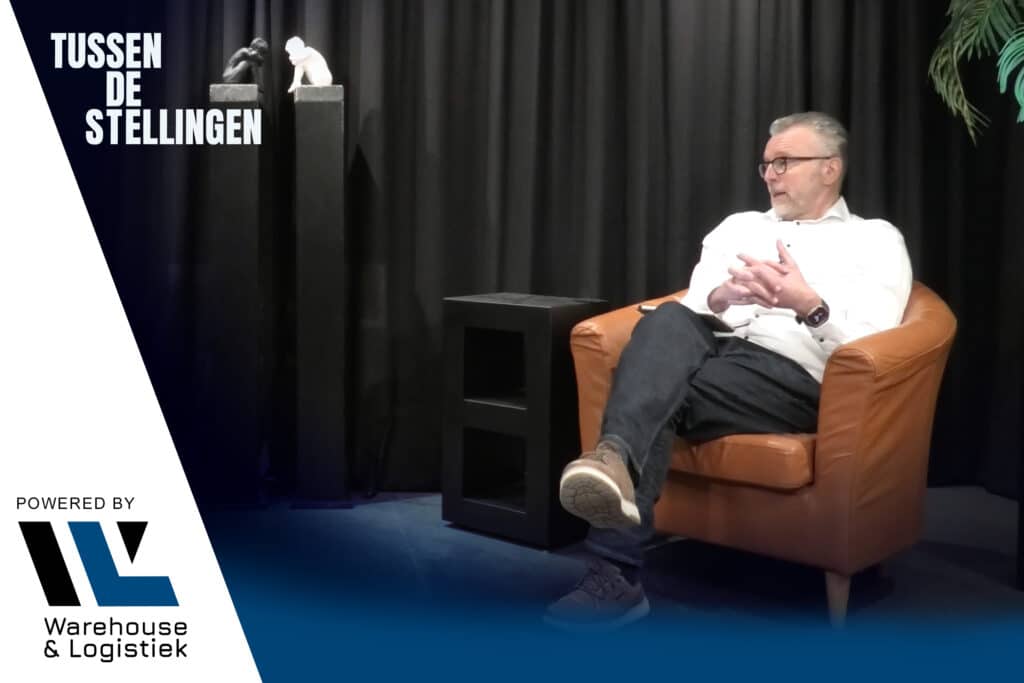
Supply chains are no longer in temporary disruption. According to Dr. Alex Van Breedam, we have definitely entered an era of structural instability. Geopolitical tensions, trade tariffs, climate disruption, resource scarcity and technological acceleration are making uncertainty the new normal.
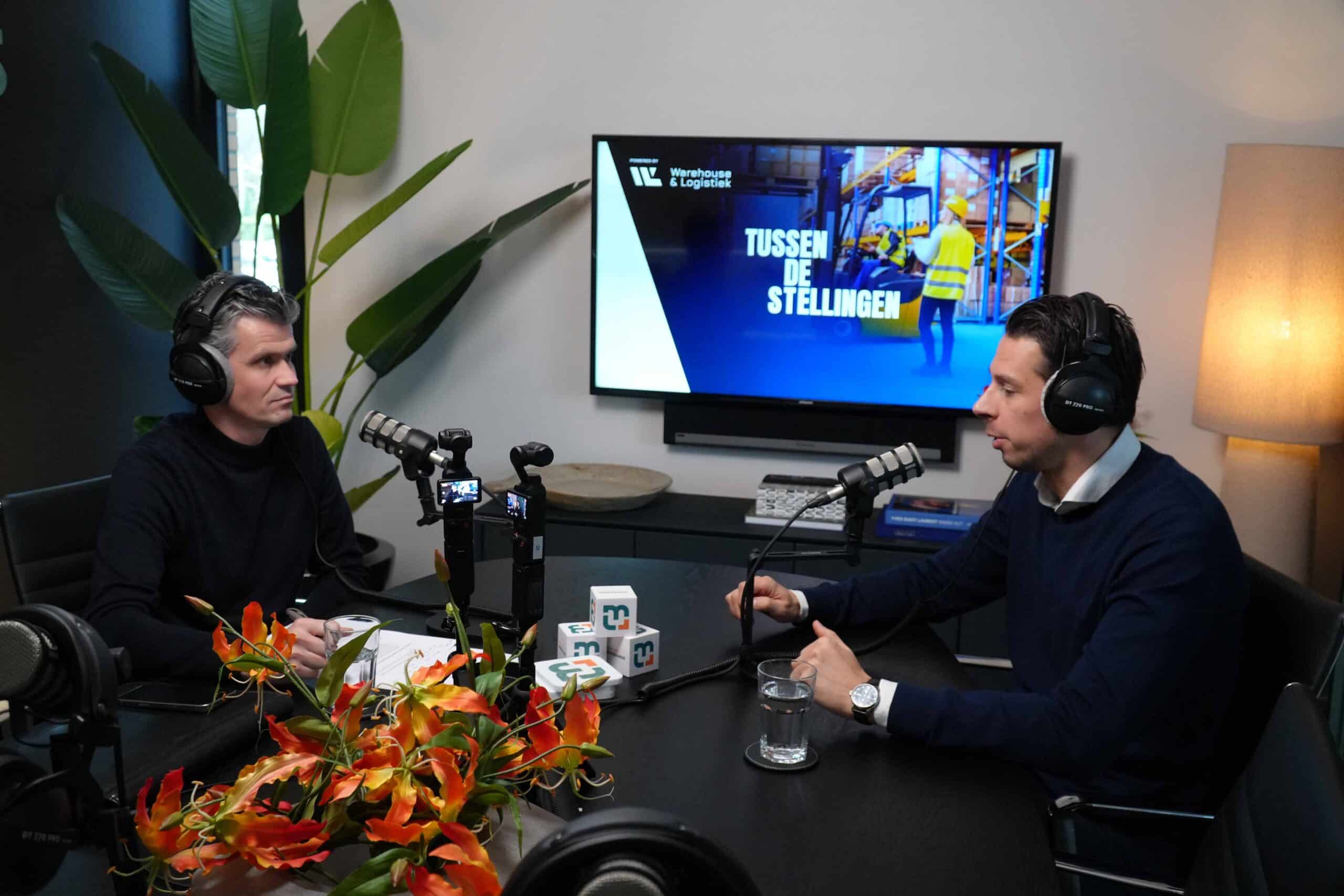
In this episode of the Warehouse & Logistics podcast, moderator Kris Vandekerckhove (Louwers Media Group) heads to the ISCN.Academy in Kontich for an in-depth conversation about what companies need to do today to stay relevant towards 2026, and beyond. Why is it no longer enough to look in the rearview mirror? How is AI fundamentally changing forecasting? What does ‘weaponizing supply chains’ mean in practice? And why does supply chain definitely belong in the boardroom today?
One message runs like a thread through the conversation: waiting for stability is not a strategy. Resilience is no longer an option, but a conscious strategic choice - with a price tag.
[00:00] Introduction and Situation
Kris Vandekerckhove: Welcome to the podcast of Warehouse & Logistics. Today we are on the move at the ISCN.Academy in Kontich, the far abroad for the average West Fleming. A knowledge and streaming platform dedicated to empowering supply chain professionals with the insights and knowledge they need. Moreover, it is the brainchild of doctor Alex van Breedam. As a futurist, Dr. Van Breedam identifies societal trends and challenges, but above all he seeks to anticipate and influence them by pioneering and innovating in a disruptive and persistent way as a visionary entrepreneur, opinion leader and creator of new business models. Quite a mouthful, Alex. Is this actually all true to some extent?
Dr. Alex Van Breedam: Yes, but very simply put. I'm trying to do whatever I'm advocating. I mean, a trend watcher is someone who looks at the trend, but doesn't actually do anything with it. That person just watches. I watch, but I also try to influence it. I have a company, my own company, Trivisor, where we do very sophisticated logistics projects that are really focused on getting the logistics of the future on track right now. And it's not just with companies, but I also teach and I also try to convince the new generation that we're going to have to do logistics differently in the next few years.
[01:40] Instability as a new normal
Kris Vandekerckhove: Then you are the one we want to talk to. By the way, thank you very much for allowing us into your inner sanctum, because we are indeed here on the move for once. It's fun for us every time, too. Well, we are in a turbulent period. We really can't go around that anymore. In past years, we talked about supply chains and crisis. Today my guest says, this is no longer a crisis, this is the new normal. Geopolitics, trade tariffs, climate, technology, regulations are actually causing supply chains to become structurally unstable. So companies still waiting for normalcy risk being left behind. In his new master class From 2025 to 2026, supply chain expert Dr. Alex Van Breedam analyzes what strategic choices companies need to make now to stay relevant. What are the biggest risks heading into 2026? Where is the real lever for resilience and what mistakes does he see recurring too often today? So we talk to Alex about that. And we'll start on the first question and we'll see where we land. You argue instability is structural. We've all figured that out by now, we think. For you, what is the evidence from 2025 that we are not returning to normal?
[03:20] Measuring volatility
Dr. Alex Van Breedam: Look, by now it's been since 2021, since the end of COVID, that we go from one disruption to another, from one surprise to another. We keep getting new disruptions, some worse than others. But then when we try to measure that, there are a number of indices for that. And those are indices that have come along since COVID. And the Global Supply Chain Volatility Index is one of them. The other one, the Global Pressure Supply Chain Index. The New York Bank's Global Supply Chain Pressure Index is another one. And both indices indicate that there is structural volatility in the market. So that means we're not going back to normal.
[04:07] Forecasting before and after COVID
Dr. Alex Van Breedam: Perhaps the best way to demonstrate that is the following. Before COVID, when we made predictions of our sales, we just looked in our rearview mirror of what is the past, what was it in the past and how is that going to reproduce in the future. Somehow, by some factor we were going to multiply that, but basically the picture of the past was we were going to project into the future. Today you don't do that anymore, because it doesn't make sense. On the contrary, since COVID we have been working with AI to look at the horizon. What is threatening to happen? What are the events, what are the occurrences? Where is the climate going to behave differently? Where are the storms to be expected? And how is that going to affect our production, for example? How is that going to affect our sales? That's the way we're going for now. And before that, I'm going to put it maybe a little harshly, but before COVID just look to the back, since COVID we have to look to the front or your forecast no longer makes sense.
[05:26] Is the industry ready for that turnaround?
Kris Vandekerckhove: But that's what makes it so difficult. And is the industry ready for that? What you say, we know that. Is the sector really doing that already?
Dr. Alex Van Breedam: Well to some extent. Forecasting models were one of the first parts within the supply chain where we saw AI coming in. And where the applications of AI started to run more and more. And we do see that that is on the rise. And also in the report that I put down there, you can find that if you then look at how strongly AI has meanwhile crept into the company, it is still only limited. I think there are about 20 percent, if I'm right, about 20 percent companies that have implemented it structurally. I can say that AI and cloud systems, pretty much the two important aspects, are on the agenda in more than half of the companies though. But if you really start looking at large-scale implementations, it's still limited. And what we also see, also within AI and within this new technology, is that there are still a lot of companies complaining about the quality of the data. And that's where logistics has a very special role to play. Because logistics is probably the sector where the most data is collected.
[07:18] AI no hype
Kris Vandekerckhove: Yes, so it's actually in logistics no longer a hype.
Dr. Alex Van Breedam: It shouldn't be. But let's say, not everything is ready to start implementing it ideally. And then data quality is an aspect, but also the fact that the integration of systems is so difficult. That there is now somewhere separate from or pro they integrate an AI module. But I can perfectly imagine, just as Excel is still very heavily used and a lot of companies still have a lot of little baronies of Excels here and there, that the same thing is happening with the applications of many AI applications.
[08:09] AI as a workable reality
Kris Vandekerckhove: That all seems logical to me anyway. I mean, AI is the workable form of ... Okay, AI has been around, what is it for 20, 30 years probably, but the workable form for everybody, that's barely two years old.
Dr. Alex Van Breedam: Yes, but then if you look at the different applications of AI in companies, you have the classic, the analytical AI, where we use that you and I. We use the analytical AI. And then, of course, we go to that famous generative AI, where we ask, for example, in a schedule, to create a piece of new schedule. Creating a new schedule from scratch. That's where we see that the large scale implementations are not there yet, but are coming. And then you have the third layer that is coming, is the agentic AI. Where you're going to have the AI work as if someone is sitting there. You give it an assignment. And that does get interesting, because then as a supply chain team leader in your company, you're going to have to have a team that's made up of people, but some agents. And you're going to have to get those to work together as a team. The same thing is true in a warehouse. With automation, that agentic AI is also going to have tasks within the warehouse. Because we also know, automation, until recently was only for very repetitive tasks. More and more, we are moving towards automation where less repetitive tasks are also automated. And then agent AI comes into play. And then it's a matter of getting people and technology working together as a team within the warehouse as well. I saw that at work recently, Kion, which is also here in Antwerp.
[10:17] Automation and labor market
Kris Vandekerckhove: So those really designing those warehouses where indeed AI and robots between people just work and indeed don't do repetitive tasks, but just react to their environment.
Dr. Alex Van Breedam: Yes, of course, we have to pay close attention. The scarcity of workers, especially in the warehouse, is an issue. In transportation, our drivers, our chauffeurs, is also an issue. But in the warehouse, we thought that through some automation, we could compensate for that shortage. We did. But at some point it stops still working on the less repetitive tasks, which could create a little bit more job satisfaction, to increase that nevertheless that responsibility with those people, give them a greater job satisfaction, which makes them or by having them also co-manage those agents. Also people who are, let's say, short-skilled in the warehouse could do that. By which they can actually give more direction to their job and to their team, which is not only made up of other employees, but also agents. So that's not necessarily a bad thing because of that.
Kris Vandekerckhove: No, not at all. But they also say that there, that automation is actually human. If you have the people who work with it, the people who work with it, who drive it, don't drive it, you have to have them along from point zero. And if you have that, then only the benefits of that are seen. Because then you do indeed have to control some repetitive tasks, but also things that you don't like to do, do like to do, and you have a kind of collaboration between robots and humans.
Dr. Alex Van Breedam: And automation may not be top-down just because of that, but bottom-up?
Kris Vandekerckhove: No, bottom-up, indeed, they say that, by the way.
[12:14] Weaponizing supply chains
Kris Vandekerckhove: Well, there's another thing that we're seeing very much happening lately. And we won't mention its name, but it comes from the West, another continent there. So nowadays supply chains are also used as weapons, as political tools. What three mechanisms do you often see coming up there?
Dr. Alex Van Breedam: The simplest mechanism we have now learned about is tariffs. That's an example of how actually a supply chain is used.
Kris Vandekerckhove: Weaponized.
Dr. Alex Van Breedam: Weaponizing supply chain may be the term of the year within supply chain. That so. We didn't even know it a few years ago. But so those import tariffs are used as a mechanism. But on the other hand, the military is also quietly penetrating the supply chain. Also unthinkable until recently. We see a large part of our Belgian budget being used for military applications. That is going to benefit logistics to some extent, better quality roads. But it will also start to work against logistics. And let me give you an example. For the military industry there is again a great need for rare earth materials. Rare earth materials that are also needed for energy transition, but also for military applications. At some point the military application will take priority. And at least the price will increase for civilian applications, but also the scarcity. And so we will see supply chains start to change direction. So that's definitely in there.
[14:12] Geopolitical concentrations of commodities
Dr. Alex Van Breedam: So I'll just take the example of rare materials. And just think about the semiconductor supply chain. If you look at the top three rare materials there, in that top three, 95 percent of the mining happens in China. So you not only have production concentrations, which are also often in China, but also the mining of those rare materials, which is also often in very sensitive or geopolitically sensitive territory. Think again about the semiconductors I was talking about a moment ago. Rare materials, as you say, from China, but manufacturing actually in Taiwan.
Kris Vandekerckhove: Yes. Super sensitive.
Dr. Alex Van Breedam: Super-sensitive. Geopolitical area. One company then, TSMC. One has tried with the CHIPS Act of Europe and of America to increase that production on other continents. But that's at least for ten years before the first chip can be produced. So you see there with geopolitics very dangerous mechanisms.
[15:46] Water and new scarcity
Dr. Alex Van Breedam: Then just think about plain water for a while longer. Water is going to be a rare commodity. And when you know that today the need for water for data centers and AI just to work. A large data center has the same water consumption as 50,000 families in a year. And we are nowhere near the end of that. So we build data centers all the time. The need for fresh water, meaning pure water, is only going to increase. And we were already in shortages. Even here in Flanders, we're in water problems. So that's another way in which you're going to have geopolitical steering of supply chains. And the last little example I want to give is copper. Copper, one would think, okay, there's plenty of that out there. We already use it today in every possible electricity application. Well, an electric car today drives or contains 150 kilograms of copper. Or around that. You need that for electrification, you need it for data centers. And a raw material that we thought was in sufficient supply actually turns out not to be so. Because that is, think of the mining of copper in Chile, is in an area where extreme weather conditions are commonplace. Which not only can make transportation difficult and can be interrupted, but also mining in problem. So we've got a lot of additional geopolitical dangers that have only recently emerged, that have emerged with the energy transition and are actually aggravated by the geopolitical tensions that are out there today.
[17:44] What can Europe do?
Kris Vandekerckhove: And there is obviously no simple answer, but what could Europe's answer be? Or are we left with blind spots here that we don't get solved?
Dr. Alex Van Breedam: Well, let's see for a moment what the response from the United States, for example, is going to be. You know there's been a pause in the trade war between the United States and China. And maybe that pause has been put there a little bit against our better judgment, because we also know that the United States is very dependent on also the rare earth materials, the rare materials, that one only mines in China. So we're going to see that that's going to be a continuing tension. And maybe that will have a positive effect, that people will see that they cannot force the trade wars to the extreme after all. Because that there is always going to come back to the finding of the materials as being: okay, if you do that, then I'll shut that down. And you see that also with the number of licenses on mining those materials, that just increasingly there are coming. So China is actually blocking access to those materials that they know are very critical. And is using this in negotiations.
Kris Vandekerckhove: That seems logical to me.
[19:29] Tactical stockpiling versus strategic redesign
Kris Vandekerckhove: To go back once, because we haven't gone deep enough yet, I think, about rates. What is the difference between tactical stockpiling and strategic redesign of your network?
Dr. Alex Van Breedam: Look, I think, what have we learned as a company to arm ourselves against tariffs, but not just tariffs, against all kinds of disruptions that we don't know about now maybe that are going to suddenly pop up tomorrow. Well, that's our resilience, our resilience as a company. And resilience, you can do that in many ways. The simplest one is just to start increasing your stock. And that's right after COVID, remember, we started doing that. Because then we went from just-in-time to just-in-case. That caused the warehouses to fill up. Meanwhile, those warehouses have emptied back a little bit. And of course stockpiling and frontloading, as we call it, that has a cost. Frontloading means, look, in the run-up to the announcements of all those tariffs, a lot of companies suddenly shipped a lot of materials, already to the different parts of the world, to actually get around those import tariffs and to have the goods already there. What misery has that caused? Well, that if you look also at that Global Supply Chain Pressure Index, that there are actually two halves of the year. The first half of the year with the announcements of import tariffs and the so-called frontloading, which is the building up of inventories. And the second half of the year with a tremendous downturn. Up to 30 percent less shipments between China and the United States, because the stocks were already there and then those famous 125 percent tariffs were suddenly announced. Meanwhile, that's reduced back a little bit, but it was there then. And that actually caused a two-speed year. So what has been added? That the thing that China was no longer able to send away to the United States, that 30 percent reduction, about 18 percent of that came to Europe. So we were inundated with Chinese products.
[22:10] Outlook 2026
Dr. Alex Van Breedam: And then when I look at yet the some optimism that there is for 2026 and Q1 mainly from the Purchase Managers Index, which is actually a good leading indicator, which is used by many financial institutions to look at what does the future look like, we do see a slight optimism. And that slight optimism appears to be very much dependent on the internal Chinese market. If China can still ‘domestically’ release what they no longer export to the US into the internal market, then we are heading for a fairly positive first half of 2026. If we miss out on that and then the real estate bubble in China goes into further trouble, then we could have a bad first half of the year. And then a continued deterioration into 2027.
[23:17] No-regrets recommendations
Kris Vandekerckhove: Okay, then we'll try to come up with solutions. In your year-end conference, you ended up with nine recommendations. Which do you think are the top three, the no regrets, for a medium-sized logistics player in the Benelux?
Dr. Alex Van Breedam: You have to have a resilience strategy. That is, your resilience has to be there and has to be built into your strategy. It shouldn't just be a hotchpotch of initiatives that you took because then again it was COVID and you were afraid of a lockdown, so you put your inventory somewhere else at another warehouse in case of lockdown. And you then for those import tariffs you might have shifted your goods through another route. So basically fragmented initiatives, you shouldn't do that. You have to try to work structurally on a strategy, because there are so many disruptions that may be coming that we don't know about yet. And if you want to be armed against that, you have to do that. So a clear strategy driven from the boardroom. Because that's important. It's about strategy and it has to be driven from the boardroom. That may have been the big thing since COVID, that supply chain and logistics has actually risen to the boardroom. And that's not going away anymore. Because people realized for the first time then that it's not enough to produce our products, we also have to get to the customer. The raw materials have to get here and the products have to get to the customer. People have realized, that has become so crucial, especially with all the geopolitics and import tariffs, they have seen, okay, supply chain is board. That's a very important one and you have to pull that to that level as well.
[25:17] Cost of resilience and scenario thinking
Dr. Alex Van Breedam: Another important thing is, in addition to that resilience, you have to have the cost of resilience mindset. We had a cost of sustainability mindset until before the geopolitical tensions. And that has actually been replaced by a cost of resilience. And actually you should have two. So you need to know at what cost are you going to be able to develop what sustainability and what resilience. You actually have to start thinking in those terms. We used to think only in the cost of service. How much more do I have to invest to want to go from a 95 percent delivery rate to a 98 percent? Well, the same thing, how much more do you have to invest for a resilience in 95 percent to be armed to 98 percent? And the same thing for that sustainability. And those are the reflections that we have to be able to adopt. So you have to start thinking in scenarios. And scenarios means you also do the worst scenarios and you do the best and then you have to determine, okay, what scenario do I want to be able to be armed for? And what is the price that I'm willing to pay for that?
[36:18] Final Message
Kris Vandekerckhove: If you have to give one sentence, one sentence to CEOs, stop with blabla but start with this. So in short, the sentence that actually every business leader should hang above his desk in 2026 and beyond. One sentence, Alex.
Dr. Alex Van Breedam: Stay optimistic and resilient.
Kris Vandekerckhove: Stay optimistic and resilient.
Dr. Alex Van Breedam: Yes, because the thing is, the more difficult the environmental factors become, the more distinctive the strongest company is going to be. The one that manages to model its business model ideally within all those difficult conditions, it's going to be able to maybe double its lead over the competition that it would normally have in ordinary periods where it's less difficult to operate.
Kris Vandekerckhove: Nice wrap-up, Alex. What I take away from this conversation is that waiting is really not an option anymore. Not waiting for stability, not waiting for clarity and certainly not waiting for perfection. On the contrary, making up as many scenarios as possible of things that actually have yet to be invented or to come, so to speak. Today's supply chains demand real leadership, demand choices and demand courage. Even if it means that efficiency sometimes has to give way to resilience, because that's what we want. Dr. Alex Van Breedam, thank you for this talk and for looking ahead to what 2026 and still the years beyond will bring us.
Dr. Alex Van Breedam: With great pleasure.