warehouselogistiek.eu
EN
The platform for internal & external logistics, supply chain and automation
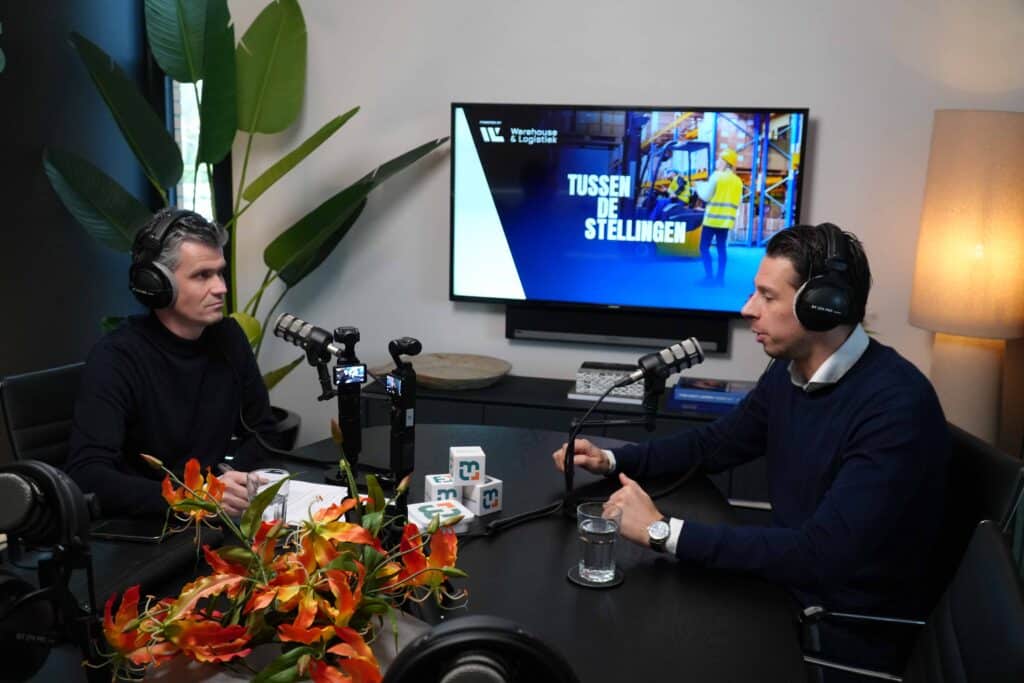
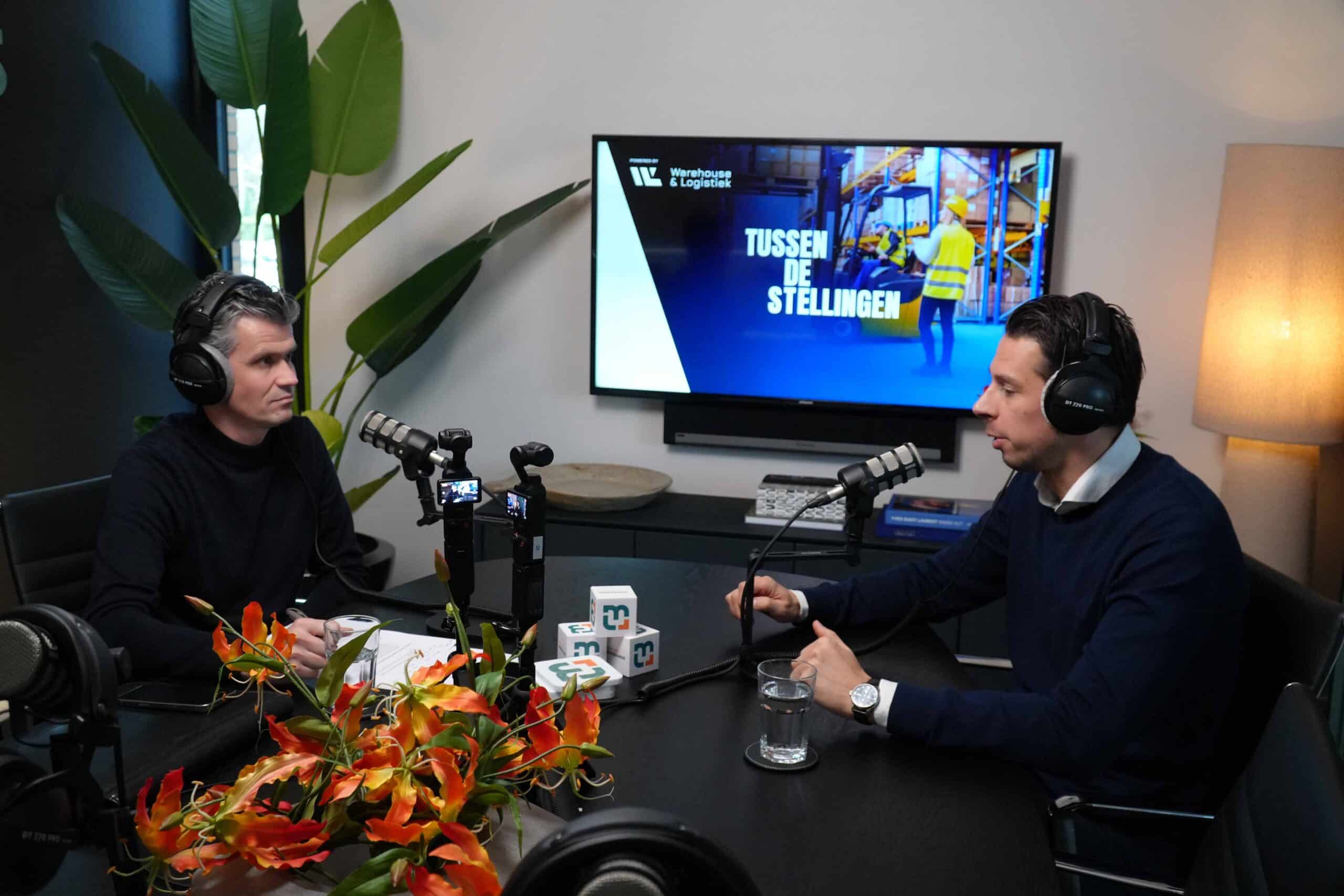
In this episode of Between The Theses, Roel van Gils speaks with Guido Guiking (DLL - De Lage Landen) On financing warehouse automation and robotics.
Guiking explains how leasing allows companies to realize large automation investments without high initial capital commitment. By converting CAPEX to OPEX, cash flow and balance sheet remain manageable, while financing term and contract period can be matched. Featured are financial leasing, operational leasing and more flexible models such as pay-per-pick and Robotics as a Service, which are of particular interest to 3PLs and high-growth companies.
It also looks at residual value, used markets for AGVs and AMRs, and the rapidly increasing level of automation in warehouses. The central message: involve financing early in the automation process, as a strategic part of decision-making.
[00:00] Introduction of the podcast and guest
Roel van Gils: Welcome to the podcast Tussen de Stellingen from Louwers Mediagroep's platform Warehouse & Logistiek here in Weert. Joining me at the table is Guido Guiking from De Lage Landen. Welcome Guido.
Guido Guiking: Thank you very much Roel. Please introduce yourself. My name is Guido Guiking, working for De Lage Landen as an international account manager in intralogistics, where we mainly help large end customers, but also manufacturers and suppliers to realize their automation projects in logistics. So really specifically robotization and automation in warehousing.
[00:36] Pay-off “We are always there for you”
Roel van Gils: On your website you have the payoff: We are always there for you. Can you maybe give an example of that? What do you guys mean by that?
Guido Guiking: By always ready, we mean that we don't care how big or how small the project is. We do projects where it starts with a small robot to fully automated warehouses, like you know from the bol.com's of this world. Where we facilitate financing from A to Z for these customers.
[01:05] DLL - The Low Countries international
Roel van Gils: You, DLL - De Lage Landen I should actually say - is a strong combination of financial and operational expertise. Can you elaborate on that?
Guido Guiking: Right. Just coming back to DLL, De Lage Landen. It's kind of nice that you bring that up, because De Lage Landen has been a household name in this for more than 50 years. Certainly in this region, but also in the Benelux. But ‘De Lage Landen’ doesn't have the same international appeal. That's why five or ten years ago they said: we have to do something about our international branding. Then the name was changed to DLL, to make it pronounceable internationally, because that G will not work in many areas.
Roel van Gils: But so it still stands for De Lage Landen?
Guido Guiking: Definitely. A lot of companies also ask what it stands for. Then it's just De Lage Landen.
[01:59] How does funding help businesses?
Roel van Gils: How does financing help me as a company? Do you have an example of that?
Guido Guiking: In a lot of different ways. You have to distinguish what kind of company you are. We help roughly two types of companies. Those are large multinationals - large American or European companies that operate worldwide - and SMEs that are moving from a few warehouses to the next stage and starting with automation.
Guido Guiking: With SMEs, we help mainly with liquidity and project financing. With large companies, the reason is often different. Those usually have good access to capital, but it's more about cash flow. They have a project with a payback period of a certain period and want to raise the capital exactly for that period. Or they have a business case with an end customer for five or 10 years and want to match the funding with that term. This is often why large companies choose leasing.
[03:14] Customized financing
Roel van Gils: So you have a variety of financial solutions actually.
Guido Guiking: Exact. Both for small businesses and multinationals. And it's always customized.
Roel van Gils: And it's always customized.
Guido Guiking: Exactly. That's also because these projects are always customized. No two projects are the same. With trucks, which we also finance, there is a diesel or electric engine in it and it can drive a certain distance. The only thing that differs might be the color. But here, all facets are different: the size, the scope, the type of products to be handled. Sometimes these are refrigerated pallets that need to get from A to B, sometimes small boxes of medicine.
[03:58] What exactly is being funded?
Roel van Gils: You all fund those, too?
Guido Guiking: Yes, we fund the products needed to do that handling and storage.
Roel van Gils: So everything that's in a warehouse?
Guido Guiking: Anything in a warehouse or outside it can be financed. I focus specifically on robotization and automation within the warehouse. That's racking, equipment, software. Often most of it is hardware and a smaller part is software, although software - especially with AI - is becoming more and more important.
Guido Guiking: Hardware are, for example, racks, shuttle systems that run through those racks, AGVs - robots that lift and transport pallets or boxes. With that comes software control, such as a warehouse management system. We finance that whole project.
[05:19] CAPEX versus OPEX
Roel van Gils: What are the differences between CAPEX and OPEX? And why do companies choose a particular solution?
Guido Guiking: We see CAPEX as an investment made by the company itself. OPEX are costs. Costs are often easier to accept than a large investment. When you put an automation project into a lease, you convert a CAPEX investment to OPEX. You don't have to make an upfront investment, but pay monthly lease fees.
Guido Guiking: That is easier for many companies to accept and approve internally than an initial investment of 40 or 50 million. In addition, these types of projects often result in savings, such as fewer staff, more efficient work or more turnover in the same space. If the cost reduction is equal to or less than the lease payment, then it is a logical investment.
[06:28] Interest rate risk and long lead times
Roel van Gils: To what extent then is there interest rate risk?
Guido Guiking: There is often interest rate risk because these projects take a long time. If you decide to automate today, it often takes nine to twenty-four months before everything is in place. A lot can happen with interest during that period. We can manage and hedge that interest rate risk. That means you fix your interest rate today and are not exposed to market risk.
Guido Guiking: For companies, predictability is more important than speculating on interest rate movements.
[10:00] Scalability and flexible models
Roel van Gils: Looking at scalability, are you more scalable when you choose a flexible model?
Guido Guiking: That could certainly be the case. Certainly the current trend is that there are many new models coming on the market that offer even more flexibility. We already know that from other markets, for example SaaS - software as a service. You now also have robotics as a service in this market. That's actually building on the pay-per-pick model. These are corollaries of an advanced operational lease, as you know from cars, where the full flexibility lies with the end user.
[10:49] Financial lease versus operational lease
Guido Guiking: In the Netherlands you usually see either a financial lease or an operational lease. With financial leasing, ownership ultimately transfers to the end customer and you own the equipment after the term, for example after five or ten years. With an operational lease, ownership remains with the leasing company. At the end of the term, the end customer can choose: do I give it back, do I take it over for a small amount, or do I lease it on for another period.
[11:24] Off-balance sheet benefits of operating lease
Roel van Gils: That's also the most commonly used model in intralogistics right?
Guido Guiking: Yes, exactly. The advantage, especially for large companies, is that it is often seen as off-balance sheet. That means the balance sheet is not extended and balance sheet ratios are not disturbed. With financial leasing, it is seen as additional debt on the balance sheet. Hence, for many multinationals, operational leasing is preferred nine times out of 10.
[11:55] Pay-per-pick and Robotics as a Service (RaaS)
Roel van Gils: You just mentioned pay-per-pick or RaaS. Those are submodels?
Guido Guiking: Yes, these are sub-models of operational leasing where even more flexibility lies with the end customer. With pay-per-pick, you don't pay a fixed amount per month, but a fixed amount per pick. Depending on how many orders go through the line, you pay. That's attractive, also because it's completely off-balance under the latest accounting rules.
Guido Guiking: In addition, it offers flexibility when sales are down. Companies with peak seasons need to pay less in off-peak periods. In peak periods you pay more, but then turnover is also higher. However, the more flexibility, the higher the cost. Someone has to pay for that flexibility.
[13:07] RaaS for high-growth companies
Guido Guiking: For start-ups or fast-growing companies, it is difficult to estimate exactly what their consumption of equipment will be. Then these models can help them get off to a good start. A multinational company in the food industry can often predict exactly what its turnover will be. But a fast-growing e-commerce company is less able to do so. Then a RaaS model scales perfectly with turnover.
[13:42] Administrative impact and partnerships
Roel van Gils: That also requires more administrative burden for you guys?
Guido Guiking: That's right. That's why we work with partners in this. It's not something we offer stand-alone. We currently have a partnership in which we are rolling out this model.
[14:09] Future of RaaS
Roel van Gils: Do you expect more of it in the future?
Guido Guiking: Certainly for smaller robotic solutions, such as packaging machines, AGVs and AMRs, RaaS is going to play a big role. For complete large projects, such as at DHL or bol.com, I see that happening less quickly. Those companies can estimate their demand well.
[14:40] Is there a second-hand market?
Roel van Gils: Is there a secondary market, a second-hand market?
Guido Guiking: The short answer is: not really yet. For lift trucks, there is traditionally a big used market. From that, AMRs and AGVs follow. That technology is fairly new and has only been widely used in recent years. Before equipment is discarded, it usually runs for five to seven years. So it will take several more years for that market to develop.
[15:49] Leasing and recurring equipment
Guido Guiking: AMRs and AGVs can return to the market after a lease period and be used by another party as used equipment. The technical lifespan is often ten to twenty years. Because they are software-controlled and not controlled by people, they last longer.
[16:02] Software upgrades and integration
Roel van Gils: Then the software needs to be upgraded?
Guido Guiking: Yes, software has to be integrated into a new environment and sometimes updated. But that is getting easier and easier. I expect a bigger market for AGVs and AMRs in the future. Other fixed installations, such as shuttle systems in racking, are less suitable for relocation to another location.
[17:23] Growth within existing locations
Guido Guiking: If an installation has been running for ten years and the user grows out of it, a new end user can move in at that same location. The lifespan of equipment is often underestimated. Technology is depreciated in ten to fifteen years, but we see examples of systems that run for 25 to 30 years, such as shuttle systems and high-bay cranes.
[18:16] Depreciation and residual value
Roel van Gils: Does the first customer then pay full amortization?
Guido Guiking: That depends on the construction. Accounting-wise, depreciation is often done in ten or fifteen years. Whether ownership lies with the customer or the leasing company depends on financial or operational leasing. We do include residual values in our calculations, but they are relatively low because of limited verifiability. This is also necessary to offer an off-balance operating lease.
[18:52] What happens after the financing period ends?
Roel van Gils: What happens when the funding period ends?
Guido Guiking: With financial leasing you become the owner of the equipment. With operational leasing, the ownership remains with us. That makes sense if, for example, you only have a five-year contract with an end customer. Then you might not want to keep the equipment. With operational leasing you retain flexibility to extend, take over or return.
[20:00] Financing for 3PL versus end customers
Roel van Gils: What is the difference in financing between end customers versus 3PL?
Guido Guiking: 3PLs are logistics companies that perform logistics for third parties, i.e., manufacturing companies. We work for both types of customers. There is a clear trend that many manufacturing companies outsource their logistics to logistics service providers, because logistics is not their core business. So many of our customers are 3PLs.
Guido Guiking: Those often have a certain contract duration with an end customer. That can be short, three years, or long, ten to fifteen years. Especially with longer contract periods, it is realistic to invest in automation, given the payback period of those projects. They often want their cash flow to be matched with the contract length. So if they have a seven-year contract, they also want a seven-year financing solution. That ensures neutral cash flow during that contract.
[21:31] Multi-client facilities
Roel van Gils: But you also have structures where 3PLs serve multiple end customers?
Guido Guiking: Yes indeed. There are many 3PLs with a multi-client facility. In that case, they sometimes choose shorter term financing, say three or five years, to spread the investment costs. After that, they keep the facility and can deploy it to different end customers.
Guido Guiking: The end customer often has a lot of influence on the 3PL's investments. They make demands on quality, error margins and production capacity. If you have to meet a lot of requirements, you need a lot of people. In Western Europe, and certainly in the Netherlands, personnel are expensive and want to earn more every year. At the same time, the end customer often wants to pay a fixed amount per order. Automation is then an ideal solution, because you can properly prognosticate your costs over the contract period.
[22:48] What is fully co-financed?
Roel van Gils: For 3PLs, are all project costs also included? Installation, transportation?
Guido Guiking: Exactly. We include everything. Engineering costs, which is often already 10% of the project, the hardware, the software and everything that goes with it. In a worst-case scenario, if things go wrong, we also want to have full ownership so we can deploy it to another party.
Guido Guiking: For example, if we finance a facility for DHL and the contract ends, there are plenty of other parties who want to take over that facility. But that is only possible if we have financed the complete project - including software, cables and all the components. That's why we like to do the entire project.
[23:49] When to involve DLL in the process?
Roel van Gils: When does it make sense to involve you guys?
Guido Guiking: At an early stage. The moment you have an idea of what kind of technical installation you want to put in place and a rough indication of the investment - are we talking one million, ten million or a hundred million - then it makes sense to involve us.
Guido Guiking: Then we can determine the most appropriate financing solution: a short-term financial lease, an operating lease or a combination. That gives quicker clarity on cash flow and increases the chances of quick project approval.
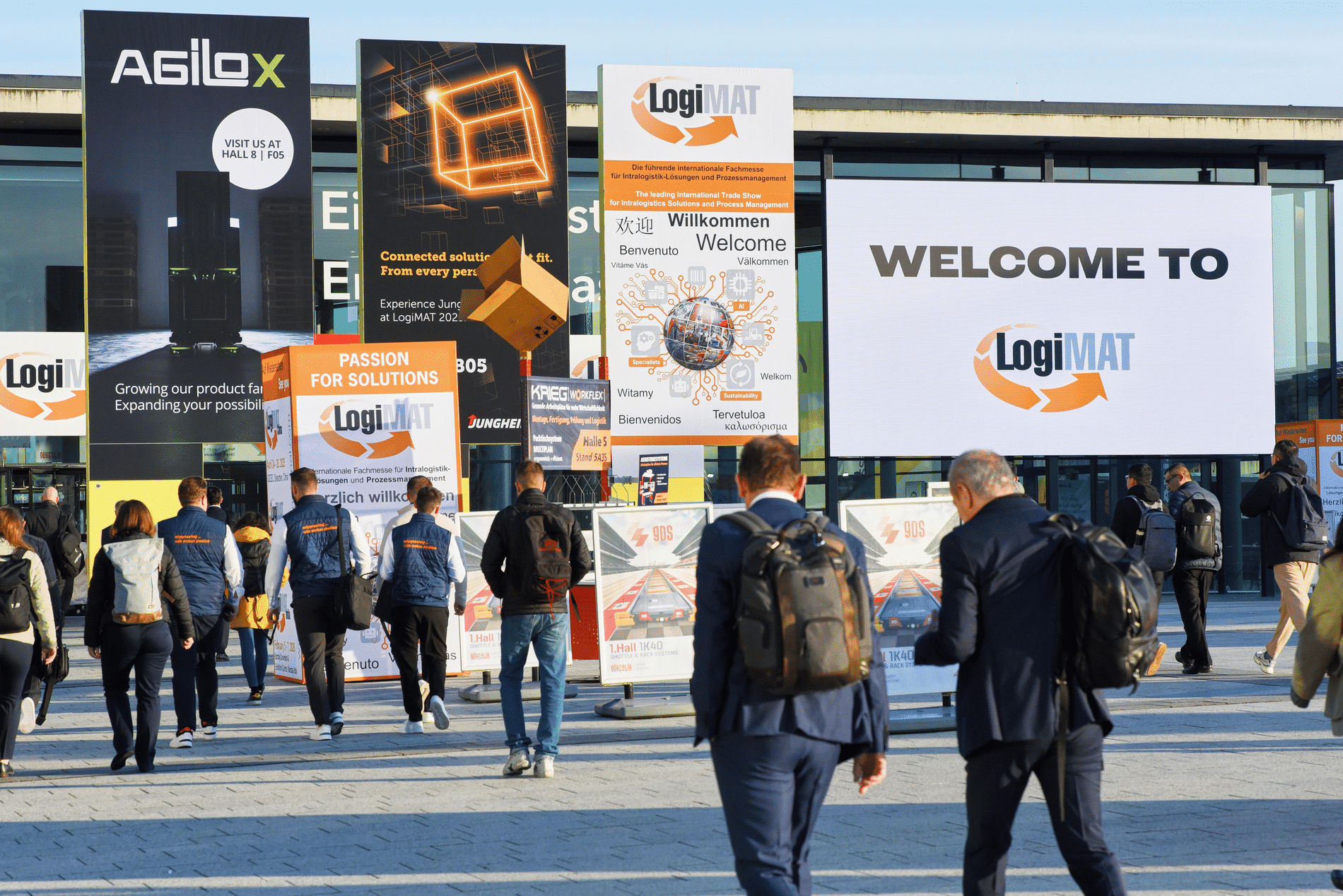
[24:43] DLL at the LogiMAT in Stuttgart
Roel van Gils: You will also be at the LogiMAT in Stuttgart. What can we expect?
Guido Guiking: For the second year we will be there with our own booth. LogiMAT is the largest logistics trade fair worldwide. All large and small suppliers are present there. We were visitors for many years and last year we were there with our own stand for the first time. That was such a success that we are participating again this year, even at a better location. I think we will be in Hall 3, a top location.
Guido Guiking: Many of our partners are there too. We work with both end customers and suppliers. The moment they meet end customers there, they can talk to us directly about financing options.
[25:47] Generating business on the show floor
Roel van Gils: Are those conversations already emerging at the fair itself?
Guido Guiking: Definitely. Last year a surprising number of parties came to us. Some were not yet clients, but wanted to know what the possibilities were. Some were already further along in the process and specifically wanted to know if we could help with the realization.
Guido Guiking: We actually got business last year from customers who met us there. We didn't expect that.
[26:29] Staffing and follow-up
Roel van Gils: Do you have the staffing for that?
Guido Guiking: Yes. There are always two or three people at the booth. In addition, our management maintains relationships with partners who are also there. If there are current leads, we can follow them up quickly. A lot of business happens on a trade show basis.
[26:57] Expectations for the upcoming edition
Roel van Gils: Do you expect much from it?
Guido Guiking: It is the most important fair in Europe. Last year was successful. We see that the demand for financing and automation is growing. Economically it may not be going great in Europe, but that does not stop companies from investing.
Guido Guiking: If they don't do it now, they are behind. Delivery times from suppliers have gone up to two or three years before. Companies have learned from that and are now investing when an opportunity arises.
[27:40] Increasing degree of automation
Guido Guiking: When we started five or six years ago, these were often pilot projects with a few robots and some software. Those were investments of several tons. Many of those pilots became successful and grew into fully automated warehouses.
Guido Guiking: Still, not everything is automated yet. The level of automation is maybe around 60%, sometimes 80%. There is still a lot of room to automate further. New construction is also becoming more automated.
Guido Guiking: Capital investments for new warehouses are getting higher. In the end, operational costs go down, because you need fewer staff, work more efficiently and make fewer mistakes. But the initial investment is higher.
[28:50] Leasing in large-scale rollout
Guido Guiking: For companies with not one, but, say, a hundred warehouses worldwide, those are huge capital-intensive investments. Then leasing is a strong solution.
[29:04] Final question - main message
Roel van Gils: If we could give one more thing to listeners?
Guido Guiking: That they can always contact us to spar about possible solutions. It may also be that it is not an appropriate solution at the time, but then we can give direction for future investments.
[29:35] Closing
Roel van Gils: Thank you Guido for this conversation and have a good fellowship.
Guido Guiking: You're welcome, Roel. Thank you. That's definitely going to be good.