warehouselogistiek.eu
EN

The platform for internal & external logistics, supply chain and automation
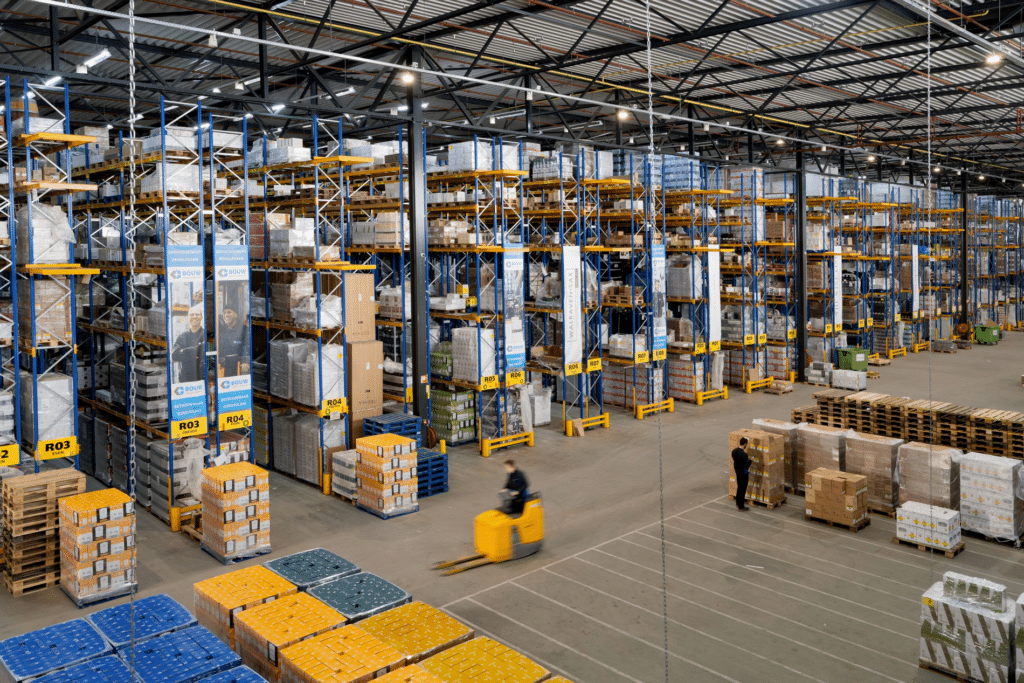
AI is going to transform logistics. But there is still a significant gap between what is technically possible and what actually adds value on the shop floor today. This is evident from conversations with Bart Lambooij, IT Manager at Bouw Logistic Services, and Arjen Hoekstra, Director of Operations at Bakker Transport & Warehousing. Both logistics service providers are at the forefront and are already actively working to adopt AI into their business processes. Their experiences highlight where opportunities lie today, but also what is needed to move forward in the future.
Bart Lambooij sees three key applications for AI in logistics: solutions from software vendors for areas such as transportation planning and warehouse optimization; custom agents powered by proprietary data; and—further down the road—AI that combines these two and can actually centrally control applications.
“For example, an agent who identifies an error in a shipment’s status, proposes a solution, and implements it once it’s approved. In the long term, there may be opportunities for a single centralized application that combines information from various sources and helps users determine the next step.”
But technology should never be the starting point. As Lambooij explains: “AI shouldn’t become an end in itself. It must demonstrably add value to the organization and help in day-to-day operations.”
Today, that value starts much closer to home. For example, Bouw is experimenting with custom agents for internal documentation, and Bakker Transport & Warehousing uses Copilot for internal document management, procedures, and other administrative tasks, among other things.
By making company documentation centrally available in SharePoint and adding a custom agent to it, Bakker Transport & Warehousing discovered how quickly and easily employees can gather information. For now, the immediate benefit of AI often lies not in fully autonomous logistics processes, but in practical support:
“Now that we’ve centralized all our documentation and built a chatbot around it, we can find the right information, make proposals, and analyze documents much more quickly,” said Arjen Hoekstra.
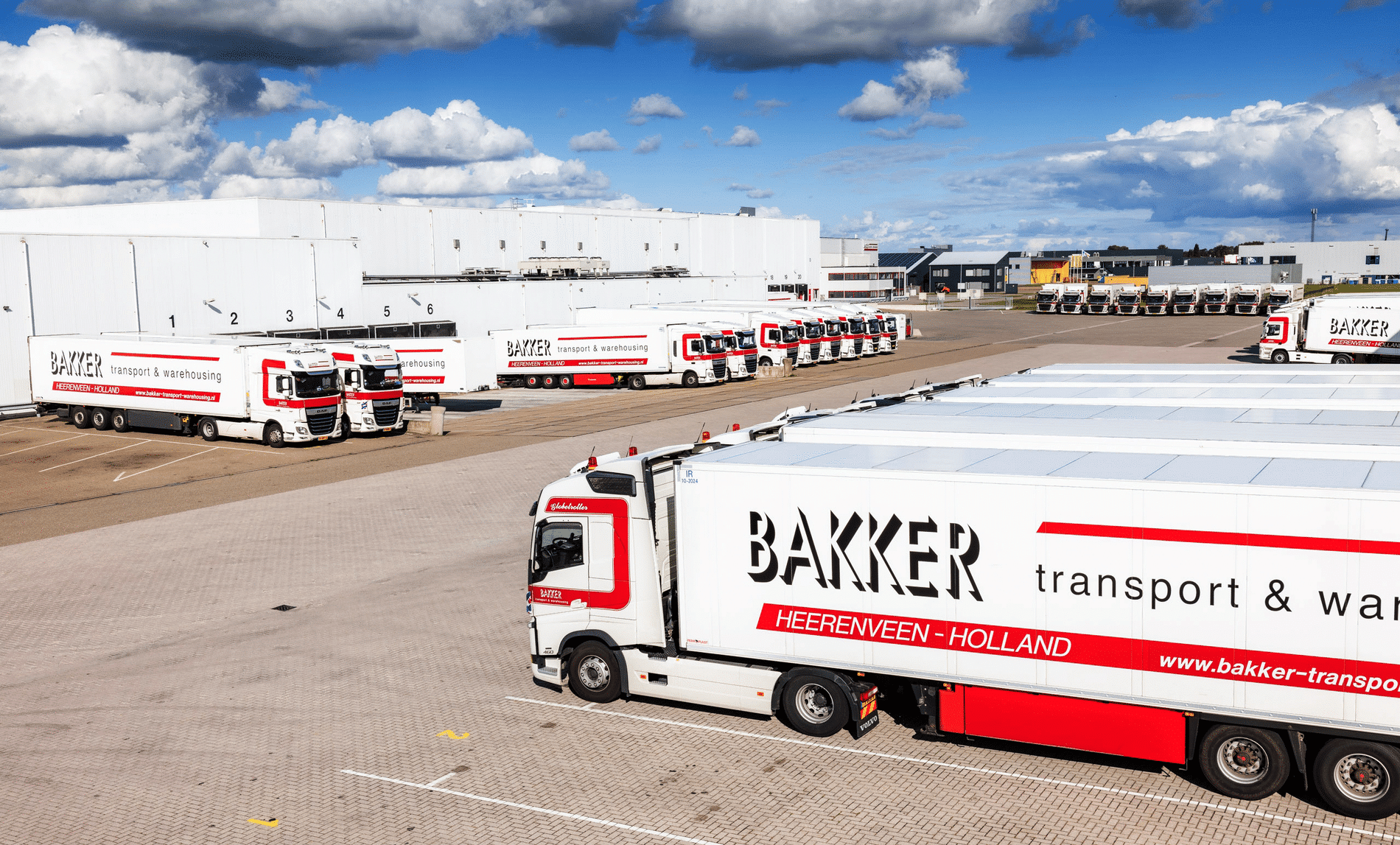
These first steps in AI adoption also confirm a well-known IT lesson: the quality of AI stands or falls with the information on which the application is based. Lambooij explains: “Your source data must be in order. If the data isn’t good, the AI application won’t work well either.”
But technology and data aren’t the only requirements. Hoekstra actually sees the human factor as one of the biggest challenges. “Technology is capable of much more than what people currently allow. The main obstacle is letting go of control.”
Hoekstra adds that, in his view, this is not a generational issue: “Being digitally literate does not automatically mean that someone uses AI to work more efficiently. Employees need to understand what the technology does, be willing to experiment with it, and handle data responsibly.”
Knowledge must also be safeguarded. Both Lambooij and Hoekstra emphasize that employees must continue to understand what AI does and that humans must remain in control. Lambooij: “As AI takes over more cognitive tasks, there is otherwise a risk that knowledge and judgment will decline.” Hoekstra: “That dependency also arises when a single employee builds all kinds of AI processes and no one else knows how they work. So make sure that knowledge doesn’t get concentrated in just one person.”
The same caution applies to security. What data is an AI model exposed to? Is information used for training? Who is authorized to access which data? And who is responsible when an agent takes action on its own?
Authentication and authorization become essential, especially when AI is integrated with operational systems or customer portals.
Lambooij therefore sums up his advice in practical terms: “Start small and with a well-defined scope, experiment, and think carefully about security from the very beginning.”
At Bakker Transport & Warehousing, AI is currently used primarily as an internal tool. Hoekstra advises: “Work with AI within a defined environment; for us, that’s the Microsoft ecosystem. Also, make sure you collaborate with partners who specialize in security so you can keep this under control.”
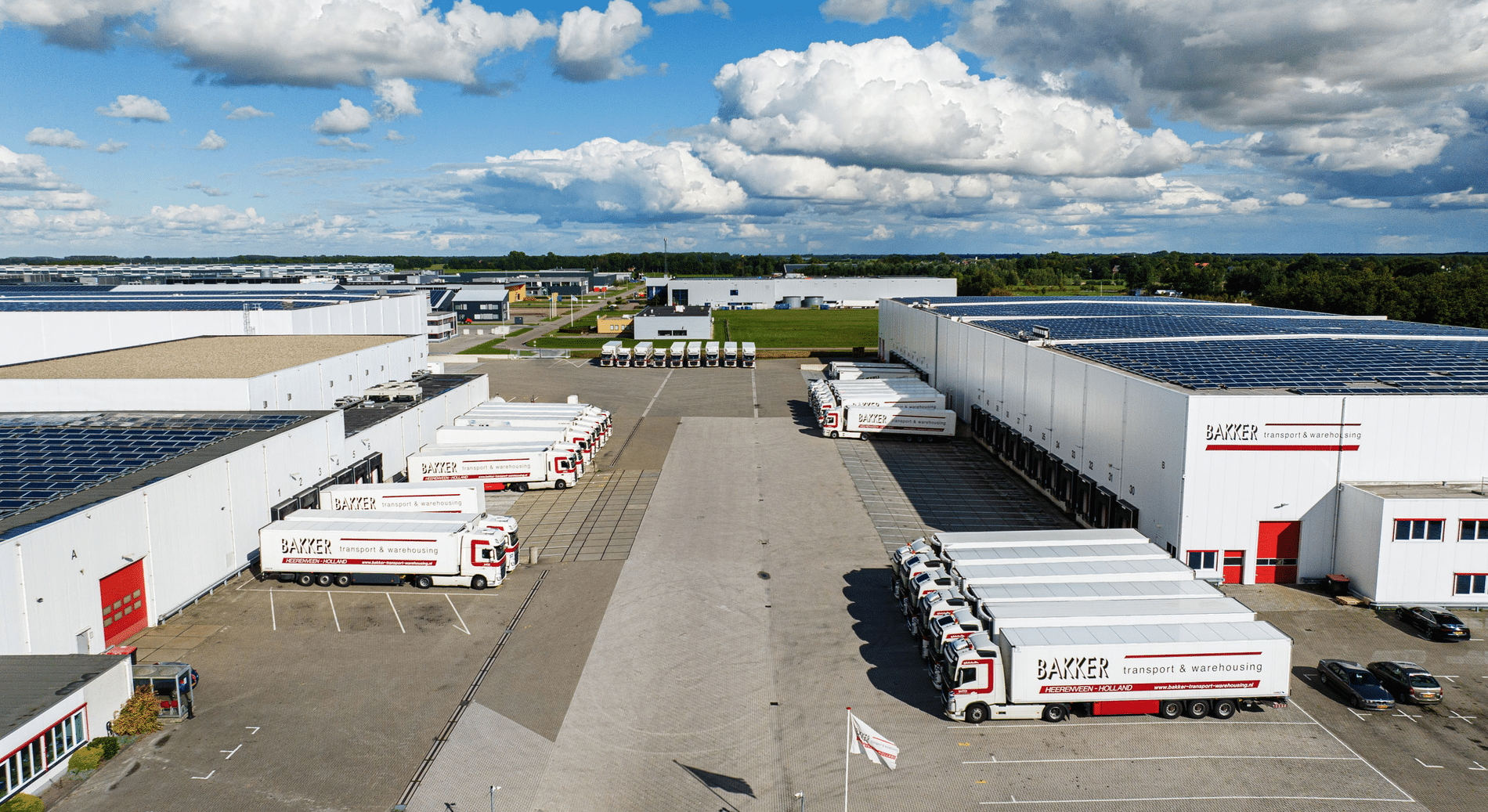
If data, security, and adoption are in order, Lambooij and Hoekstra see plenty of opportunities for the logistics sector. “Inventory optimization is an area that holds long-term potential,” says Lambooij. “By combining data, AI can help identify patterns and trends, thereby improving the prediction of demand, capacity, and inventory. However, this requires reliable data and further technological development.”
“We also see future opportunities in the transportation sector,” Hoekstra adds. “AI could factor in elements such as traffic, road closures, costs, and capacity when making planning decisions. For example, it could help identify alternative routes and assess the impact on scheduling, costs, and deliveries. Electric vehicle fleets add an extra dimension to this. AI could then analyze patterns in energy consumption, trips, and prices to determine the best times to charge vehicles.”
Hoekstra also expects a shift in administrative work: “Some tasks will definitely be taken over, especially administrative ones. But I don’t expect there to be no one left in the office.”
In addition, both Lambooij and Hoekstra expect logistics software to become more intuitive. “I expect that in a few years, we’ll be managing all our business processes from a single AI-driven environment—from managing our email and tasks to controlling our logistics software,” Lambooij explains.
Hoekstra sees another intermediate step in this process. Instead of knowing exactly where information is located within a system, he expects to be able to ask AI for what he needs. “I expect to be able to ask a chatbot: How much inventory do I still have for this customer? Your system knows where that information is.”
This also changes the role of software vendors. Once AI becomes part of warehouse and transportation processes, logistics service providers will depend on the capabilities of their core systems. For Bouw Logistic Services and Bakker Transport & Warehousing, the Microsoft foundation underlying Boltrics“ WMS and TMS provides a strong starting point for keeping pace with future AI developments. As Lambooij explains: ”We have high expectations for Boltrics when it comes to AI. As a leading software provider for the logistics sector, we expect Boltrics to take the lead. And this is reinforced by the fact that Boltrics can benefit from the Microsoft ecosystem and leverage developments in Microsoft Fabric and AI tools such as Copilot.”
For Bakker Transport & Warehousing, this is already a factor in the selection of suppliers. After implementing Boltrics WMS, the organization also chose TMS, in part because of the benefits of having data within a single system and the integration with Microsoft. This foundation aligns with the positioning of Boltrics as a single modular platform for WMS, TMS, and FMS, built on Microsoft Dynamics 365 Business Central.
What should a logistics service provider do with AI today? Lambooij and Hoekstra both see plenty of reasons to take action, but each places a different emphasis.
For Lambooij, it’s all about pioneering and experimenting: “Take a measured approach. Don’t jump right into large AI projects; instead, start small and focused to discover what works and what actually adds value. I don’t think the construction industry necessarily needs to be at the forefront of this, but we do want to gain experience so we can keep up with new applications as they become available. The technology is evolving so quickly that, as an organization, you have to do something with it and have a vision for it. You can’t ignore it anymore.”
Hoekstra, on the other hand, emphasizes the people who will actually be working with this technology: “Be a pioneer, but make sure you have the right people in your organization—people who enjoy this, want to experiment with it, and see what it can do. Ultimately, your employees will determine whether AI can truly become part of everyday practice.”
That's where two perspectives—from two different logistics companies—ultimately converge: start with AI to gain experience
to implement, but don't forget that technology alone won't help your organization move forward. Ensure you have good data and security, choose applications that actually add value, and at the same time, invest in the people who will be using them.
Because no matter how smart AI becomes, Hoekstra’s final piece of advice remains relevant: “Make sure you continue to understand what’s happening.”