warehouselogistiek.eu
EN

The platform for internal & external logistics, supply chain and automation
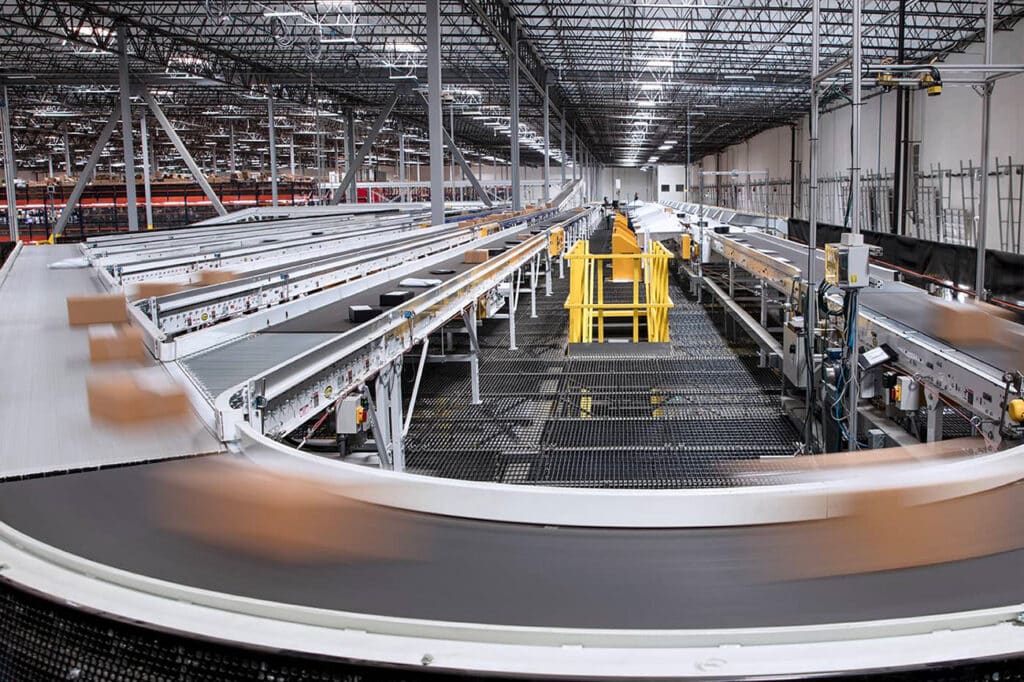
While accurate predictions are always difficult to make with certainty, our outlook for 2026 is based on powerful and data-driven insights, as well as our experiences over the past few decades and what we have heard and seen from clients. At Manhattan, we have a simple mission: eliminate noise, focus on what really matters to our clients and be at the forefront of change.
Based on insights from our experts from around the world, we outline the key supply chain and retail developments for 2026. The common thread: the continuing advance of AI in all aspects of business, the evolution of commerce as we know it and what do trends such as ‘hyper-personalization’ mean for the already heavily burdened (B2B and B2C) supply chain. Perhaps these insights will provide food for thought and make for interesting conversations in the new year!
1. Broader deployment of AI leads to more resilient supply chains
By 2026, AI tools will be more widely deployed to automate labor-intensive tasks and significantly accelerate deployments. These tools will also evolve to provide incident management capabilities, leading to machine-driven self-healing mechanisms and ultimately more resilient supply chains.
2. Professional services are embracing AI
Organizations in professional services are accelerating the use of AI-driven automation to streamline deliveries. This results in faster onboarding, smarter deployment of resources and more efficient support models. As customers demand greater transparency and demonstrable value, the focus of professional services teams is shifting to results-driven collaborations, supported by real-time data and collaborative platforms to create solutions and deliver demonstrable impact together.
3. AI adoption is growing steadily, not explosively
Although more and more organizations are exploiting new AI capabilities, growth in 2026 is more gradual than in the past two years. Many organizations realize that data quality and digital modernization are prerequisites to effectively deploy AI and deliver the desired speed, accuracy and value that everyone is looking for.
4. B2B decision-making shifts to the ‘moment of truth’
In the B2B market, intelligent decision making at the moment a customer wants to place an order is increasingly becoming the norm to optimize customer service and profitable operations. Smart sourcing, order allocation in relation to available inventory and continuous reallocation are becoming essential. As a result, ERP systems are coming more explicitly into the picture as a critical link to meet customer expectations in 2026.
5. Unified commerce accelerates through hyperpersonalization
Consumers today are everywhere and expect to be able to buy, receive and return anywhere, anytime. Supply chains must therefore be able to commit to orders in real time, regardless of channel. Unified commerce is gaining ground at an accelerated pace as retailers seek to meet the growing demands of hyper-personalization.
6. Mobile-first POS replaces traditional POS systems
By the end of 2026, traditional POS systems will give way to mobile-first POS platforms that act as omnichannel hubs. Coupled with real-time inventory and fulfillment engines, these platforms provide employees with flexible options such as ship-from-store, later pickup or same-day delivery. In addition, employees gain access to rich customer context, including purchase history, loyalty status and open shopping baskets, allowing them to serve customers faster, with greater precision and personalization.
7. Conversational commerce is changing online shopping
Major retailers, such as Walmart, are investing heavily in ‘conversational commerce. This is shifting online shopping from traditional search functionality to interaction through AI, fundamentally changing the way consumers discover and buy products.
8. Social commerce is growing explosively
Social commerce continues to grow at a rapid pace. TikTok Shop recently experienced a record year with an average of 6,000 live shopping sessions per day. Established retailers, such as Marks & Spencer in the United Kingdom, are also stepping into this channel. Many more retailers are expected to follow by 2026.